
Disconnected HR, payroll, and benefits systems can turn one employee update into a chain of repeated tasks. The benefits of a unified HR and payroll system include connecting key information, reducing duplicate data entry, and making records easier to use for payroll, benefits administration, and compliance support. A connected process can also link onboarding with benefits enrollment, giving important details a clearer path from hire to payroll.
When your team is juggling separate records, deadlines, and systems, fewer handoffs and more consistent information can make day-to-day work easier. A unified approach can help coordinate reporting, onboarding, benefits administration, and employee records. Technology works best alongside clear policies and well-organized data, so teams can review changes and resolve exceptions rather than relying on automation alone.
Key Takeaways
- Connect employee, payroll, and benefits records to make compliance reporting and documentation easier to manage.
- Reduce duplicate data entry by keeping employee information consistent across HR, payroll, and benefits processes.
- Link onboarding tasks with benefits enrollment so new hires can receive relevant information at the right point in the process.
- Identify where disconnected systems create extra handoffs, missed deadlines, or uncertainty, then consider whether an integrated HCM approach fits your needs.
Benefits reporting and compliance documentation
Accurate employee records support payroll processing, tax filing, benefits administration, and recordkeeping. When HR and payroll information is connected, a change to an employee’s details can flow into payroll instead of being entered again. For example, updated withholding information can be reflected in payroll records, helping teams work from consistent data when reviewing pay history and preparing reports. Keeping related information connected is one of the practical benefits of a unified HR and payroll system.
How does HR and payroll integration support tax withholding and compliance in the United States? It connects employee information with payroll processing, helping reduce mismatches between HR records and pay calculations. Keeping related records together can also make it easier to review how information was used. The system supports the process, while teams remain responsible for maintaining accurate employee data and reviewing records.
Clear documentation matters when a payroll amount or benefits entry needs an explanation. A useful record links the employee profile, relevant update, payroll result, and supporting document. For example, when a benefits deduction changes, the related record can help staff trace the update and understand its effect on payroll. Organizing these details together supports consistent recordkeeping.
Compliance tracking becomes more practical when teams can review related records and reporting in one place. A regular review of employee information, payroll entries, and benefits records can help identify gaps, such as a missing update or inconsistent deduction. Clear records also support consistent application of HR policies, which can reduce the risk of compliance issues. These are further benefits of a unified HR and payroll system when teams need a clearer view of their records.
Separate systems can leave teams switching between platforms to find a report or resolve a discrepancy. A unified platform can reduce those handoffs and make routine reporting easier to manage. When assessing a system, consider whether its reports meet your needs and whether it can support your operations as they change. Accurate pay and benefits information also contributes to a more reliable employee experience.
Reducing manual data entry and errors
Integrated HR and payroll software can reduce duplicate entry by allowing teams to record employee information once and use it across payroll, benefits, and workforce processes. Fewer repeated handoffs make details such as an employee’s address, pay rate, or job status easier to keep consistent. This can reduce opportunities for errors, but accurate source records remain essential.
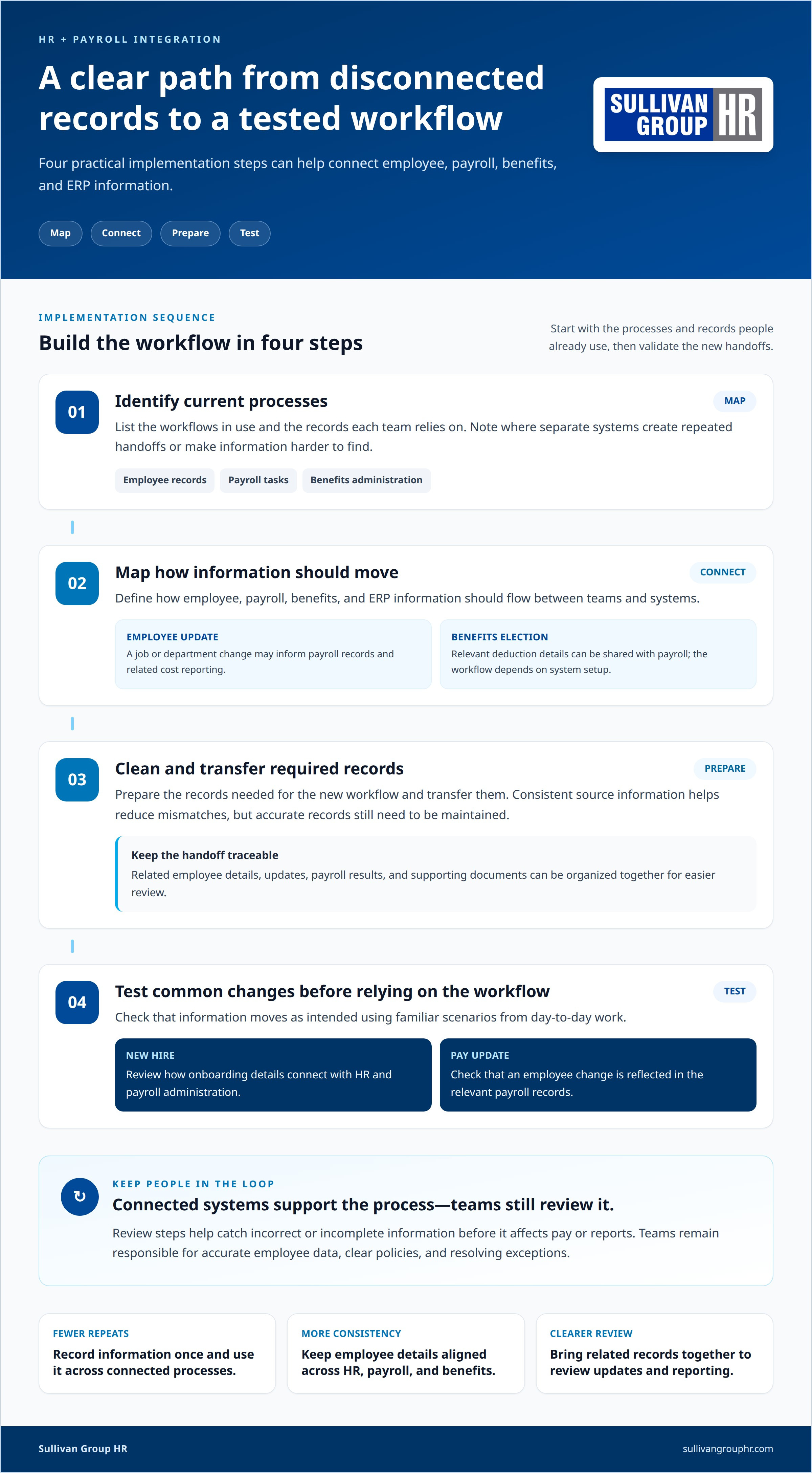
Consider a change to an employee’s benefits election. When HR and payroll systems share the update, payroll can use the relevant deduction details without someone retyping them. If benefits information is also sent to a carrier through a configured connection or file transfer, the selected coverage can be communicated with less manual handling. The exact workflow depends on the system setup.
Connections with an ERP system can help synchronize information used across finance and workforce operations. For example, a job or department change entered in HR may inform payroll records and related cost reporting. Sharing an update can reduce mismatches, while review steps help catch incorrect or incomplete information before it affects pay or reports.
HR data and analytics can help managers spot patterns in attendance, staffing, or turnover. A workforce report might show repeated absences or rising turnover in a department. That information can prompt a closer review of scheduling or retention practices. Consistent, timely data makes trends easier to track, but managers still need context before deciding what to do.
What cost savings and pricing should you expect from integrated HR and payroll software? Savings may come from reducing repeated administration, correcting fewer errors, and spending less time reconciling records. Pricing depends on the organization’s needs, selected functions, configuration, and data migration, so costs vary by implementation.
Start implementation by identifying current processes and the records each team relies on. Then map how employee, payroll, benefits, and ERP information should move. Clean and transfer the required records, and test common changes, such as a new hire or pay update, before relying on the new workflow.
Integrated onboarding and benefits administration
A connected onboarding workflow can carry a new hire’s information from recruitment into HR and payroll administration. After accepting an offer, an employee might receive an offer letter, complete paperwork, and have an account set up. Coordinating these tasks can streamline administration and make the next steps clearer for the candidate.
Benefits enrollment can be included in the onboarding checklist, alongside plan information and other new-hire tasks. An employee can review available benefits, submit enrollment choices, and receive confirmation through the same workflow. This connection helps HR teams coordinate benefits administration with payroll setup, so relevant deductions can be handled as part of the employee’s transition into paid work.
Automated tasks can prompt employees to complete forms, remind them about pending steps, and notify HR when information is ready for review. For instance, an enrollment notice can direct a new hire to plan details before the deadline. When an employee completes a task, the onboarding checklist can be updated, making progress easier to track without relying on separate reminders.
Open enrollment generally happens once per year, apart from qualifying events. An integrated system can send enrollment notices and updates electronically, giving employees a place to manage benefits and paid time off. For example, an employee making a benefits change after a qualifying event can review information and submit the relevant update through the platform. Clear notices connect deadlines with the actions employees need to take.
Well-organized onboarding can also shape a candidate’s first experience after accepting an offer. A single sequence for paperwork, account setup, benefits information, and payroll details reduces the need to repeat instructions across separate channels. Once onboarding is complete, HR can use records of training and development tasks to support follow-up. Coordinated processes give employees a clearer start and help teams maintain useful records for reporting and retention efforts.
Challenges of disconnected HR, payroll, and benefits systems
Separate systems can turn one employee change into several updates. A new address entered in HR may still need to be changed in payroll and benefits records. If a system is missed, teams may use inconsistent details, and employees may have to repeat information. Each handoff adds work and makes it harder to see where an update stalled.
Disconnected enrollment processes create another challenge. An employee might choose benefits in one platform while payroll deductions are managed elsewhere. If the information doesn’t carry across correctly, staff must trace the discrepancy between systems, and the employee experience can suffer. Missing a deadline, such as open enrollment, can also create compliance concerns for the organization.
What employee self-service features can unified HR and payroll systems provide? Employees may be able to update personal details, view pay stubs and benefits information, check leave balances, and request time off. Bringing these tasks into one platform makes everyday information easier to access, including for remote and hybrid employees.
Implementation also requires care. Moving inaccurate or duplicate records into a new platform can carry existing problems forward. Teams may also follow conflicting processes for the same task, such as recording a job change. Before automating workflows, map current processes, decide which records are authoritative, and test common transactions. This preparation can reveal issues before they affect payroll or enrollment.
Integration can improve efficiency when an organization aligns its data and processes. Review where information is entered, who updates it, and how teams resolve exceptions. Then assess whether an integrated platform can reduce unnecessary handoffs without making essential review steps harder. A clearer workflow can support a more consistent employee experience and make routine administration easier to manage.
To bring payroll and benefits processes into closer alignment, explore integrated HR support.
Sullivan Group HR: Applicant Tracking System
Sullivan Group HR offers applicant tracking, screening, and onboarding tools to support hiring as part of your workforce management. These tools can help when disconnected hiring and HR processes make it harder to move candidates into employee administration smoothly.
Beyond recruitment, Sullivan Group HR provides HCM, Employee Benefits, and payroll and benefits administration. These services support connected parts of the employee lifecycle, from bringing people into the organization to managing payroll and benefits. The appropriate support depends on where your processes need coordination.
To discuss how Sullivan Group HR’s workforce management services could support your organization, contact the team.
Build a more connected path forward
The benefits of a unified HR and payroll system depend on how well it supports your organization’s processes. Identify where disconnected workflows create avoidable handoffs, then decide which employee tasks need better coordination. Consider people and processes alongside technology. A practical approach can help strengthen operations while keeping the employee experience in view.
Sullivan Group HR provides HCM, payroll outsourcing, and payroll administration to support organizations managing these needs. Consider how integrated payroll, HR, and employee-benefits services could fit your current structure, whether you want to connect more workforce functions or get support with payroll responsibilities. Contact Sullivan Group HR to discuss the right next step for your organization.
Contact Sullivan Group HR to discuss your HR and payroll needs. A more connected approach can give your team room to focus on the people and work that move the organization forward.
Frequently Asked Questions
What are the main benefits of integrating HR and payroll systems?
Integration gives teams a more connected view of employee changes and their effects across workplace processes. For example, a promotion can be reflected in job records and payroll workflows without relying on separate teams to interpret disconnected updates. This can clarify responsibilities and help employees access relevant work information. The value depends on sound processes and well-maintained records.
How does a unified HR and payroll system reduce data entry errors and duplicate work?
A unified system can use a shared employee record instead of separate versions maintained by different departments. For example, when an employee changes departments, HR can update the central record for authorized processes to use. This reduces duplicate entry. Clear access controls and review procedures still matter, because incorrect information entered once can affect multiple workflows.
How can integrated HR and payroll software improve payroll accuracy and on-time payments?
Integrated software can connect payroll with approved time, employee status, and pay changes, helping payroll staff work from aligned records. For example, a manager’s approved hours can be available for payroll processing without another manual transfer. Accurate, timely pay still depends on complete information, approvals, and meeting internal processing deadlines. Integration supports the workflow, but it doesn’t replace payroll review.
How does unified HR and payroll software improve reporting and workforce analytics?
Connected information can help teams build reports from consistent employee records rather than reconciling separate files first. Leaders can use available workforce data to spot patterns and investigate possible explanations. For example, a change in turnover should prompt questions about roles, teams, or workplace conditions, not assumptions about the cause. Analytics can organize decisions, but they do not provide context on their own.


