

What if the right HR partner did more than recommend a solution and also helped carry the work forward? Choosing among human resources consulting firms can feel difficult when you need both sound guidance and reliable day-to-day support. Advice alone may not resolve the administrative work waiting back at the office.
You may already know your business needs HR support. The harder question is what kind: strategic advice, outsourced administration, technology, or a combination. Software can organize processes, but it doesn’t replace knowledgeable guidance when people decisions get complicated.
This guide explains what HR consulting firms do and how consulting, HR administration, and HCM technology differ. You’ll learn how to match a service model to your needs and how these pieces can work together. Sullivan Group HR combines HR consulting with payroll administration, employee benefits management, and access to the isolved HCM platform, bringing guidance, administration, and technology into the same conversation.
Key Takeaways
- Identify whether your most pressing need is expert advice, recurring HR administration, or technology to manage processes.
- Compare human resources consulting firms by how their expertise, implementation support, administration, and technology fit together, not by rankings alone.
- Separate urgent people-management challenges from longer-term workforce and administrative priorities before choosing a service model.
- Consider how consulting, payroll and benefits administration, and HCM technology can work together to support connected HR processes.
- Sullivan Group HR brings HR consulting together with payroll, benefits, workers’ compensation, applicant tracking, time and attendance, and access to the isolved HCM platform.
What Do Human Resources Consulting Firms Actually Do?
An HR consulting firm helps an organization address workforce and people-management needs. The work might start with a focused question, such as how to improve hiring or clarify employee policies, or extend to ongoing support with HR administration. The label covers a range of services, so the firm’s name alone won’t tell you what it will handle.
At its core, human resources consulting brings outside knowledge to people-related decisions. An engagement may include recommendations, help putting them into practice, and recurring operational support. For example, a business might get advice on improving onboarding, then receive help implementing updated processes. Another might delegate recurring work such as payroll administration. These stages can connect, but they aren’t interchangeable. Clarify which are included so you know what support continues after the initial recommendations.
What problems can an HR consulting firm help address?
Growth, limited internal capacity, and changing workforce needs can all prompt a business to seek outside HR support. A growing organization, for example, may need a more consistent hiring process. A lean team may need help coordinating benefits administration or organizing employee records. A business changing roles or work arrangements may want guidance on communicating and managing the change. These examples represent different needs, not a standard package. The right services depend on the work involved.
People-management support is also distinct from legal representation. An HR consultant may help an organization review its HR processes or develop practical policies, but that isn’t the same as representing a business in a legal matter or providing legal defense.
How is consulting different from an internal HR department?
An internal HR team develops ongoing knowledge of an organization’s people, practices, and priorities. An external consultant brings a different perspective or focused expertise for a defined need. The two can work alongside each other: internal staff may handle daily employee questions while outside support helps with a particular project or recurring administrative workload. The right division depends on the organization’s capacity and goals.
Before engaging human resources consulting firms, make the work concrete. List the problem to solve, the decisions that need guidance, and the tasks that require hands-on execution. Then identify who will own implementation and whether support continues after the initial work. This helps prevent a mismatch, such as expecting ongoing administration from an engagement focused only on recommendations.
If your main need is operational rather than advisory, consider how HR outsourcing support can handle recurring HR functions. Consulting and outsourcing can complement each other, but first identify which work you want to delegate.
HR Consulting, Outsourcing, and HCM: How the Service Models Differ
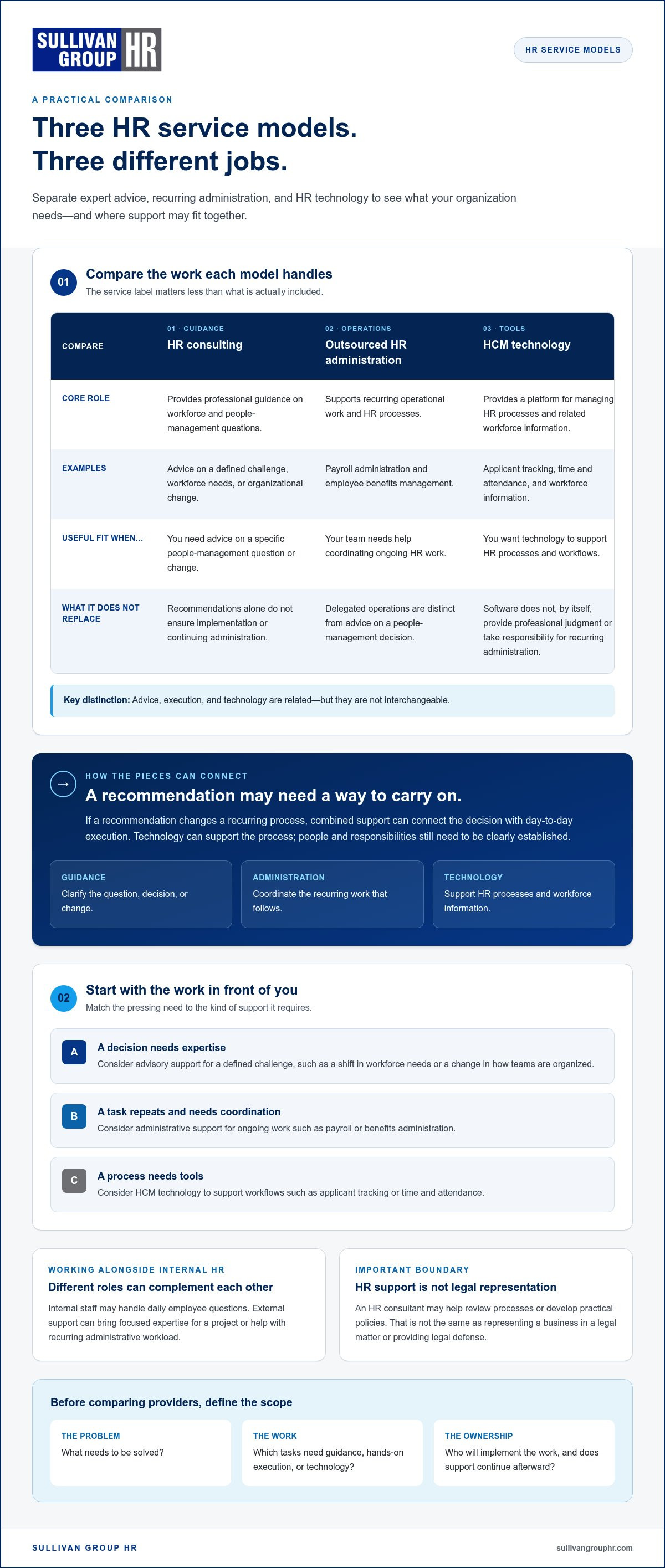
Choosing among human resources consulting firms is easier when you separate three things that are often bundled together: expert advice, recurring administration, and the technology used to manage HR processes. Each addresses a different part of the work. A company might need one, two, or all three, depending on its goals and internal capacity.
| Service model | What it does | A useful fit when |
|---|---|---|
| HR consulting | Provides professional guidance on workforce and people-management questions. | You need advice on a defined challenge or organizational change. |
| Outsourced HR administration | Supports recurring operational work, such as payroll administration or employee benefits management. | Your team needs help coordinating ongoing HR processes. |
| HCM technology | Provides a platform for managing HR processes and related workforce information. | You want technology to support processes such as applicant tracking or time and attendance. |
The models are related, but they aren’t substitutes. Software provides tools for handling information and workflows; it doesn’t, by itself, deliver professional judgment or take responsibility for recurring administration. Advice can clarify what needs to change, but the business still needs a way to implement the recommendation and maintain the process over time.
When does a business need advice, administration, or both?
Choose advisory support when the central need is a decision, such as how to respond to a shift in workforce needs or plan a change in how teams are organized. Choose administration when work repeats and requires consistent coordination, such as payroll or benefits administration. If a recommendation affects a recurring process, combined support can connect the decision with day-to-day execution. Define the immediate question first, then decide who will carry out the work that follows.
What role does HCM technology play?
Human capital management, or HCM, refers here to technology that brings workforce processes into a platform. Applicant tracking supports recruitment workflows, while time-and-attendance capabilities relate to recording and managing employee time. These tools support HR operations within the processes and responsibilities an organization establishes. For a deeper explanation of the platform concept, explore this human capital management strategic guide.
Some organizations pair expert guidance and administrative support with HCM technology. Sullivan Group HR provides HR consulting alongside payroll administration, employee benefits management, and access to the isolved HCM platform, connecting guidance, recurring processes, and technology within a broader HR support model. To explore how these services fit together, visit Sullivan Group HR’s integrated HR support.
How to Compare Human Resources Consulting Firms Beyond Rankings
A ranking can help you discover firms, but it can’t tell you which one fits your operating needs. A prominent name or broad service list doesn’t explain how a firm will handle your priorities, work with your team, or support follow-through. Compare the work you need done, not just how firms appear on a list.
Start with the pressure points inside your business. Is your team spending too much time coordinating payroll? Are benefits processes hard to manage? Do recruiting or time-tracking workflows need attention? Your answers help distinguish a firm with relevant expertise from one whose services sound impressive but don’t address your immediate workload.
Which capabilities matter for your current business needs?
Match capabilities to specific processes before comparing proposals. If payroll takes significant internal coordination, focus on the administration and support involved. If recruiting is a bottleneck, look for relevant applicant-tracking capabilities. Benefits, workers’ compensation, and time and attendance may also matter, depending on where your team needs support. Prioritize services tied to real demands rather than choosing a firm for the breadth of its claims.
Then separate the problem from the support you expect. A recommendation can identify a better process, but your team may still need help putting it into practice. Clarify how advisory work connects to implementation, and whether ongoing administration or technology is part of the proposed approach. This matters especially when your team lacks capacity to take ownership after receiving guidance.
How can you assess whether support will fit your operations?
Look for a clear description of responsibilities and working rhythms. A useful proposal should distinguish what the consulting partner handles from what your staff retains, explain how decisions and information move between people, and state whether support is project-based or recurring. Those details help prevent recommendations from stalling when everyday work resumes.
Consider people and systems together. Technology may support processes such as payroll workflows, employee records, applicant tracking, or time and attendance, while human support helps interpret needs and coordinate work. The right arrangement should make those roles clear, not add another disconnected layer. Think ahead, too: a service model that fits today should make it clear how its scope can adjust as your workforce needs change.
- Expertise: Does the firm understand the workforce process you need help with?
- Follow-through: Is implementation or recurring administration part of the support you need?
- Operating fit: Are responsibilities, communication, and technology roles clear?
If risk management is shaping your search, consider how HR processes connect to the concerns your organization wants to address. This HR risk management guide can help frame that discussion. A thoughtful comparison uses rankings as a starting point, then puts your actual needs, operating capacity, and follow-through at the center.
A Practical Process for Choosing an HR Consulting Firm
A clear selection process turns a broad search into a practical plan. Before comparing human resources consulting firms, separate the issue demanding attention now from workforce and administrative needs that may grow over time. Then define what your team needs advice on, what work it needs help carrying out, and how the engagement should fit existing responsibilities.
- Define the need. Name the processes creating pressure and the outcome you want to work toward. Separate urgent concerns from longer-term priorities, such as improving a recurring workflow or preparing for changes in workforce needs.
- Map the services. For each priority, identify whether you need consulting, administration, technology support, or a combination. Describe the work involved instead of relying on a general request for “HR help.”
- Review operating fit. Consider your internal capacity, current workflows, and who will coordinate with the outside partner. The model should support the team you have today without assuming employees can take on work they don’t have room to manage.
- Plan implementation. Agree on what happens after recommendations are made, who owns each next step, and how progress will be reviewed. Include a way to revisit scope as priorities or business needs shift.
How should you define the scope before engaging a firm?
Make a short inventory of the processes that need attention. For each one, note whether the need is advice, hands-on administration, or technology support. Identify the internal roles involved and the work each person can realistically own. Set priorities based on current capacity and desired outcomes, such as clearer ownership or a more consistent process. Treat these as aims to guide the engagement, not guaranteed results.
What should a workable engagement make clear?
A useful engagement explains responsibilities on both sides, how information and decisions will be shared, and how implementation will be coordinated. It should show how recurring work connects with existing workflows, including where internal staff remain involved. Agree on how progress will be reviewed and how to raise a change in priorities. That clarity keeps advice connected to practical work instead of leaving recommendations without an owner.
Choose a model that fits present needs and can be reassessed as the business changes. A growing team may develop new administrative demands, while internal responsibilities may shift. Regular scope reviews help keep support aligned without assuming every future need can be predicted now. For support that brings HR guidance together with administration, explore Sullivan Group HR’s HR services.
How Sullivan Group HR Connects Consulting, Administration, and HCM
HR guidance is most useful when it relates to the work that follows. Sullivan Group HR brings human resources consulting together with HR administration and access to the isolved HCM platform. Businesses can consider people-management needs alongside recurring processes and the technology used to support them.
Service areas include payroll administration and outsourcing, employee benefits management, workers’ compensation insurance, applicant tracking, and time and attendance. The right combination depends on an organization’s priorities. A business focused on recruiting may consider applicant tracking alongside HR guidance, while another may need to connect payroll workflows and employee records with its administrative responsibilities.
How can integrated HR support simplify day-to-day work?
Consulting helps an organization think through its HR needs and processes. Administration supports recurring work, while HCM technology provides a platform for managing HR processes. Together, these roles can connect planning with operations. For example, guidance about a people process can be considered alongside the related administrative work and the technology the organization uses. The platform supports HR activity, but it doesn’t replace professional guidance or the human coordination involved in ongoing administration.
That distinction matters. Software alone may not answer how a process should work, and advice alone may not handle the recurring tasks that follow. Sullivan Group HR’s service areas include payroll, benefits, applicant tracking, and time-and-attendance capabilities, bringing these needs into the same HR support conversation. The aim is to align guidance, administration, and technology with an organization’s actual workflows, without assuming every business needs the same mix.
What is a useful next step for a business considering support?
Start with the issue taking the most attention. Is it an HR question that needs guidance, a recurring administrative process, or a need to review how workforce processes are supported? Make a short list of current priorities, then identify the service areas related to them. This creates a practical starting point for exploring support, rather than trying to select every possible HR service at once.
For businesses comparing human resources consulting firms, Sullivan Group HR offers a connected approach that brings consulting, administration, and isolved HCM access together. Whether your focus is payroll, benefits, workers’ compensation, hiring workflows, or time and attendance, a clear understanding of the need can help shape the conversation.
Explore Sullivan Group HR’s HR support services to see how the service areas relate to your organization’s priorities and day-to-day work.
Turn Your HR Priorities Into a Practical Next Step
Your next HR decision doesn’t need to solve every people challenge at once. Identify the one issue that most needs attention, then consider what kind of support would help move it forward. A clear first priority makes it easier to begin a useful conversation and decide what should come next.
As your business changes, your needs may change too. The right partner should help you think beyond a single task while keeping immediate work manageable. Look for an approach that can adapt to your priorities, rather than choosing the broadest offering or most prominent name among human resources consulting firms.
If you’re ready to explore a practical path for your people and HR operations, contact Sullivan Group HR to discuss support for your business. Start with the challenge in front of you and take the next step with greater clarity.
Frequently Asked Questions
What do human resources consulting firms do?
Human resources consulting firms help employers address people-management needs with expertise tailored to a particular challenge or ongoing work. A business changing how it hires, for example, might seek help reviewing its process, while a company with a stretched internal team may need support coordinating HR tasks. An engagement can focus on advice, implementation, or continued assistance. Define what work the firm will handle and what remains with your team.
How do I choose a human resources consulting firm for my business?
Choose a firm by matching its capabilities and working approach to the specific issue you need to solve. Describe a real scenario, such as a new hiring process or a recurring payroll challenge, and assess whether the proposed support addresses both the decision and the work that follows. Consider communication, internal ownership, and how the arrangement could adjust if your priorities change. A ranking can help build a shortlist, but it can’t replace this fit assessment.
What is the difference between HR consulting and HR outsourcing?
HR consulting centers on professional guidance, while HR outsourcing shifts some operational work to an external partner. A company could use consulting to evaluate an employee process, then outsource a recurring function such as payroll administration. The distinction is responsibility: advice helps inform decisions, while outsourcing involves performing agreed-upon work. An organization can use either model independently or combine them when it needs both guidance and help with ongoing tasks.
Can a human resources consulting firm help with payroll and benefits?
Some firms provide payroll administration and employee benefits management alongside HR consulting, while others focus on advice alone. Sullivan Group HR offers consulting alongside payroll and benefits administration. Because these processes can involve shared employee information and deadlines, clarify how responsibilities are divided between your internal team and the outside partner. That helps keep day-to-day work coordinated and makes it easier to identify where support is needed.
Do small businesses need a human resources consulting firm?
Not every small business needs ongoing outside HR support, but it can be useful when people-related tasks take time away from core operations or require expertise the team doesn’t have internally. A business might seek targeted guidance for a new hiring process or operational help with recurring HR administration. Start with the work causing the most pressure. That helps determine whether a focused project, ongoing support, or existing internal capacity is the right fit.
How much do human resources consulting firms charge?
Fees vary with the scope of work, the expertise involved, and whether support is project-based or ongoing. Common pricing structures include hourly fees, project fees, and recurring retainers, but those labels alone don’t show what’s included. When comparing proposals, consider the responsibilities, implementation work, and continued support covered by each scope.
Can HR consulting firms provide both expert guidance and HR technology?
Some providers combine HR consulting with access to an HCM platform, bringing human guidance and technology into one service relationship. Sullivan Group HR provides HR consulting alongside access to the isolved HCM platform. The platform supports HR processes, while consulting offers a human perspective on workforce needs. Consider how each role fits your workflows and whether your team needs technology, advice, or a coordinated combination of both.


