

Consistent employee data is less about collecting more information and more about knowing which record to trust. A single source of truth for employee data is a central, reliable place where employee information is maintained and shared with the systems and teams that need it.
When HR, payroll, and benefits rely on separate records, keeping employee details aligned takes extra effort. A shared, current source gives teams a clearer basis for their work and helps prevent confusion from duplicate or outdated information.
This article explains what a single source of truth is, how integrated HR data connects systems, and why consistent employee information matters across an organization. You’ll learn how a central record can support smoother HR and benefits processes, more reliable reporting, and better-informed decisions. The aim is to show how shared data works in practice and what it can make easier for the people who manage and use it.
Key Takeaways
- Learn what makes an employee record the authoritative one, and why a central home matters.
- See how consistent HR information can reduce duplicate records and make benefits processes easier to manage.
- Understand how connected systems can share updates instead of relying on repeated manual entry.
- Recognize when employee benefits management and integrated HR support can help bring related processes together.
What is a Single Source of Truth?
An employee data SSoT is the trusted central record used across relevant HR processes. It keeps information current, consistent, and useful for decision-making.
Defining a Single Source of Truth
Each employee detail has one authoritative home instead of competing copies across files and systems. Teams can use the approved record for payroll, benefits, and time processes, reducing confusion when they need to act. For example, an employee’s job status should have one current value. This approach supports efficiency when updates reach the processes that rely on them.
SSoT Data Governance
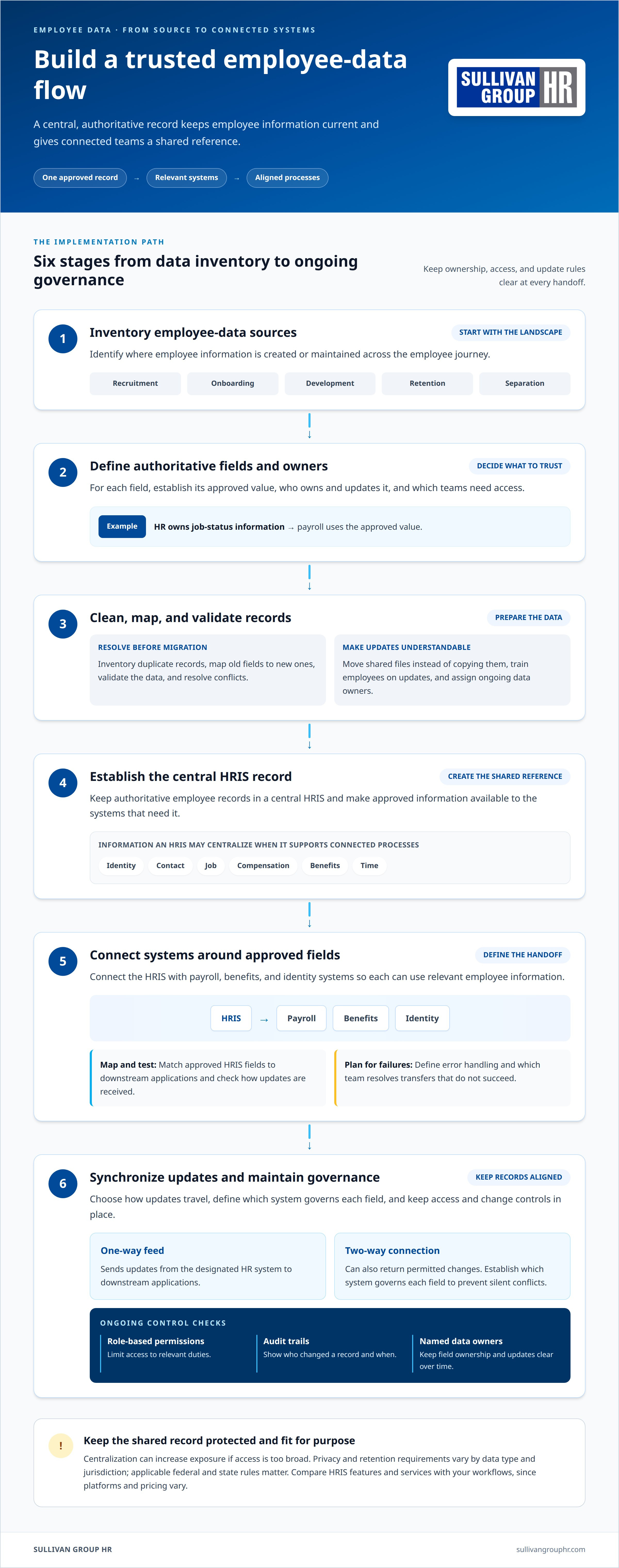
Data governance defines who owns each field, who can update it, and how teams use it. For example, HR can own job-status information while payroll uses the approved value. In the United States, privacy and retention requirements vary by data type and jurisdiction, so applicable federal and state rules matter. Centralization can increase exposure if access is too broad. Set role-based permissions, limit access to relevant duties, and keep audit trails showing who changed a record and when.
SSoT Architecture and Purpose
An SSoT architecture keeps authoritative employee records in a central HRIS and makes approved information available to connected systems. Separate systems can still serve distinct purposes; a school, for example, may maintain student records separately from employee records. HRIS platforms vary in their employee-record, payroll, benefits, and integration features, so compare them with your workflows. Pricing also varies by platform and scope, so review which features and services are included.
Requirements for an Employee Data SSoT
Start by identifying employee-data sources across recruitment, onboarding, development, retention, and separation. Solutions such as Cateno help streamline entity onboarding workflows so organizations can capture reliable data right at the entry point. Then define which fields are authoritative, who owns them, and which teams need access. An HRIS may centralize identity, contact, job, compensation, benefits, and time information when those details support connected processes. For migration, inventory duplicate records, map old fields to new ones, validate the data, and resolve conflicts. Move shared files instead of copying them, train employees on updates, and assign ongoing data owners.
Benefits of consistent HR data
Accurate employee records help teams use consistent information across HR processes. Clear data management also makes it easier to spot gaps before they cause confusion.
Improving Data Quality and Consistency
Consistent HR data means employee details follow the same definitions and stay current wherever teams use them. For example, a job-status change should not appear differently across payroll, benefits, and time records. Mismatched details can force teams to reconcile incomplete records manually. A clear update process helps keep digital records accurate and makes relevant information easier to use.
Maintaining Master Data Consistency
Master data consistency means core information, such as employee identity and job details, stays aligned across the organization. One approved record can support multiple business processes without creating a new version each time. This matters when a status change affects payroll and benefits. Consistent values give each team a shared reference point instead of separate records that require manual comparison.
Templates bring structure to everyday data management. A standard template for each file type gives employees familiar fields and clarifies where information belongs. For example, using the same field names for department, job title, and employment status helps teams interpret records consistently. Templates also make missing details easier to spot during entry, review, or transfer. They support consistency, but teams still need clear ownership and a reliable update process.
Consistent records can also reduce repetitive work. If benefits, document, access, and time-tracking processes receive incomplete employee details, staff may have to reconcile them manually. With accurate shared information, connected processes can use the same approved values, and some updates can flow automatically. This lets teams focus more on exceptions and decisions. Keeping the record accurate at its source is essential: an incorrect shared value can spread just as easily as a correct one.
Integrating HR data into an aggregated system
An integrated HR system connects employee information with the other tools that use it. A sound integration design clarifies where updates begin and which departments receive them.
Connecting HR Data Systems
System integration connects an HRIS with payroll, benefits, and identity systems so each can use relevant employee information. For example, a job-status change recorded in HR may trigger related work in connected systems. The integration should define shared fields, ownership, and what happens when information fails to transfer. Implementation costs depend on scope, data cleanup, migration, configuration, and the number and type of connections involved.
API Integrations with Downstream Systems
An application programming interface, or API, lets separate systems exchange defined data. A team can map approved HRIS fields to downstream payroll or benefits applications, then test how each system receives updates. API design should also specify error handling and which team resolves failed transfers. Connectors, including HelloID integrations where suitable, can support system connections; map required data and workflows to the connector’s role.
System Integration and Synchronization
Synchronization keeps connected systems aligned when an employee record changes. A one-way feed sends updates from the designated HR system to downstream applications; a two-way connection can also return permitted changes. The design must establish which system governs each field, so a payroll adjustment does not silently conflict with HR data. Clear workflows help departments collaborate, resolve errors, and keep employee documents and records aligned.
HR Systems as Employee Data Records
An HRIS can serve as the employee system of record when the organization designates it as the authoritative source for employee identity data. Some organizations use separate systems of record for different groups or needs, such as a student information system alongside HR records. Choose the system based on which information it owns and which connected processes rely on it. This gives each department a clear reference point for action.
Benefits of a single source of truth
A central employee data platform can do more than align records. It gives teams a shared basis for finding reliable information, resolving exceptions, and making decisions without repeatedly tracing details across separate files. Its value lies in what the organization can do with dependable information, not simply in storing it in one place.
Consider a manager preparing for a staffing discussion. If job status and time records are difficult to verify, the conversation can stall while teams search for current information. A trusted source reduces that verification work and helps employees find the records they need. Less time spent searching leaves more time for decisions based on accurate workforce details.
Keeping employee information in multiple places can create avoidable work and costs. Teams may need to reconcile conflicting records, correct repeated errors, or maintain systems that duplicate the same information. A shared source makes it possible to correct a connected record at its origin and distribute the approved update. This can simplify routine work, though connected systems still need careful management.
Timely, connected records can support practical actions throughout the employee lifecycle. Keeping employee records current can help teams manage payroll accurately. An HRIS can also compare clock-in data with time records from other tools and flag discrepancies for review. These examples show how a data platform can help teams identify issues earlier instead of relying only on periodic manual checks. For teams looking to turn connected records into forward-looking insights, platforms such as heartsy™ bring organizational data together into predictive analytics.
Reliable employee information also gives leaders a stronger basis for workforce decisions. A department reviewing staffing needs can work from shared job and status details, while benefits teams can use relevant records to support administration. Integrate information thoughtfully, define ownership, and decide which records guide each action. To connect better HR data practices with benefits processes, explore HR data support.
Sullivan Group HR: Employee Benefits Management
Sullivan Group HR supports organizations with Employee Benefits Management and human capital management. When benefits administration relies on employee records spread across systems, aligning benefits work with broader HR processes can create a clearer workflow.
Sullivan Group HR’s HCM services address employee data, benefits, and payroll administration. Organizations seeking support with benefits processes can consider this approach alongside Payroll Outsourcing or Payroll Administration, depending on which work they need managed. Clear ownership of employee information remains essential so each connected process uses the appropriate current record.
If you’re ready to discuss employee benefits management for your organization, contact Sullivan Group HR.
Make employee data work for your next decision
A single source of truth for employee data is most useful when it supports clear ownership and practical decisions. As your organization grows or processes change, revisit which employee records guide each workflow and who is responsible for keeping them current. Ongoing attention helps keep your data practices connected to the way people work.
When HR operations need additional support, Sullivan Group HR offers HCM, Payroll Outsourcing, and Payroll Administration. These services can help when employee data processes span HR and payroll responsibilities or your team wants support managing that work.
Choose a next step that fits your organization’s needs. Contact Sullivan Group HR to discuss how its HR support may fit your employee data and payroll processes. A thoughtful approach can help your team move forward with greater clarity.
Frequently Asked Questions
How can you avoid common SSoT pitfalls?
Avoid common SSoT pitfalls by assigning an owner to each data area and preventing unofficial copies from becoming working records. For example, if a manager keeps a spreadsheet of job changes, define how approved changes enter the authoritative system. Train employees on the update process, review transfer errors, and adjust workflows as organizational needs change. Clear responsibility helps prevent conflicting records from quietly returning.
What is SSoT?
SSoT stands for single source of truth: the designated authoritative source for a particular set of information. It doesn’t mean every department must use one system for every type of data. For example, a university may use one system for employee records and another for student records. The key is to make clear which source governs each information domain.
What does a single source of truth for employee data mean?
A single source of truth for employee data is an agreed authoritative record for information such as identity or job details. Other tools may display or use that information without becoming its authority. For instance, a benefits application can use an employee’s status while the designated HR record remains the reference for that field. This distinction helps teams resolve conflicting values.
How do you keep employee data accurate and up to date?
Keep employee data accurate by linking updates to relevant events, such as a role change or departure, and routing them to the systems that depend on them. Use validation rules to catch incomplete or inconsistent entries before they spread. Give employees a clear way to report changes to personal details, and assign an owner to resolve exceptions. Review failed transfers and correct the underlying record.


