

An executive pay plan should connect compensation to business priorities, measurable performance, and clear governance. Compensation strategy consulting can help organizations review current pay, market and peer groups, performance goals, and incentive design before stakeholders approve the plan and employees learn how it works. The goal is to balance immediate needs with long-term priorities and adapt as the business changes.
Organizations need executive pay that attracts and retains leaders without rewarding the wrong outcomes or creating confusion. A well-designed plan gives decision-makers a shared framework for explaining what the organization rewards and why.
This article explains what executive compensation planning involves, how to align a pay philosophy with business goals, which incentive features to consider, and how to manage stakeholder approval and employee communication. It also outlines how to assess the support your organization needs from a consulting partner.
Key Takeaways
- Review existing pay, market and peer comparisons, performance goals, and incentive design before seeking stakeholder approval.
- Benchmark executive rewards against relevant organizations in the same industry and region, then weigh that context against your business needs.
- Set a compensation philosophy that connects pay decisions with business strategy, workforce needs, and organizational culture.
- Document who approves the plan and how its principles and decisions will be explained to employees.
- Choose a consulting partner whose approach fits your governance needs, and consider how HCM and payroll administration can support day-to-day execution.
What Does an Executive Compensation Plan & Strategy Entail?
An executive compensation strategy connects salary and incentives to business priorities, leadership responsibilities, and measurable outcomes. The plan should motivate talent without rewarding performance that conflicts with the organization’s long-term interests.
Incentive and Sales Compensation Planning
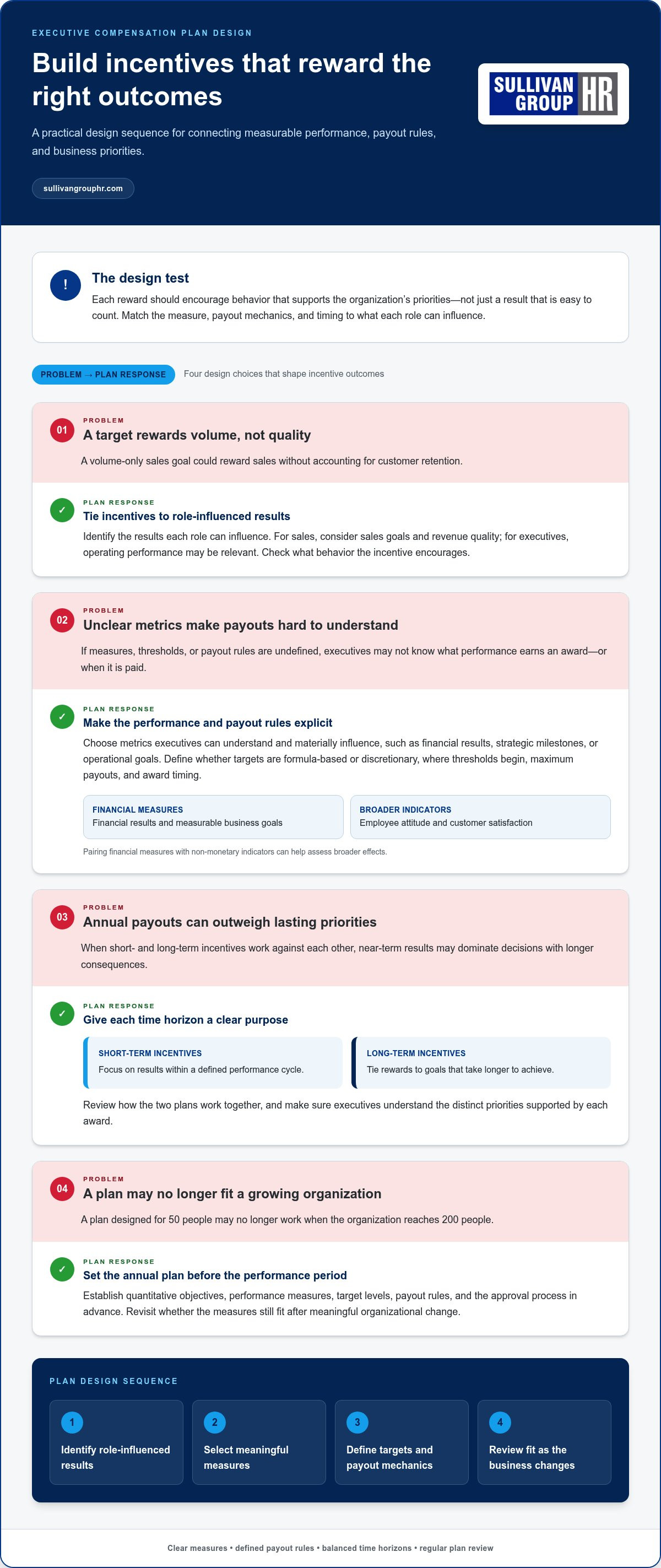
Start by identifying the results each role can influence. An executive plan might reward operating performance, while sales compensation may tie payouts to sales goals and revenue quality. Check what behavior each incentive encourages: a volume-only target, for example, could reward sales without accounting for customer retention. Compensation strategy consulting can help assess plan details, market and peer groups, and how incentives fit the organization’s direction.
Plan Metrics and Payout Design
Choose metrics executives can understand and materially influence, such as financial results, strategic milestones, or operational goals. Define whether targets are formula-based or discretionary, where thresholds begin, what maximum payouts apply, and when awards are paid. These choices determine the strength and timing of incentives. Pair financial measures with non-monetary indicators, such as employee attitude and customer satisfaction, to assess broader effects.
Short- and Long-Term Incentive Plans
Short-term incentives typically focus on results within a defined performance cycle; long-term incentives tie rewards to goals that take longer to achieve. Consider how the two work together so annual payouts do not dominate decisions with lasting consequences. A plan review should weigh immediate and long-term needs, since pay programs can influence behavior and produce unintended outcomes. Executives should understand how each award supports distinct priorities.
Annual Incentive Plan Development
Build an annual incentive plan around quantitative objectives that can be updated as the business grows. Set the performance measures, target levels, payout rules, and approval process before the performance period begins. Revisit whether the measures still fit after meaningful organizational change: an incentive plan designed for 50 people may no longer work when the organization reaches 200 people. Employee attitude and customer satisfaction can help show whether incentives support healthy outcomes.
How do compensation strategies differ by company size and industry? Organization size affects plan complexity, while industry and peer groups shape relevant market comparisons and performance measures. A growing business may need to revisit its objectives and plan administration as its structure changes.
What federal and state laws affect compensation strategy in the United States? The Equal Pay Act and Fair Labor Standards Act (FLSA) are relevant to pay and salary status. State and local pay transparency laws may also affect how organizations communicate compensation.
How do companies develop a compensation strategy step by step? Review current pay and peer groups, connect goals to business priorities, select metrics and incentive mechanics, then seek stakeholder signoff and communicate the plan. Reassess the design as the organization changes.
What are the risks of hiring a compensation strategy consultant? A plan can miss the mark if its data, assumptions, or incentive design do not fit the organization. Set clear objectives, examine the rationale behind recommendations, and define approval responsibilities.
How can companies measure the results of compensation strategy consulting? Compare actual performance with the plan’s objectives, considering employee attitude and customer satisfaction alongside financial measures. Review whether payouts encourage intended behaviors and support business priorities.
Nonprofit executive pay also requires attention to tax rules. According to the Internal Revenue Service, a disqualified person who receives an excess benefit from an excess benefit transaction is liable for payment of a section 4958(a)(1) excise tax equal to 25 percent of the excess benefit.
What Is a Compensation Consultant?
A compensation consultant helps organizations compare pay practices, structure salary ranges, and assess rewards against business needs. For executive roles, this work can clarify how pay decisions relate to responsibilities, performance, and market context.
Salary and Rewards Market Benchmarking
Benchmarking starts with comparable jobs, not titles alone. A consultant matches responsibilities, decision authority, experience, industry, and region before comparing salary and rewards. The U.S. Bureau of Labor Statistics describes compensation specialists comparing pay with organizations in the same industry and region. That context helps leaders interpret market data rather than treat one survey figure as a universal target.
Review the survey’s job definitions, participant mix, and data date. Then compare total rewards, including incentives and benefits, alongside base salary. For example, two roles with similar salaries may have different incentive opportunities. A transparent comparison explains those differences and shows which rewards support recruitment and retention. Organizations can also account for coverage as part of the overall package, including workers’ compensation insurance.
Salary Structure and Market Analysis
Market analysis turns comparisons into a usable salary structure. Consultants can group roles by job value, establish pay ranges, and examine where employee salaries fall within those ranges. A structure gives managers a consistent reference for hiring, promotions, and pay reviews. It can also reveal compression, where newer hires approach the pay of experienced employees in comparable roles.
Ask how the analysis accounts for location, role scope, and data quality. A national survey may not reflect a regional labor market, while a broad job match may hide differences in responsibilities. Consultants should explain the comparison group and how they translated its findings into ranges. That rationale makes salary decisions easier to review and communicate than an unexplained market midpoint.
Executive Compensation Benchmarking
Executive benchmarking requires careful peer selection because organization size, industry, growth stage, and leadership scope affect comparisons. A consultant can assess salary, annual incentives, and long-term rewards separately, then show how each contributes to total compensation. This helps the board see whether a proposed package reflects the executive’s role and the organization’s priorities.
Review the rationale, not just the market ranking. A peer group selected for similar operations may differ in scale or business complexity, changing the meaning of the comparison. Consultants can present alternative peer groups and explain their impact on the analysis. This gives stakeholders a clearer basis for decisions and supports consistent governance when executive pay is discussed.
Define the decision before reviewing data: setting a salary range, evaluating an executive package, or improving internal consistency. Then ask for a clear explanation of job matches, survey sources, peer selection, and how findings lead to recommendations. The consultant’s analysis should give leaders evidence they can apply, while approval authority remains with the organization.
Aligning compensation philosophy with business and leadership goals
A compensation philosophy sets the principles behind pay decisions, from market positioning to approval authority. It helps leaders connect compensation programs with business goals, workforce needs, and organizational culture.
Leadership and Compensation Philosophy
Start with the outcomes the organization needs from its leaders. A business focused on sustainable growth might reward progress toward strategic milestones, while one prioritizing customer experience could include service outcomes. The philosophy should explain how base pay, incentives, and recognition support those priorities. Market information can inform decisions, but the organization’s business and human capital strategies should shape the final plan.
Make the principles practical. State how the organization competes for talent, how leadership performance affects incentives, and who makes pay decisions. These rules help managers apply a shared approach across teams. They also let leaders explain why a particular reward supports the organization’s mission rather than simply matching a market reference.
Total Rewards Strategy Alignment
Total rewards can include base pay, incentives, benefits, recognition, development, and career opportunities. A coherent strategy shows how these elements work together to attract and retain the talent the organization needs. For example, if leadership goals include building specialist capability, development and career opportunities can complement salary and incentive programs.
Review each reward against its intended workforce outcome. Benefits may address employee needs, while variable pay can emphasize defined performance goals. The organization should also assess whether the full package fits its culture and operating strategy. A written framework helps leaders make consistent choices instead of shifting priorities with each pay decision.
Translate the philosophy into visible practices. Set market positioning, review expectations, decision authority, and communication principles, then compare actual pay decisions with those standards. If leaders say they reward collaboration but incentives recognize only individual results, the program sends conflicting signals. Alignment means reward design and leadership behavior reinforce the same priorities.
Internal Pay Alignment and Equity
Internal alignment means comparing roles by responsibilities, skills, and contribution, then reviewing whether pay decisions reflect those distinctions. Consultants can examine salary structures and decision practices to identify inconsistencies, support pay equity reviews, and help organizations comply with applicable pay transparency laws. Clear criteria make compensation decisions easier to explain and review.
How do compensation consultants support pay equity and pay transparency compliance? They can review pay practices, role comparisons, salary structures, and communication processes to identify compensation-related risks and support compliance with applicable laws. The organization can then document its rationale and apply consistent criteria when making and explaining pay decisions.
Build transparency into the process, not just the final message. Define which factors guide salary decisions, who approves exceptions, and how employees receive explanations. For example, documenting how roles differ by scope or required skills gives managers a clear basis for discussing pay. Regularly comparing decisions with the compensation philosophy helps keep programs aligned as business goals and workforce needs evolve.
Stakeholder approval and employee communications
An executive compensation plan needs clear approval roles and a communication plan before implementation. Document its principles, market references, compensation mix, performance considerations, and decision responsibilities in a single governance framework.
Start with the stakeholders who shape or review executive pay. The board or compensation committee may assess the proposal, while executives and human resources teams provide operational context. Shareholders, regulators, proxy advisors, shareholder activists, and activist law firms may also scrutinize executive compensation. A documented rationale helps decision-makers explain how the plan supports organizational priorities.
Set approval steps before finalizing the plan. Identify who recommends changes, who reviews the evidence, and who can approve the final design. Record the rationale for each significant decision, including selected market references and performance considerations. Clear roles reduce confusion when a compensation plan changes or an exception needs review.
Communication starts with the compensation philosophy. Explain the principles behind pay decisions, including how the organization balances salary, incentives, benefits, and recognition. Connect those principles to business goals and performance expectations. If an incentive rewards a strategic objective, for example, employees should understand which outcomes count and how results affect payouts.
Prepare managers to discuss individual pay decisions consistently. Give them a short guide explaining the factors used, who makes the decision, and where employees can raise questions. A manager discussing a salary adjustment, for example, should explain the role criteria and review process rather than compare confidential details with another employee. Consistent explanations support transparency and engagement.
Implementation also requires practical training. Before a new plan takes effect, brief leaders and managers on eligibility, performance measures, payout timing, and answers to common questions. Give employees a plain-language summary and a way to seek clarification. This helps prevent teams from describing the same compensation plan in conflicting ways.
Total rewards communication should show how the parts fit together. Explain salary, incentive opportunities, benefits, and recognition as components of the overall employee offering. If benefits form part of the package, describe their role alongside pay without suggesting they replace salary or performance rewards. Use accessible examples that reflect actual plan terms.
Keep the sources behind the plan traceable. Store market references, internal analysis, approval records, and communication materials together. When leaders revisit the philosophy or adjust a program, they can compare the proposed change with the original rationale. This record also helps explain decisions to employees and stakeholders consistently.
After launch, gather employee questions and manager feedback, then review recurring confusion. If employees misunderstand how a performance measure affects an award, clarify the explanation and training materials. Treat communication as an ongoing part of plan administration, not a one-time announcement. Clear messages, prepared managers, and documented approvals help put the compensation philosophy into practice.
Choosing a boutique compensation consulting firm
A boutique firm may suit an organization seeking focused collaboration on a defined pay challenge, but the label alone does not establish quality. Assess the team’s executive compensation experience, analytical approach, and ability to explain recommendations. The right fit depends on your goals, internal capacity, and the decisions stakeholders need to make.
Begin with a written scope. Specify whether the work covers executive pay, salary benchmarking, incentive design, equity, compliance risks, or implementation. A review focused on executive incentives, for example, needs different expertise from an assessment of organization-wide salary practices. Clear scope helps you compare proposals based on the work itself, not broad promises.
Next, examine how the firm builds its analysis. Ask how it matches roles, selects market peers, interprets survey data, and accounts for differences in organization size or industry. A sound recommendation should explain its assumptions and show how evidence supports the proposed approach. That transparency helps leaders assess whether the conclusions fit their business.
Consider who will do the work. Find out who will lead the analysis, present findings, and respond to stakeholder questions. A boutique team may offer direct engagement with senior specialists, which can help when a board needs a clear explanation of pay practices. The key is to clarify responsibilities and communication channels from the start.
Review independence and governance support, too. Executive compensation decisions can face scrutiny from shareholders, regulators, proxy advisors, and activist groups. A consultant should help document the rationale, peer references, compensation mix, and approval roles. Ask how the firm presents competing options and risks rather than simply endorsing a preferred outcome.
Check whether recommendations can be put into practice. A polished report has limited value if managers cannot apply its salary structures or explain pay decisions. Look for practical deliverables, such as documented decision criteria, implementation steps, and manager guidance. If pay equity or transparency is a priority, assess whether the proposed review addresses internal consistency and communication practices.
Finally, compare the working relationship with your organization’s needs. A focused engagement may suit a specific executive plan, while broader change may require ongoing coordination across human resources and leadership. Agree on decision owners, review points, and how findings will be shared. These details help keep accountability within the organization.
Choose the firm that can connect sound analysis with usable decisions, candidly explain trade-offs, and support your governance process. If your compensation work also touches broader people practices, explore human resources consulting support.
Sullivan Group HR: HCM
Sullivan Group HR supports the workforce operations that follow compensation planning through HCM, payroll administration, and payroll outsourcing. Once pay decisions are approved, payroll processes help put them into practice. Its Applicant Tracking System can also support hiring workflows as organizations recruit talent.
Turn to Sullivan Group HR when your organization needs support managing connected workforce processes alongside compensation work. HCM provides a broader framework for coordinating human capital management, while payroll services focus on administering pay. These services support implementation and administration; they do not replace executive compensation governance or stakeholder approval.
Contact Sullivan Group HR to discuss your workforce management needs.
Turn Your Compensation Plan Into a Practical Next Step
A compensation plan creates value when its principles carry into everyday workforce decisions. Use your next planning cycle to identify which processes need attention, who will own them, and how leaders will review progress. That makes compensation strategy consulting part of ongoing management, not a one-time exercise.
Once executive pay decisions are set, connected workforce processes can support consistent administration. Sullivan Group HR offers HCM, Payroll Outsourcing, and Payroll Administration to help organizations manage key human capital and payroll tasks. Focus your next step on the operational needs that matter most to your organization.
To discuss how these offerings may fit your workforce priorities, contact Sullivan Group HR. A clear plan and dependable follow-through can help your organization move ahead with confidence.
Frequently Asked Questions
What Should You Look For In a Consultant?
Look for a consultant who can explain the analysis in plain language and connect it to your decision. Before engaging, define the outcome you need, such as reviewing executive pay or building salary ranges. Then assess the proposed work products, who will prepare them, and how assumptions will be documented. A useful recommendation makes its reasoning clear enough for leaders to evaluate and apply.
What does compensation strategy consulting include?
It can include an assessment of current pay practices, market comparisons, salary structures, incentive design, and implementation planning. The scope should match the decision at hand. An organization revising executive incentives, for example, may need a review of award terms and performance measures, while one addressing inconsistent job pay may need role analysis and salary structure recommendations.
How much do compensation strategy consultants charge in the United States?
Fees depend on the case and are provided after a quote request; scope, data needs, analysis depth, and implementation support affect the amount. A focused review of one pay issue differs from work involving several job groups, executive plans, or detailed analysis. Compare proposals by their defined deliverables and included work, not by the fee alone.
What factors affect compensation consulting fees and pricing models?
Pricing depends on project scope, the number and complexity of roles under review, data requirements, and the level of implementation support. Consultants may propose a fixed project fee, hourly billing, or an ongoing retainer. Each model allocates time and scope differently, so clarify how added work, revisions, and final deliverables are handled before approving an engagement.
How do compensation consultants benchmark salaries and benefits?
They match roles by actual duties, required skills, decision-making scope, industry, and labor market, then compare salary and benefits using relevant survey data. A job title alone can lead to a poor match. For a more useful comparison, separate base pay from incentives and benefits, review survey definitions, and note whether the data reflects the organization’s hiring market and workforce.
How should compensation strategy align with business goals and budget?
Start by identifying the workforce outcomes the organization can fund and needs most, such as retaining key talent or supporting a new business priority. Model different pay approaches against budget capacity, then assess their likely effects on hiring, retention, and performance. A phased change can help prioritize critical roles while keeping compensation decisions connected to operating plans.
How do employers compare compensation consulting firms and consultants?
Compare firms using the same project brief, decision criteria, and requested deliverables. Review how each explains data sources, role matching, assumptions, and recommendations. Consider whether the proposed team has relevant experience with your organization’s size, industry, and governance needs. A clear comparison helps distinguish tailored analysis from a generic report and shows how each approach supports your decision.


