

An employee assistance program (EAP) for a small business can connect employees with confidential assessments, short-term counseling, referrals, and follow-up support for personal or work-related challenges. Pricing may be based on each employee per month or a flat rate for limited services, so the right structure depends on the support your team needs. An EAP can make it easier for employees to seek help and give a small business another way to respond to workplace needs.
It’s understandable to weigh costs carefully when every benefit has to earn its place in a small-business budget. A program’s value depends not only on being available, but also on whether employees understand what it offers and how to access it. This guide explains common EAP services, pricing approaches, and potential benefits for small businesses. It also shows how employee support fits alongside the HR systems and services that help a business manage its workforce.
Key Takeaways
- Learn what EAP support can cover, from personal and work-related challenges to counseling, referrals, and follow-up.
- Understand how per-employee monthly pricing and flat-rate plans can fit different team sizes and service needs.
- Consider how remote employees can access support and how clear communication can help employees use an EAP.
- Assess potential business benefits alongside cost, including support for employee well-being and workplace challenges.
Counseling, work/life, and employer services
An employee assistance program (EAP) for a small business can give employees a clear route to support and help managers address workplace concerns. Services and access differ by plan, so define the needs it should meet before introducing it to employees.
Counseling and Mental Health Support
Personal concerns can affect concentration, attendance, and working relationships. An employee dealing with stress or grief, for example, may use an assessment to discuss next steps and referrals. Short-term counseling is different from ongoing care, so explain how employees can move from an initial conversation to further support when needed. Managers can also seek guidance on organizational challenges without asking employees to share private counseling details.
Financial Counseling and Planning
Financial strain can create pressure at home and at work. If a program includes financial counseling, employees may use it to discuss a budgeting concern or identify possible next steps. Make the scope clear: financial guidance is different from managing an employee’s finances or guaranteeing a particular outcome. Explaining the available support helps staff understand what kinds of concerns they can bring forward.
Comparing EAPs With Other Benefits
An EAP offers a work-based route to support, while mental health benefits are provided through a health plan. Telehealth describes remote access to care, not necessarily a particular type of benefit. These options can complement one another. For example, an employee might start with an EAP assessment and use a referral to explore continuing care. Explain how each route works so staff can choose an appropriate starting point.
Confidentiality and Employee Use
A small business can offer an EAP while shaping its privacy and employment practices around the program. Clearly explain who handles records, what participation information employers receive, and how employees access confidential support. Promote the service during onboarding and repeat the access steps in staff communications. To assess use and value, review aggregate utilization over time alongside workplace measures such as absenteeism, while accounting for other changes that could affect results.
What is an Employee Assistance Program (EAP)?
An employee assistance program (EAP) for a small business is a voluntary, work-based way to connect staff with support for personal or workplace concerns. An employee facing stress, for example, may begin with an assessment and discuss suitable next steps. The program’s service scope determines what support employees can access.
Remote employees can use the access methods included in their program, which may involve phone or video appointments, online resources, or messaging. These formats let staff start the process away from the workplace. A clear guide should explain how to begin, what information is needed, and how follow-up works. A well-designed employee assistance program (EAP) for a small business makes these steps easy to understand.
Digital therapy and messaging aren’t interchangeable. A platform might provide written wellness resources or a messaging channel, while counseling involves direct support. Referrals can help employees identify further services, and follow-up can clarify next steps. Explain the difference between short-term support and ongoing care so employees understand how each part of the program fits.
The EAP assessments, short-term counseling, referrals, and follow-up services described here are free and confidential for employees. A referral to additional care doesn’t mean those later services are free. State this distinction clearly and explain how employees can understand any separate costs before proceeding. This helps a small business describe the program’s scope without creating confusion about expenses.
Privacy requirements depend on the program’s structure, its records, and the organizations handling them. A small business should communicate what information is collected, who can access it, and how it is kept separate from routine personnel decisions. These details help employees make informed choices about using an employee assistance program (EAP) for a small business.
Organizations that actively promote their EAP services have seen utilization rates increase by 30%. Promoting available services can bring the program to employees’ attention.
EAP pricing and scalable plans
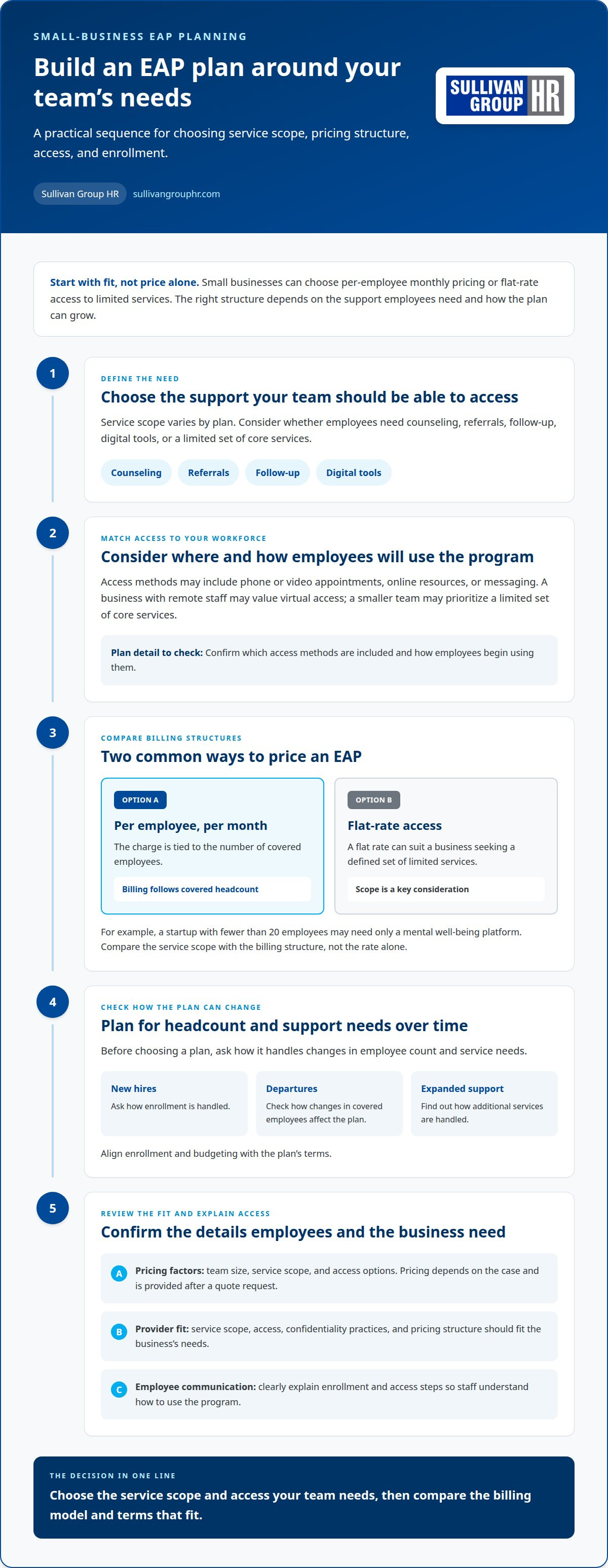
Small businesses can choose between per-employee monthly pricing and flat-rate access to limited EAP services. The best fit depends on the support the team needs and how the plan can grow.
Small-Business EAP Pricing
A per-employee-per-month model ties the charge to the number of covered employees. Flat-rate access can suit a business seeking a defined set of limited services. For example, a startup with fewer than 20 employees may need only a mental well-being platform. Compare the scope of support with the billing structure, not the rate alone.
Plan for changes in employee count and service needs. Ask how the plan handles new hires, departures, and expanded support, then align enrollment and budgeting with those terms. Pricing depends on the case and is provided after a quote request; factors include team size, service scope, and access options.
Factors That Affect EAP Pricing
The range of services shapes the plan: counseling, referrals, follow-up, and digital tools offer different levels of support. Employee count and access methods also matter. A business with remote staff, for instance, may value virtual access, while a smaller team may prioritize a limited set of core services.
The best EAP provider for a small business is one whose service scope, access, confidentiality practices, and pricing structure fit its needs. To set up a plan, define the support employees need, choose the service scope and billing model, then clearly communicate enrollment and access steps.
EAP Costs and Tax Deductibility
An EAP’s name alone doesn’t establish whether its cost is deductible for a U.S. employer. The expense’s tax classification and business records matter, so include the program’s purpose, fees, and payment details in the company’s tax records.
Build the expense into the business budget alongside other employee support costs. Keep plan documents and invoices together, and record changes when the service scope or employee coverage changes. These steps give the business a clear record of its EAP spending for tax preparation.
EAP benefits for small businesses
For a small business, an EAP can add practical support without requiring an in-house counseling team. Employees gain a route to help with personal or workplace challenges, while managers can seek guidance on organizational needs. The benefit extends beyond responding to a crisis: support may help employees address concerns before they disrupt daily work.
Retention is one reason to consider that support. Replacing an employee can cost a U.S. employer up to 33% of that employee’s annual salary. An EAP can give an employee facing stress or family difficulties a place to seek help, though it cannot guarantee someone will stay. Its value depends on fit, access, confidentiality, and whether employees know how to use it.
Workplace outcomes may also matter. Reported findings include a 27% drop in absenteeism among EAP users and an 8% increase in their work engagement. Employees using EAP services report a 20% improvement in overall job satisfaction. These figures describe reported outcomes, not a promised result for every business. Track relevant measures over time and consider other factors that may affect them.
Some estimates place employer returns at $3 to $10 for every dollar invested in an EAP. Productivity findings also show work productivity issues falling from 34% before participation to 5% afterward, with an 88% recovery rate for at-risk employees’ productivity issues. Treat these measures as context for evaluating potential value, not as a forecast for your team.
Many programs also help organizations prepare for workplace violence, trauma, and other emergency response situations. A practical first step is to map likely employee needs, explain the EAP’s access process, and review aggregate use alongside absenteeism and engagement. To connect employee support with broader employee benefits management, consider how the benefit fits your existing plans.
Sullivan Group HR: Employee Benefits Management
Sullivan Group HR helps small businesses organize employee benefits alongside essential HR and payroll processes. If you’re evaluating an EAP, Employee Benefits Management can help you place employee support within your broader benefits approach. HCM connects people-related processes, while Payroll Outsourcing and Payroll Administration support payroll operations.
Turn to Sullivan Group HR when you’re ready to coordinate benefits and core people systems as your business grows. The right structure can make responsibilities clearer for both the business and its employees.
Contact Sullivan Group HR to discuss your employee benefits and HR needs.
Make employee support part of your next step
Choosing an employee assistance program (EAP) for a small business is an opportunity to shape how your organization supports people day to day. Set a clear goal for the benefit, such as making support easier to access or strengthening your response to employee concerns. Then connect that goal to the broader systems that keep your people operations organized.
Sullivan Group HR offers HCM, Payroll Outsourcing, and Payroll Administration to support these business needs. These services can help you consider employee support alongside the processes that manage workforce information and pay. A coordinated approach can help you build a people-focused operation as your business develops.
Ready to explore the right next step for your organization? Contact Sullivan Group HR to discuss your HR and payroll needs. Thoughtful planning can help you move forward with greater clarity and confidence.
Frequently Asked Questions
Why Offer An EAP?
An EAP gives employees a defined way to seek support when personal challenges affect work. For example, an employee dealing with grief may not know where to begin; the program can provide an access point for support and referrals. Employers can also use aggregate program information to understand broad workplace needs while keeping individual counseling details private.
What is an employee assistance program (EAP), and what services does it provide?
An EAP is a voluntary, work-based program that helps employees address personal or work-related concerns. Services can include confidential assessments, short-term counseling, referrals, and follow-up. For a remote employee, the practical first step is to use the program’s stated access method, then discuss suitable support. The program’s scope explains which services are available and where referrals may lead.
How much does an EAP cost for a small business per employee?
There’s no single per-employee rate that applies to every small business. Pricing may be calculated monthly for each covered employee or offered as a flat rate for limited services. Cost depends on factors such as the number of employees covered, service scope, and access options. Compare the support included in a plan with your workforce’s needs when assessing its fit with your budget.
What are the best EAP providers for small businesses in the United States?
The best provider is one whose service scope, access options, confidentiality practices, and pricing structure fit the small business’s needs.


