
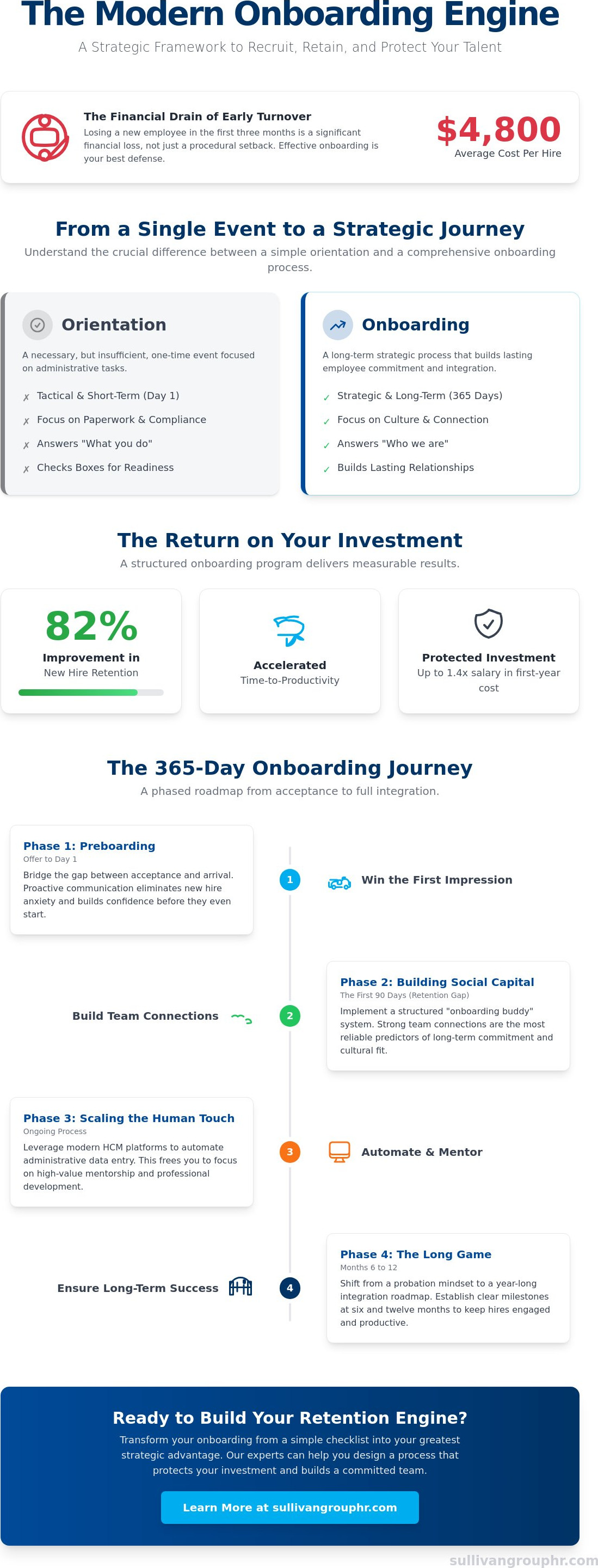
Is your current hiring process a bridge to a long-term career, or is it a barrier that sends top talent packing? With the average cost per hire now reaching up to $4,800, losing a new team member in their first three months isn't just a setback; it's a significant financial drain. You likely feel the weight of administrative burnout from manual data entry, yet you want every hire to feel like they truly belong. By mastering employee onboarding best practices, you can shield your business from turnover and transform a standard orientation into a strategic retention engine.
We know that managing modern HCM strategies feels like a constant balancing act between human connection and strict compliance. Whether you're rushing to meet the July 31, 2026 deadline for electronic I-9 updates or implementing new regional safety training, the pressure to get it right is immense. This guide provides a scalable framework to boost engagement scores and accelerate time-to-productivity. You'll discover how to move beyond the first week to create a year-long journey that supports, secures, and stabilizes your workforce for the long haul.
Key Takeaways
- Transform your perspective from orientation to integration. Modern employee onboarding best practices treat the first 365 days as a retention engine rather than a one-day paperwork session.
- Bridge the gap between the signed offer and day one through strategic preboarding. Proactive communication eliminates new hire anxiety and builds immediate confidence in your leadership.
- Prioritize social capital by implementing a structured "onboarding buddy" system. Strong team connections are the most reliable predictors of long-term employee commitment and cultural fit.
- Scale your human touch by leveraging modern HCM platforms like isolved. Automation handles the administrative data entry so you can focus on mentorship and professional development.
- Shift from a 90-day probation mindset to a year-long integration roadmap. Establishing clear milestones at six and twelve months keeps new hires engaged and shortens their time-to-productivity.
Beyond the Checklist: Why Onboarding is Your Greatest Retention Tool
Onboarding isn't a task to be checked off; it's a strategic bridge to your company's future. Too many business owners treat a new hire's first day like a trip to the DMV. They focus on tax forms, seat assignments, and handbook signatures. But if you want to keep the talent you worked so hard to find, you must look beyond the paperwork. True onboarding is a process of organizational socialization that turns a stranger into a high-performing team member. It's about building a connection that lasts long after the initial excitement of the job offer fades.
Our philosophy centers on a vital three-part framework: Recruit, Retain, and Protect. You've already done the hard work of recruiting the right person. Now, you must focus on retaining that talent through intentional engagement and protecting your organization from the risks of turnover and non-compliance. Why leave your investment to chance? The first 90 days represent a "Retention Gap." This is the critical window where new hires are most vulnerable to second thoughts. If they don't feel a sense of belonging or role clarity within this period, they'll likely start looking for the exit before they've even finished their first project.
Orientation vs. Onboarding: Knowing the Difference
Think of orientation as the foundation of a house. It's the concrete slab: necessary, but it isn't a home yet. Orientation is a tactical, one-time event. It's about giving out laptops, setting up email, and signing the employee handbook. While these steps are essential for day-one readiness, they don't inspire loyalty. Onboarding is the actual growth of the structure. It's a long-term journey of cultural immersion and performance building. It moves the conversation from "what you do" to "who we are." By following employee onboarding best practices, you transition from simply checking boxes to building a lasting relationship with your staff.
The ROI of Getting It Right in 2026
The financial stakes have never been higher for growing firms. Current data from SHRM shows the average cost per hire in 2026 is between $4,700 and $4,800. When you consider that the total first-year cost of a new employee can be up to 1.4 times their base salary, every departure is a major loss. A structured onboarding program can improve new hire retention by 82%, providing a massive return on investment. Beyond the dollars, there's the "Time-to-Productivity" metric. Effective employee onboarding best practices help hires contribute faster, reducing the time they spend in the "learning phase" and moving them into the "producing phase" with confidence. In an era where "ghosting" and early turnover are common, a professional onboarding strategy is your best defense against administrative burnout and lost revenue.
The Preboarding Phase: Winning the First Impression Before Day One
How do you ensure your new hire feels like a priority before they even walk through the door? Preboarding is the strategic answer. It covers the high-stakes window between the signed offer and the first morning. This isn't just about logistics; it's about emotional security. When you reach out early, you crush "Day One Anxiety" and prove that your organization is organized, welcoming, and ready. Part of this readiness involves setting clear expectations for digital security; sharing resources from HJS Technology Ltd on internet safety can help protect both the employee and the company from day one. Preboarding is the bridge between candidate experience and employee reality.
Equipment readiness is a primary sign of professional respect. Nothing says "we weren't expecting you" like a new hire sitting at a bare desk waiting for a laptop. Ensure all hardware, software logins, and security badges are ready 48 hours in advance. When you prioritize these details, you improve talent retention by showing that you value their time from the very first second. It sets a standard of excellence that the employee will strive to match.
The Welcome Kit: Digital and Physical Essentials
Your welcome kit should be a mix of the practical and the personal. Send digital copies of the employee handbook, culture guides, and team bios so they can browse at their own pace. A physical gift, or "swag," also goes a long way in building brand loyalty. Using a modern applicant tracking and onboarding system allows you to automate these deliveries without losing the human touch. It ensures every hire receives the same high-quality introduction to your team, regardless of which department they join.
Administrative Clearance: Handling the Compliance Burden
Don't let paperwork eat up the first day's excitement. Use a secure self-service portal to have new hires pre-fill I-9 and W-4 forms. This is where you "Protect" the business. By following employee onboarding best practices, you ensure that all HR risk management protocols are met before the start date. This includes verifying the current I-9 version, valid through 2027, and ensuring all remote verification steps are completed correctly. If you're feeling overwhelmed by these regulatory hurdles, our HR consulting experts can help you streamline the process. Clearing the administrative clutter early leaves room for what matters most: building a relationship that lasts.
Building Social Capital: The Power of Mentorship and Team Integration
What makes an employee stay through a difficult month? It's rarely just the salary. Social belonging is the single most important predictor of long-term commitment. When people feel connected to their peers, they're more resilient, more engaged, and far less likely to leave. Employee onboarding best practices must prioritize these human connections from the very first hour. Without a sense of community, even the most talented hire will feel like an outsider looking in.
Leadership plays a critical role here through what we call the "Vision Handshake." In the first week, a senior leader should personally connect with the new hire to explain the company's "why." This isn't a speech; it's a conversation. It bridges the gap between daily tasks and the organization's broader purpose. For remote and hybrid teams, this integration requires even more intention. You can't rely on "watercooler moments" that don't exist. You must create digital spaces for social interaction to ensure no one feels isolated by their geography. Connection is the glue that holds a growing team together.
The Onboarding Buddy: More Than a Tour Guide
An onboarding buddy is a peer who helps a new hire navigate the "unwritten rules" of your office. Who do I ask about the coffee machine? How does the team usually handle lunch? These small questions can feel daunting to a newcomer. By assigning a buddy, you provide a safe space for these inquiries. A 30-day "buddy checklist" ensures consistent support and takes the immediate pressure off the direct manager. For structured templates, you can reference the University of Arizona's Onboarding Toolkit, which offers excellent supervisor resources for peer mentorship. This system turns a potentially lonely first month into a guided tour of your company's heart.
Cultural Immersion: Communicating Vision and Values
Values shouldn't just live on a poster in the breakroom. They need to be seen in action. Encourage "Departmental Speed Dating," where new hires spend fifteen minutes with different teams to understand how the whole business moves together. This builds a holistic view of the company and fosters cross-departmental empathy. This level of alignment is at the core of what is human capital management. It's the art of aligning individual talent with corporate goals to create a stable, high-performing culture. When you invest in social capital, you aren't just being "nice." You're building a fortress of retention around your most valuable assets.
Scaling the Human Touch: Leveraging HCM Platforms for Seamless Onboarding
Can your current process survive a hiring surge? Once your team grows beyond 20 employees, manual onboarding often turns into a chaotic scramble. You want to provide a warm welcome, but administrative burnout starts to win. This is where technology steps in to protect your time and your reputation. By leveraging a robust platform like isolved People Cloud, you can scale your employee onboarding best practices while maintaining the high-quality experience your new hires deserve.
The secret to a professional transition is the "Single Source of Truth." When data flows directly from the initial application into the permanent employee record, you eliminate the risk of manual entry errors. This unified approach ensures that information for payroll and benefits is accurate from day one. Managers benefit too; a dedicated Manager Dashboard provides a clear view of where each new hire stands in their journey. It creates a culture of accountability where no one is left wondering what comes next. If you're ready to modernize your approach, our HCM technology solutions can help you build a more resilient foundation.
Automated Workflows: Removing the Friction
Automation doesn't replace the human touch; it frees you to focus on it. Automated task lists ensure that critical steps, such as payroll administration outsourcing setup, are never missed. Electronic signatures and digital document storage provide immediate audit protection, keeping your business safe from regulatory headaches. An employee self-service portal further empowers new hires, allowing them to complete their own profiles and review company policies at their own pace. This independence builds confidence and sets a tone of professional autonomy from the start.
Unified Data: From Applicant Tracking to Benefits
The journey from candidate to colleague should be seamless. A unified platform allows data to move effortlessly from your Applicant Tracking System (ATS) into the employee record without a single keystroke of re-entry. This precision is vital when setting up benefits management solutions, where even a small typo can cause significant delays in coverage. Research indicates that unified HCM platforms can reduce administrative time by up to 40%, giving your HR team the freedom to act as coaches and allies rather than data clerks. Efficiency and expertise go hand-in-hand when you have the right tools in place.
The Long Game: Extending the Onboarding Journey to 365 Days
Why do so many businesses abandon their new hires after just three months? The traditional "90-day probation" is a myth that often leads to a talent cliff. By day 91, the novelty has worn off, and the real challenges of the role begin to surface. If your support vanishes now, you risk losing the very person you spent months recruiting. Employee onboarding best practices in 2026 require a full-year commitment to integration. This long-term approach ensures that your new hire doesn't just survive the first quarter but thrives for years to come.
A critical tool in this extended journey is the "Stay Interview." Unlike an exit interview, which identifies what went wrong after someone leaves, a stay interview asks what is going right while they're still here. It's a proactive conversation about their career goals, their pain points, and their sense of belonging. When you combine these conversations with modern workforce management solutions, you can track ongoing training and performance milestones with precision. This data helps you act as a coach and ally rather than just a supervisor.
Milestones for Success: Month 6 and Month 12
Your roadmap should include distinct milestones that celebrate growth. At the six-month mark, the focus shifts from "learning the role" to "owning the role." This is the time to encourage autonomy and seek their feedback on existing processes. By the one-year anniversary, they transition from a "new hire" to a "legacy employee." This is a moment for celebration and a deep dive into their long-term professional potential. These feedback loops don't just help the individual; they provide you with the insights needed to improve the process for the next hire you bring onto the team.
Measuring Onboarding Health: The Metrics That Matter
How do you know if your strategy is actually working? You must look at the numbers. Key KPIs include your one-year retention rate, time-to-productivity, and new hire Net Promoter Score (NPS). If you see a trend of early departures, don't ignore it. Use exit interview data to identify specific gaps in your onboarding process. Was the training insufficient? Did they feel a lack of social connection? Linking these metrics to your overall business growth creates a clear picture of organizational stability. When you treat onboarding as a 365-day engine, you aren't just filling seats. You're building a secure and motivated workforce that is ready to grow with you.
Secure Your Legacy with Strategic Integration
Are you ready to stop the revolving door of early turnover? True success in 2026 depends on your ability to move beyond the paperwork and embrace employee onboarding best practices that last a full year. By prioritizing preboarding logistics, building deep social capital, and leveraging unified technology, you create a culture where new hires don't just show up; they stay and contribute. This shift transforms your administrative burden into a competitive advantage that fuels long-term stability.
With over 25 years of regional expertise, we understand the specific nuances of your territory. As an authorized isolved HCM provider, we help you implement our "Recruit, Retain, and Protect" framework to stabilize your workforce and minimize risk. Our goal is to act as your coach and ally, ensuring your business remains compliant and your people remain engaged. Ready to automate your onboarding and protect your growth? Explore our HCM solutions.
Your team's potential is waiting to be unlocked. Let's build a retention engine that supports your vision, protects your investment, and secures your professional success.
Frequently Asked Questions
How long should the employee onboarding process actually last?
A strategic onboarding process should last a full year. While many businesses stop after a week, the first 365 days are critical for long-term retention. This extended timeline allows you to move beyond basic orientation and focus on deep cultural integration. By setting milestones at six and twelve months, you ensure that new hires feel supported as they transition from learning their roles to owning them.
What are the most common onboarding mistakes small businesses make?
The most frequent errors include focusing only on paperwork, failing to prepare equipment, and neglecting social connections. Many owners treat the first day as a bureaucratic hurdle rather than a welcome celebration. This lack of preparation creates "Day One Anxiety" and signals a lack of professional respect. If a laptop or security badge isn't ready when a hire arrives, you've already missed your first chance to build trust.
How can I onboard remote employees effectively in 2026?
Effective remote onboarding requires intentional digital connection and early logistics. Send all physical hardware and welcome kits at least three days before the start date. Use the DHS Alternative Procedure for remote I-9 verification via live video call to stay compliant. You must also create virtual social spaces to replace watercooler moments. This ensures your remote staff feels like a protected part of the team, regardless of their geography.
What documents are legally required during the onboarding process?
You must collect Form I-9, Form W-4, and any required state tax documents. In 2026, ensure you use the I-9 edition dated 01/20/25, which is valid through May 31, 2027. California employers have additional requirements, including providing annual Workplace Violence Prevention training under SB 553. You must also distribute the "Workplace Know Your Rights Act" notice to all new hires by February 1, 2026, to remain fully protected.
Is an onboarding buddy different from a mentor?
Yes, these roles serve different functions within employee onboarding best practices. A buddy is a peer who helps with immediate social integration and office "unwritten rules" during the first 30 days. A mentor is a long-term advisor focused on career trajectory and high-level professional development. Both are necessary to stabilize a new hire's experience. Using a buddy reduces the direct manager's burden while providing the hire with a safe space for casual questions.
How does an HCM platform like isolved improve the onboarding experience?
An HCM platform like isolved creates a "Single Source of Truth" by flowing data directly from applicant tracking into payroll. This automation eliminates manual entry errors and ensures that benefits enrollment is accurate from day one. Managers use the dashboard to track progress and maintain accountability across departments. This unified approach reduces administrative time by up to 40%, allowing your HR team to focus on mentorship rather than data entry.
Can I automate onboarding without making it feel impersonal?
Automation actually makes your process more personal by freeing up your time for human interaction. When technology handles the "heavy lifting" of tax forms and handbook signatures, you can spend your energy on vision-casting and team building. You aren't replacing the human touch; you're scaling it. Use automated workflows for the compliance burden so you can focus on the "Vision Handshake" that truly connects a hire to your mission.
What is the "Stay Interview" and when should I conduct it?
A stay interview is a proactive conversation designed to understand why an employee chooses to remain with your organization. You should conduct the first stay interview around the six-month mark. Unlike an exit interview, this happens while the employee is still engaged. It helps you identify potential pain points and professional aspirations early. This feedback loop is a vital tool for organizational security and long-term retention.


