
Did you know the EEOC secured a staggering $660 million from employers in 2025 alone? With retaliation claims now making up nearly half of all filings, the stakes for handling employee complaints effectively have never been higher. You've likely felt that familiar knot in your stomach when a staff member asks for a private word. Is it just a routine venting session, or are you looking at a formal grievance that could trigger a DOL audit? It's exhausting to manage a business while constantly looking over your shoulder at shifting regulations, such as the recent rescission of federal harassment guidance.
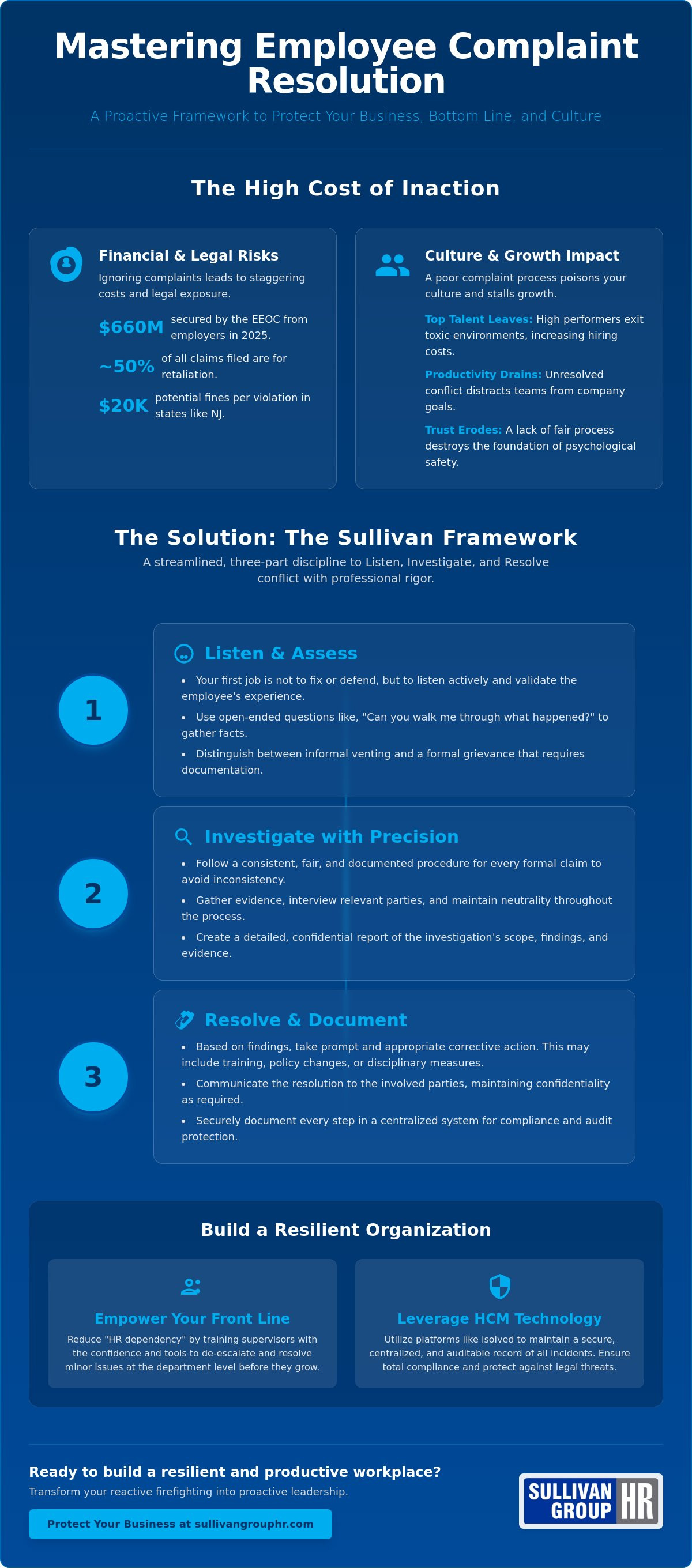
We understand that your goal isn't just to avoid a $20,000 fine or a costly lawsuit; it's to build a culture where people feel heard and productivity thrives. This guide promises to transform your approach from reactive firefighting to proactive leadership. You'll master a professional framework designed to protect your bottom line and your team's morale. We'll walk through the essential steps of listening, documenting, and resolving conflict with bulletproof precision. From navigating new AI disclosure laws to leveraging secure HCM technology, you're about to gain the clarity you need to lead with confidence.
Key Takeaways
- Recognize the "snowball effect" and learn how to implement proactive risk management strategies before minor gripes escalate into formal grievances.
- Adopt the Sullivan Framework; a streamlined, three-part discipline to Listen, Investigate, and Resolve workplace conflict with professional rigor.
- Understand the critical legal and procedural distinctions between informal verbal venting and formal documented claims to ensure you are handling employee complaints effectively.
- Reduce "HR dependency" by empowering your front-line supervisors with the confidence and tools to settle disputes at the department level.
- Leverage integrated HCM technology like isolved to maintain a secure, centralized record of all incidents for total compliance and audit protection.
The High Cost of Silence: Why You Must Handle Employee Complaints Proactively
Is the silence in your breakroom a sign of peace or a brewing storm? Many business owners mistake a lack of noise for a lack of problems. In reality, handling employee complaints effectively is less about stopping the noise and more about proactive risk management. It is about catching the spark before the whole building is on fire. When you treat every concern as a data point for improvement, you move from a reactive defensive posture to a position of leadership and strength.
Small issues have a way of growing when they are left in the dark. We call this the "snowball effect." A minor disagreement over scheduling or a perceived slight from a supervisor rarely stays minor. Without a clear path for resolution, these dissatisfactions gather momentum. They transform from a casual remark into a documented formal complaint that requires hours of administrative time to unravel. By the time a complaint reaches your desk as a legal threat, it has already cost you weeks of lost productivity and team cohesion.
Financial and Legal Repercussions of Mismanagement
Ignoring a complaint doesn't just hurt feelings; it hits your bank account. Poor resolution processes are a direct gateway to heightened HR risk management concerns. In 2025, the EEOC secured $660 million in recoveries from employers. Many of those cases started as simple internal issues that were simply ignored or mishandled. Beyond federal lawsuits, you face specific regional threats. In New Jersey, for instance, violating the Conscientious Employee Protection Act can result in fines up to $20,000 for repeat violations. Unresolved tension also leads to stress-related workers' compensation claims, which can cause your premiums to skyrocket for years. Consistent, documented resolution is your only real defense against these mounting costs.
The Impact on Organizational Growth and Culture
Your best people have options. In 2026, top talent prioritizes psychological safety and respect over almost everything else. If they see "toxic" micro-behaviors going unchecked, they won't stick around to see if things improve; they will simply leave. This creates a revolving door that drains your resources and stalls your growth. By prioritizing handling employee complaints effectively, you protect your culture and your bottom line simultaneously.
Effective leadership means setting a tone where communication is open and resolution is transparent. When employees see that their concerns are taken seriously, it builds a foundation of trust that automated systems can never replicate. A culture of listening acts as a protective shield. It ensures your team stays focused on the mission instead of the drama. Transparency doesn't mean you agree with every complaint, but it does mean you value the person enough to provide a fair, professional process.
The Sullivan Framework: A Three-Step Approach to Resolution
Why settle for vague advice when you can follow a proven system? Most managers fail at handling employee complaints effectively because they treat every issue as a unique crisis. This reactive approach is exhausting and leaves you vulnerable to inconsistencies. Instead, you need a repeatable discipline that works for a five-person startup or a multi-state enterprise. We've developed a punchy, three-part framework designed for speed and clarity: Listen, Investigate, and Resolve. This process isn't just about HR paperwork; it's a collaborative partnership that empowers leadership to lead while protecting the organization's integrity.
Step 1: Active Listening and Initial Assessment
When an employee enters your office, your first job isn't to fix the problem or defend the company. It's to listen. You must handle it in a fair and consistent manner from the very first second. Use open-ended questions like "Can you walk me through the timeline?" to uncover the root cause. This technique validates the employee's experience without you having to take a side. During this stage, keep your ears open for "red flag" keywords. Terms like "retaliation," "hostile environment," or "safety hazard" aren't just complaints; they are legal triggers that require immediate escalation to your HR partners.
Step 2: Diligent Investigation and Documentation
A thorough investigation shouldn't paralyze your daily business operations. The goal is to gather objective evidence quickly and quietly. Focus on what can be proven through emails, logs, or witness statements rather than relying on subjective hearsay. Consistency is your greatest defense here. Use a standard documentation template for every single inquiry to ensure no detail is missed. If you find your team is struggling to keep up with these administrative demands, our human resources consulting team can help you implement a streamlined documentation process that stands up to scrutiny.
Step 3: Decisive Resolution and Follow-Up
Resolution is about closure and clarity. Once the facts are in, communicate the outcome directly to all parties involved. You don't need everyone to agree with the decision, but they must understand that the process was fair and compliant. Implementing corrective actions should be swift and firm to prevent the issue from resurfacing. The final, often ignored, piece of this framework is the 30-day follow-up. A quick check-in one month later ensures the resolution is holding and that the workplace culture is actually healing. This simple step proves you value people over just checking boxes.
Informal Complaints vs. Formal Grievances: Knowing the Difference
Do you know when a casual comment in the hallway turns into a legal liability? Distinguishing between a "venting session" and a formal grievance is the first step in handling employee complaints effectively. Most workplace tension starts as an informal complaint. This is typically a verbal expression of dissatisfaction. It might be a gripe about a cold office temperature or a minor disagreement over a project deadline. These issues are often resolved with a quick conversation and a handshake. However, you must be ready for when the conversation shifts.
A formal grievance is a different animal. It is a documented claim that follows a specific company policy. Once a complaint is put in writing, it carries significant legal weight. In the eyes of the law, a formal grievance is a signal that your internal resolution process has been officially triggered. If the matter ever reaches litigation, your response to this document will be the primary evidence of your compliance. You cannot afford to treat a written grievance with the same casual tone as a hallway chat. It requires a structured, professional response that mirrors the rigor of the framework we discussed earlier.
When to Escalate to a Formal Process
Not every gripe needs a full-scale investigation, but knowing when to pivot is critical for your safety. You must move to a formal process immediately if the issue involves allegations of discrimination, harassment, or safety violations. These are non-negotiable triggers. You should also escalate when you notice a pattern of recurring informal complaints that remain unresolved. If an employee vents about the same supervisor three times in a month, the informal approach has failed. This is where human resources management services provide the necessary guardrails. They help you effectively deal with employee complaints by providing an objective, third-party perspective that minimizes emotional bias.
Compliance Standards for Employee Handbooks
Your employee handbook is your first line of defense. In 2026, a vague "open door policy" is no longer a sufficient shield against DOL audits. Your "Reporting Procedures" section must be explicit. It should define exactly who the employee should contact, how to submit a claim, and what the expected timeline for a response looks like. Anti-retaliation policies must be prominent and written in plain English. Since retaliation claims accounted for nearly half of all EEOC charges in 2024, your team must know that raising a concern is safe. Regular handbook audits are essential to stay ahead of regional changes, such as New Jersey's CEPA notice requirements, where failure to distribute rights annually can lead to fines of up to $10,000.
Empowering Your First Line: Training Managers for Front-Line Resolution
Are your supervisors abdicating their leadership role every time a conflict arises? Too often, managers fall into the trap of "HR dependency." They treat every minor disagreement as a hot potato, tossing it to human resources instead of resolving it on the floor. This habit creates a bottleneck that slows down your entire operation. By focusing on handling employee complaints effectively at the source, you empower your supervisors to lead with authority and empathy. This transition from policing behavior to coaching performance is a cornerstone of modern workforce management solutions. When your first-line leaders handle resolution, they build stronger relationships and stop the "snowball effect" we discussed earlier.
Essential Conflict Resolution Skills for Supervisors
Resolution starts with three core skills: De-escalate, Document, and Deliver. First, de-escalation is non-negotiable. A manager must remain the calmest person in the room, especially during heated workplace interactions. Second, they must understand their role in documenting even informal conversations. A simple timestamped note can be a lifesaver if an issue later escalates to a formal grievance. Third, they must deliver constructive feedback that addresses the root cause of the friction. This proactive approach prevents small gripes from becoming recurring headaches. Training your team in handling employee complaints effectively isn't just about compliance; it's about building a resilient culture where problems are solved, not ignored.
Setting Boundaries: When Managers Must Call HR
While we want managers to be independent, they must recognize their limits. There are clear triggers for escalation that require immediate HR intervention. These include any mention of harassment, threats of physical violence, or specific legal claims. You should provide your supervisors with a "cheat sheet" of compliant phrases and triggers. This ensures that policy enforcement remains consistent across every department, whether it's the warehouse or the front office. Consistency is your greatest defense against claims of favoritism or unfair treatment. If your leadership team needs more hands-on training to master these nuances, our human resources consulting team can provide the specialized coaching they need to succeed.
Leveraging HCM Technology for Seamless Complaint Management
Are you still managing workplace conflict through a scattered trail of emails and handwritten notes? In an era where the EEOC is securing record-breaking recoveries from employers, your documentation must be more than just present; it must be impenetrable. Handling employee complaints effectively in 2026 requires a digital infrastructure that moves as fast as your business. Integrated technology isn't just a convenience for your HR team. It is a vault for your company’s reputation. By moving away from physical files and siloed spreadsheets, you ensure that every concern is captured, tracked, and resolved with total transparency.
A centralized HCM platform provides a level of security that paper-based systems simply cannot match. For remote and hybrid teams, digital incident reporting is a lifeline. It provides a safe, accessible channel for employees to voice concerns regardless of their physical location. This accessibility fosters the "culture of listening" we discussed earlier, while giving leadership the data they need to stay ahead of trouble. You can use data analytics to identify "hot spots" or recurring friction in specific departments. If one branch shows a spike in informal gripes, you can intervene with targeted coaching before a formal grievance ever hits your desk.
The Role of isolved in Documentation and Compliance
We utilize isolved to provide a secure, centralized record for every interaction. This platform allows you to store investigation notes, witness statements, and objective evidence directly within the employee record. It eliminates the risk of lost files and ensures that only authorized personnel have access to sensitive data. Automation is another critical shield. By setting up automated follow-up reminders, you ensure that no complaint falls through the cracks during a busy week. This digital paper trail is your best defense during a DOL audit, proving that you followed your own policies with professional rigor.
Building a Future-Ready HR Infrastructure
Conflict doesn't happen in a vacuum. To understand the "why" behind a complaint, you need context. Integrating your time tracking and performance data with your resolution process allows you to see the full picture of an employee's lifecycle. This holistic approach is exactly what is human capital management is all about. It is the intersection of talent and technology. When you align your resolution framework with a powerful digital platform, you protect your culture and your bottom line simultaneously.
Sullivan Group HR is the partner you need to bridge the gap between complex tech and human connection. We bring decades of regional expertise and a "no-nonsense" approach to every partnership. Whether you are navigating new AI disclosure laws or simply trying to improve retention, we provide the advocacy and tools you deserve. Let’s build a workplace where resolution is a strength, not a burden. Reach out to us today to see how we can secure your organization’s future.
Secure Your Culture and Your Bottom Line
You now have the tools to move from reactive firefighting to proactive leadership. By applying the Sullivan Framework, you can ensure every concern is met with professional rigor and empathetic partnership. We've seen how distinguishing between informal gripes and formal grievances protects your legal standing, while empowering your managers keeps resolution at the front lines where it belongs. Handling employee complaints effectively is the ultimate shield for your organization's morale and financial health.
The path to a future-ready workplace is built on two pillars: expert guidance and industry-leading technology. Protect your business with professional HR consulting and the isolved HCM platform. We bring decades of experience in payroll, benefits, and workers’ compensation to your corner. Our team focuses on risk management and compliance so you can focus on what you do best. You've worked hard to build your legacy; let’s work together to protect it and ensure your team thrives in 2026 and beyond.
Frequently Asked Questions
What is the first step a manager should take when an employee complains?
The first step is to listen without interruption. You need to create a safe space where the employee feels heard and validated. Ask open-ended questions to gather initial facts, but avoid making promises or taking sides. This initial assessment sets the tone for the entire resolution process. By staying neutral and focused, you prevent the situation from escalating into a more complex dispute.
How long should an employer take to investigate a workplace complaint?
You should begin your investigation within 24 to 48 hours of receiving a complaint. While there is no universal legal deadline, most courts and regulatory bodies expect a prompt and thorough response. Aim to complete initial interviews within one week and reach a resolution within 30 days. Keeping a steady pace protects your culture from lingering tension and demonstrates your commitment to a fair workplace.
Can an employee remain anonymous when filing a complaint?
An employee can request anonymity, but you shouldn't promise absolute confidentiality. You must explain that you will protect their privacy as much as possible while still conducting a thorough investigation. Some details may naturally reveal the source of the complaint during witness interviews. Being honest about these limits builds trust and ensures you aren't making promises you can't keep during the resolution process.
What should I do if an employee complains about their direct supervisor?
You must provide an alternative reporting path that bypasses the supervisor in question. If a manager is the subject of the concern, the employee should go directly to HR or a higher level of leadership. This bypass procedure is a critical part of handling employee complaints effectively. It ensures the process remains objective and prevents any potential retaliation from the supervisor involved.
How do I document a verbal complaint without making it feel like a formal grievance?
Keep a timestamped manager’s log that focuses on objective facts rather than emotional interpretations. Record the date, time, and the specific concerns raised during the conversation. This keeps the record internal and informal while still providing a paper trail if the situation escalates later. It's about being prepared without prematurely triggering the administrative burden of a formal grievance procedure.
What are the legal risks of ignoring a "minor" employee complaint?
Ignoring a minor complaint can lead to expensive retaliation lawsuits and a toxic workplace culture. Small issues often snowball into formal grievances that catch the attention of the DOL or EEOC. Remember that retaliation claims made up nearly half of all EEOC charges in 2024. A proactive response is your best defense against the $20,000 fines that can stem from mishandled workplace disputes.
How can HR software help in resolving workplace conflicts?
HR software like isolved provides a secure, centralized vault for all documentation and evidence. It automates follow-up reminders so you don't miss critical deadlines and maintains a bulletproof audit trail for compliance. By leveraging technology, you can identify recurring hot spots in your organization. This data-driven approach is essential for handling employee complaints effectively across multiple departments or remote teams.
What is the difference between mediation and a formal investigation?
Mediation focuses on finding a collaborative compromise between two parties, while an investigation is a formal fact-finding mission. Mediation works best for interpersonal friction where no company policy was broken. An investigation is required when there are allegations of harassment, discrimination, or safety violations. Knowing which tool to use is the difference between a quick resolution and a legal headache.


