

An ADA accommodation request doesn’t need a form or formal letter to start the process. An applicant or employee can make a request verbally or another way, as long as they explain that they need a work-related change because of a medical condition. The ADA accommodation request process then moves into an informal, interactive discussion. The employer isn’t automatically required to provide the exact change requested.
It’s understandable to want clear steps, especially when sharing private medical information or asking for support during a job application. This guide explains what to include in a request, how to keep medical details focused and confidential, and what to expect as you and the employer discuss possible accommodations.
We’ll also cover how decisions, implementation, and follow-up work, including what to do if your needs change. Whether you’re applying for a job or already employed, understanding the process can help you communicate your needs and take part in finding a practical solution.
Key Takeaways
- Make your request clear by connecting the workplace change you need to a medical condition. You can communicate it verbally or in writing.
- Share only relevant medical information, and understand how documentation can help clarify your limitations and accommodation needs.
- Take part in a practical discussion about possible solutions, then confirm how an approved accommodation will be implemented and reviewed.
- If you’re applying for a job or visiting a workplace, explain what access or adjustment you need and who can help coordinate it.
Medical documentation and employee privacy
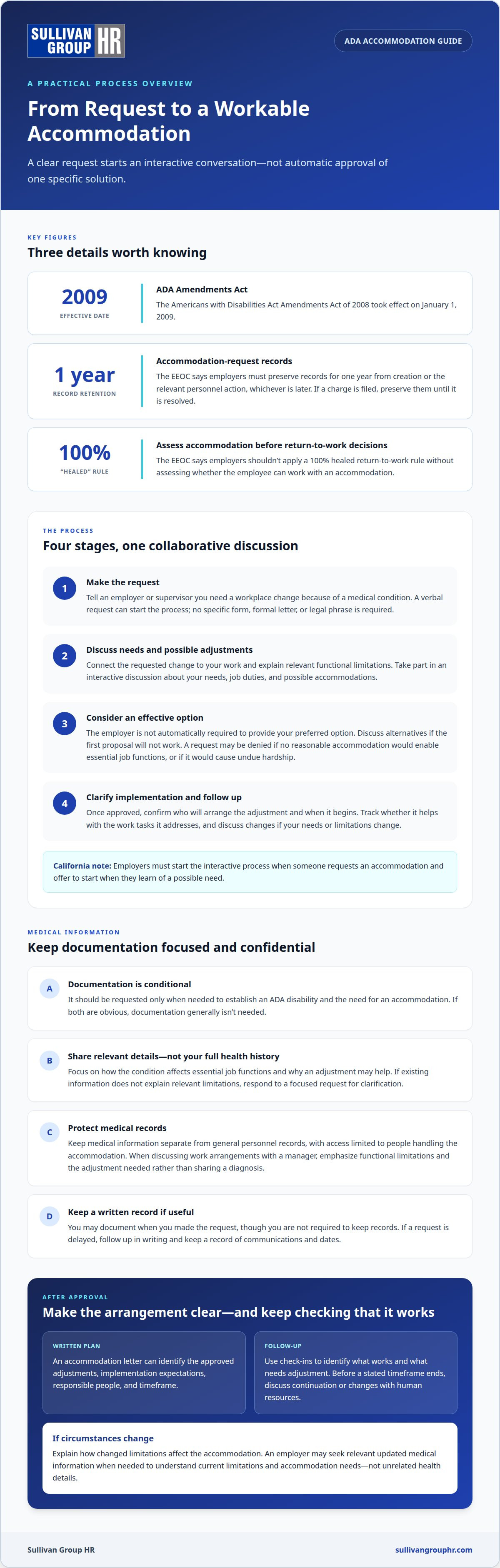
Keep medical details focused on the accommodation need, not your entire health history. The Americans with Disabilities Act Amendments Act of 2008 took effect on January 1, 2009, according to United States Congress.
An employer shouldn’t punish you for requesting an accommodation. If you experience adverse treatment, document what happened, when it occurred, and who was involved.
-
Request medical documentation
Documentation should be requested only when it’s needed to establish that you have an ADA disability and need an accommodation. If both are obvious, documentation generally isn’t needed. Any request should focus on relevant medical information, such as how a condition affects your ability to perform essential job functions and why an adjustment may help.
-
Protect confidential medical records
Keep medical information separate from general personnel records, with access limited to people handling the accommodation. A dedicated, confidential file helps protect privacy. When discussing work arrangements with a manager, focus on functional limitations and the accommodation needed rather than sharing a diagnosis. For example, describe a scheduling limitation without circulating unrelated treatment details.
- Provide only information that helps establish the disability and its connection to the requested change. An employer may first need to determine whether a medical condition meets the ADA definition of disability, then assess the accommodation need. If existing information doesn’t explain relevant limitations, respond to a focused request for clarification rather than sending your full medical history.
- Document your request in writing if you want a clear record of when you made it. You aren’t required to keep records, and an employer may record the request or ask you to use a form. The U.S. Equal Employment Opportunity Commission says employers must preserve accommodation-request records for one year from creation or the relevant personnel action, whichever is later. If a charge is filed, preserve them until it’s resolved.
When employers must initiate the interactive process
A clear request starts a conversation, not automatic approval. The next steps help identify workable adjustments and address delays or denials.
-
Start the accommodation request
Tell your employer or supervisor that you need a workplace change because of a medical condition. You don’t need to say “Americans with Disabilities Act” or use the phrase “reasonable accommodation.” A verbal request can start the process; no specific form or written request is required. Explain the adjustment you need and how it relates to your work, then answer relevant questions about your functional limitations.
-
Begin the interactive process
Take part in an interactive discussion about your needs, job duties, and possible accommodations. An accommodation request begins this collaborative process, but doesn’t require the employer to provide your preferred option. In California, employers must start the process when someone requests accommodation and offer to start when they learn of a possible need. The U.S. Equal Employment Opportunity Commission says employers shouldn’t apply a 100% healed return-to-work rule without assessing whether an employee can work with accommodation.
-
Respond and implement accommodations
Answer relevant questions and discuss alternatives if the first option won’t work. An employer may deny a request when no reasonable accommodation would enable you to perform essential job functions, or when the accommodation would cause undue hardship. If your request is delayed, follow up in writing and ask what information or discussion is still needed. Unnecessary processing delays can violate the ADA, so keep a record of communications and dates.
Once an option is approved, clarify who will arrange it and when it begins. If the employer proposes a different effective accommodation, discuss how it addresses your functional limitations. A temporary adjustment may help while the employer considers a longer-term solution.
Accommodation implementation and recertification
Once an accommodation is approved, clarify how it will work in your daily tasks. A written plan can connect the adjustment with its timeframe and the people responsible.
-
Implement the accommodation
Review the approval details with human resources and the people arranging the change. An accommodation letter should identify the approved adjustments, implementation expectations, responsible people, and timeframe. For example, if modified equipment is approved, confirm who will arrange it and how it supports your ability to perform essential duties. Raise practical barriers promptly so the plan can be adjusted.
-
Follow up and recertify
Track whether the accommodation helps with the work tasks it addresses. Before a stated timeframe ends, discuss continuation or changes with human resources. If your disability or functional limitations change, explain how that affects the accommodation. An employer may seek relevant updated medical information when needed to understand your current limitations and accommodation needs, rather than asking for unrelated health details.
- Use scheduled check-ins to identify what works and what needs adjustment. For example, a modified schedule may address treatment-related limitations, but changes in work duties could later require another discussion. Focus on the accommodation’s effectiveness and your ability to perform job functions. If the original option no longer works, suggest an alternative and explain the barrier it would address.
- Discuss any proposed change before relying on it. The employer may choose an effective reasonable accommodation that differs from your preference while taking that preference into account. If an option creates undue hardship, the employer should assess other effective possibilities. The ADA process is collaborative: share relevant updates, ask who will coordinate implementation, and record agreed changes and their timeframe.
Accommodation requests from job applicants and visitors
Accommodation needs can arise before hiring or when accessing a service. Identify the barrier and direct your request to the employer, agency, or venue responsible.
-
Identify eligible requesters
Explain who needs the adjustment and what barrier it addresses. Under Title I, qualified applicants and employees with disabilities may request workplace accommodations. A qualified applicant may need an adjustment to participate in the application process; an employee may need one to perform essential functions or access employment benefits. A representative may also share relevant information on someone’s behalf.
-
Address applicant accommodation requests
Contact the person arranging the interview and describe the adjustment you need to participate. For example, explain a limitation that affects access to the interview location or a hiring step. Federal interview applicants can work directly with the interview arranger. Requests are considered individually, so connect the change you’re requesting to the barrier rather than assuming one solution fits every applicant.
- For state or local government services, contact the agency responsible and describe the access barrier. For a public accommodation, direct the request to the relevant venue or service provider. Explain what change or assistance would let you participate, such as an accessible communication method. The details depend on the service and barrier, so identify the specific activity affected.
- Ask a representative to make the request if that’s easier, and keep a record of the communication. A request can be verbal or made through another communication method; it doesn’t have to use a particular form. Note the date, department or person contacted, limitation described, and response. For an employment request, relevant documentation may help explain the accommodation need.
- For employers, an Applicant Tracking System can help organize hiring workflows. Explore applicant tracking support to manage applicant information and process steps.
Sullivan Group HR
Sullivan Group HR supports employers managing connected workforce processes, from hiring workflows to payroll administration. When accommodation requests intersect with recruiting or broader personnel procedures, organized systems can help coordinate responsibilities and records.
Its HCM and Applicant Tracking System offerings support workforce and hiring processes, while Payroll Outsourcing and Payroll Administration address payroll operations. These services complement an employer’s internal accommodation procedures; they don’t replace individualized discussions or legal advice.
If you’re coordinating people-management processes alongside accommodation requests, contact Sullivan Group HR to discuss your organization’s needs.
Build a consistent path forward
Make the ADA accommodation request process a repeatable part of your people practices. Assign clear responsibility for receiving requests, coordinating discussions, protecting records, and following up on agreed changes. Then review how these steps connect with hiring and everyday workforce administration. Clear ownership helps employees and applicants know where to direct questions and gives managers a consistent way to respond.
Sullivan Group HR can support the broader systems around that work through HCM, Payroll Outsourcing, and Payroll Administration. These offerings help employers manage workforce and payroll operations; they don’t replace individualized accommodation decisions or legal advice. If you’re ready to strengthen the processes that support your team, contact Sullivan Group HR.
Thoughtful, practical processes give people room to contribute. Take the next step toward a workplace where responsibilities are clear and support can move forward.
Frequently Asked Questions
What is the ADA accommodation request process?
The ADA accommodation request process is a conversation to identify an effective change related to a disability. It can begin when an employee, qualified applicant, or representative explains a work-related need. The employer may ask focused questions, consider relevant documentation, and discuss options. The goal is to identify an accommodation that addresses the person’s limitations and supports participation or job performance.
How do you request an ADA workplace accommodation?
Tell your employer what work barrier you’re facing and what adjustment could help. For example, you might tell a supervisor that a medical condition affects your ability to complete a particular task or follow a standard schedule. You can make the request verbally or in writing. A written message can help you keep a clear record of what you requested and when.
What medical documentation can an employer request for an ADA accommodation?
An employer may request information needed to establish an ADA disability and explain why an accommodation is necessary. For example, documentation might describe relevant functional limitations and how they relate to the requested change. The request should stay focused on those issues, not unrelated medical history. When both the disability and accommodation need are obvious, an employer generally shouldn’t request supporting documentation.
How does the ADA interactive process work, and how long does it take?
The employee and employer exchange relevant information, discuss the work barrier, and consider effective accommodation options. The timeline depends on factors such as whether the need is clear, whether focused documentation is required, and how quickly participants can discuss alternatives. Keep communication moving by answering relevant questions and clarifying unresolved issues. Unnecessary delays in processing requests can violate the ADA.
What are examples of reasonable accommodations under the ADA?
Possible accommodations may involve changes to job duties, work schedules, or the workplace. Depending on the person’s needs and job, interpreters, readers, or other personal assistance may also help. Telework or a flexible worksite can be considered when it addresses the relevant limitation. Each option is assessed in context, including whether it enables the person to perform essential job functions.


