

HR consulting for startups helps founders build practical people systems without managing every HR task alone. Support may include compliance, recruitment, onboarding, employee handbooks, payroll, benefits administration, and workforce planning, tailored to the company’s needs.
As a startup grows, informal people practices become harder to manage consistently. Clear policies, reliable records, and a smoother employee experience give the business a stronger foundation and help founders stay focused on building the company.
This guide explains what HR consultants do, how fractional support works, and when outside expertise can help. It also covers how handbooks, onboarding, compliance processes, and employee benefits fit into a scalable approach to managing a growing team.
Key Takeaways
- Spot when inconsistent people decisions or unclear manager processes signal a need for more structured HR support.
- Consider fractional HR for targeted help with workforce tasks, without building a full in-house HR department.
- Build a stronger employee experience with clear policies, organized onboarding, and expectations that can grow with the team.
- Explore how HCM can bring key workforce processes together, with Sullivan Group HR as a resource for startups.
1. Employment compliance and legal risks
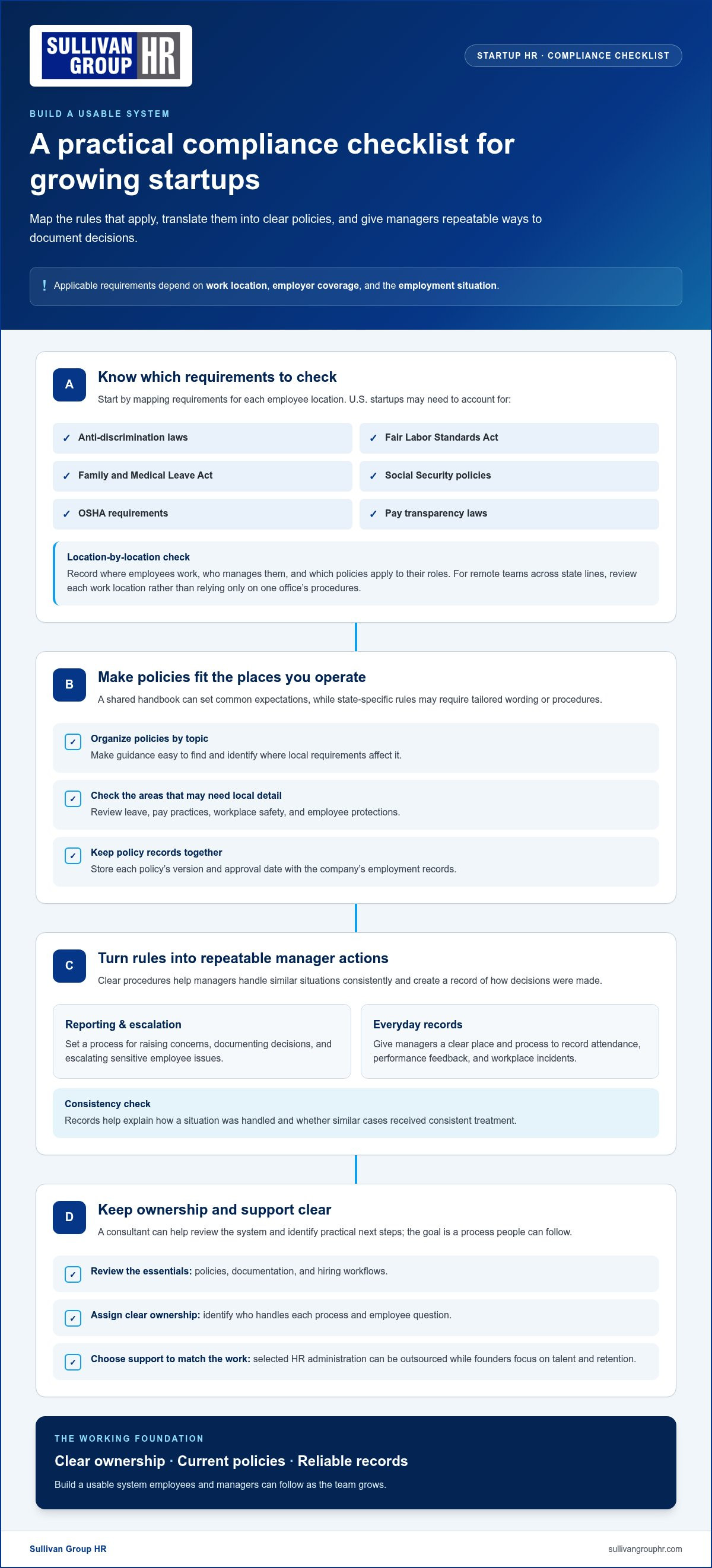
U.S. startups must follow the employment requirements that apply to their workers and workplaces. These may include anti-discrimination laws, the Fair Labor Standards Act, the Family and Medical Leave Act, Social Security policies, OSHA requirements, and pay transparency laws. Which rules apply depends on factors such as work location, employer coverage, and the employment situation.
Start by mapping compliance requirements for each employee location. Record where employees work, who manages them, and which policies apply to their roles. For example, a startup hiring remotely across state lines should review requirements for each work location instead of relying on the procedures used at one office. This can surface gaps before hiring and payroll administration become harder to coordinate.
Multi-state compliance also makes consistent policy drafting more demanding. A single handbook can set shared expectations, but state-specific rules may call for tailored language or procedures. Organize policies by topic and note where local requirements affect leave, pay practices, workplace safety, or employee protections. Keep each policy’s version and approval date with the company’s employment records.
Clear procedures turn broad rules into repeatable actions. Establish a process for reporting concerns, documenting decisions, and escalating sensitive employee issues. Managers should know where to record attendance, performance feedback, and workplace incidents. These records help explain how the company handled a situation and whether similar cases received consistent treatment.
HR support can connect compliance with strategic workforce planning. A consultant may review policies, documentation, and hiring workflows, then identify practical next steps. Outsourcing selected HR administration can help founders focus on talent and retention instead of scattered paperwork. The goal is a usable system with clear ownership, current policies, and records employees and managers can follow.
2. Fractional HR services for small businesses and startups
Fractional HR gives a startup access to experienced support without building a full in-house department. A consultant may work part-time, on a project, or on demand. For example, a founder might seek help creating a hiring process, addressing a performance concern, or organizing employee records. The right arrangement depends on the work requiring attention and how often it arises.
What HR services do startups typically need? Common needs include recruitment, onboarding, payroll, employee benefits administration, workplace policies, record-keeping, and performance management. A small-business HR consultant’s service description in item 9 from the U.S. Government Publishing Office includes HR audits, Form I-9 preparation and compliance, OSHA compliance and reporting, and EEO-1 report preparation. The mix can shift as a team grows and needs to retain talent.
How do startups choose an HR consultant? Match the consultant’s experience to your current needs, then compare the scope, working arrangement, and ability to support changing priorities. Ask for a clear outline of responsibilities and deliverables. Toolkits, templates, and self-service resources can help a small team manage repeatable tasks, while specialist guidance can address complex or sensitive work.
Prepaid support, on-demand help, and subscriptions offer different ways to organize HR work. A project arrangement can suit a defined task, while ongoing support can fit recurring payroll or policy administration. Full-service outsourcing can combine several functions; a startup should define who owns each task, approval, and employee question.
How can startups set up payroll, benefits, and employee records? Assign an owner to each process, collect employee information consistently, and establish routines for payroll updates, benefits administration, and secure record maintenance. The U.S. Bureau of Labor Statistics notes that HR specialists may administer benefits, process payroll, and handle related questions or problems.
For tailored HR consulting services, explore human resources consulting as one way to organize support around your startup’s needs.
3. Employee handbooks, policies, and onboarding
A useful handbook turns expectations into clear, repeatable guidance. Start with workplace conduct, communication, attendance, performance expectations, and how employees can raise concerns. For example, explain who receives a workplace complaint and how managers should document it. Make procedures easy to find, then review them when roles, work arrangements, or company practices change.
Onboarding helps each new employee understand the role and the people behind it. Before their start date, prepare responsibilities, required forms, system access, and a schedule for meeting teammates. During the first days, explain how work is assigned, where questions should go, and what success looks like. A consistent process helps managers welcome new hires without relying on memory.
Policies work best when they guide everyday decisions. Pair each expectation with a practical example, such as how employees request time away or report a safety concern. Give managers a shared process for communicating decisions and keeping relevant records. HR services can help organize these materials, while the startup’s HR department, however small, remains responsible for updates and distribution.
Employee relations call for a fair, documented approach. When a concern arises, record the employee’s account, relevant dates, and steps taken, then limit access to those records. For an investigation, define the question, speak with relevant people separately, and document findings without jumping to conclusions. Consistent guidance helps managers address conflict respectfully.
Termination guidance should clarify who makes decisions, how managers document performance concerns, and how employees receive next steps. Keep communications factual and consistent with established company procedures. Training and development need structure, too: set role-specific learning goals, schedule manager feedback, and revisit progress in performance discussions. These practices clarify expectations for employees and help leaders identify skills to develop.
4. Benefits of hiring HR consultants
An HR consultant can turn people decisions into a repeatable operating rhythm. Before hiring, they can help define role criteria, interview steps, and decision ownership. Managers then have a clearer handoff from recruiting to onboarding. This structure supports growth while helping leaders protect the culture they want employees to experience.
Growing companies can gain experienced support without immediately building a full HR department. A consultant can help leaders prioritize people projects, such as refining performance management or planning workforce needs. An outside perspective can reveal where daily operations depend too heavily on one founder. The team can then assign ownership and document processes before growth makes coordination harder.
Deliberate planning can also support talent acquisition and retention. Leaders can review why candidates decline offers, where new hires need more guidance, and which roles remain difficult to fill. HR consulting services can turn these observations into practical actions, such as improving role descriptions or structuring manager feedback. The goal is to connect employee experience with the company’s ability to attract and retain people.
Consultants can give managers a consistent framework for employee conversations. A manager addressing a performance concern can use shared expectations, documented feedback, and a defined follow-up process. This makes decisions easier to explain and helps employees understand what improvement looks like. HR guidance can also help founders distinguish an isolated problem from a pattern affecting morale or team coordination.
Make the value measurable. Choose a current people challenge, assign an owner, and track a useful indicator, such as open roles or recurring performance concerns. Review the result with managers and adjust the process if it isn’t helping. If your startup needs structured support for people operations, explore human resources consulting to discuss practical next steps.
Sullivan Group HR: HCM
Sullivan Group HR helps startups organize workforce administration through human capital management (HCM) and related services. When hiring grows or payroll tasks draw time away from business priorities, Payroll Outsourcing or Payroll Administration can provide operational support. An Applicant Tracking System can support the hiring process as the team adds talent.
These services offer a practical next step when founders need more structure around payroll and recruiting, without managing every task manually. The right starting point depends on which processes create the most friction. Identify the immediate need, such as coordinating payroll administration or managing applicants, then explore the support that fits.
To discuss how these services could support your startup, contact Sullivan Group HR or visit sullivangrouphr.com.
Build your next stage with a clear people plan
Growth brings new decisions: who owns each people process, how managers raise concerns, and when workflows need updating. Choose one pressure point slowing the team, then define a practical next step and assign someone to carry it forward. Clear ownership can make HR consulting for startups a focused part of your growth plan, rather than another broad project competing for attention.
As your needs change, revisit the plan with the people closest to the work. Founders can raise operational questions, managers can flag recurring employee issues, and employees can identify unclear expectations. Together, these perspectives help shape people practices that support the company’s direction and the team doing the work.
Sullivan Group HR can help you consider a practical path for your workforce needs. Contact Sullivan Group HR to start a conversation about your next step. With a clear priority and the right support, you can keep building with greater confidence.
Frequently Asked Questions
What do HR consultants do?
HR consultants help employers assess people practices and put workable processes in place. HR consulting for startups may include reviewing a hiring workflow, advising managers on a workplace concern, or planning staffing needs. The work can be strategic, hands-on, or both. A startup can define a specific project or seek ongoing guidance, depending on its internal experience and current priorities.
What are my options for getting help with HR management?
You can divide HR work among internal staff, engage a fractional consultant, outsource selected tasks, or use HR software for routine administration. For example, a founder might handle employee conversations in-house while outsourcing payroll processing and using software to organize records. These approaches can work together. Choose based on which tasks need expertise, recurring attention, or a more consistent workflow.
When should a small organization outsource its HR tasks?
Consider outsourcing when recurring HR administration takes time from core work or the team lacks experience with a specific task. For example, outside payroll support may free a business owner’s time if payroll updates regularly disrupt their schedule. Outsourcing can also suit a defined project. Keep internal ownership clear so employees know where to direct questions.
When should a startup hire an HR consultant?
Consider a consultant when leaders need focused expertise but aren’t ready to assign every HR responsibility internally. HR consulting for startups can provide targeted guidance when a new manager faces a first employee performance issue, for example. Consultants can also help founders plan people operations before rapid hiring makes informal decisions harder to coordinate.
How much does HR consulting cost for startups in the United States?
HR consulting costs depend on the work’s scope, complexity, duration, and delivery model. A defined handbook project differs from recurring support across payroll, employee relations, and workforce planning. The level of specialist involvement and the number of tasks included also affect the quote. Compare proposals by deliverables and responsibilities, not just by the label attached to an engagement.
What is the difference between an HR consultant, PEO, and HR software?
An HR consultant provides expertise and may advise on or help carry out specific people-related work. A professional employer organization, or PEO, typically offers a bundled HR service arrangement with shared responsibilities between the business and the PEO. HR software provides digital tools for tasks such as managing employee information or workflows. The best fit depends on whether you need advice, ongoing administration, or technology.


