

In the new hire orientation vs onboarding distinction, orientation is the first step: a focused introduction to the workplace, its policies, and its people. Onboarding is the broader, ongoing process that helps a new employee learn the role, build relationships, and understand what success looks like.
It’s easy to treat the two as interchangeable, especially when paperwork, introductions, and training all happen around the start date. But one welcome session cannot cover everything a person needs to settle in and contribute with confidence.
This guide explains what employee onboarding means, how it differs from orientation, and what each typically covers. You’ll see how training, performance expectations, and workplace culture fit into both, and where the first-day welcome ends and longer-term support begins.
Key Takeaways
- Use orientation to welcome new employees and introduce essential people, policies, and resources.
- Think beyond the first day: ongoing support helps employees build confidence and settle into their roles.
- Connect role-specific training with clear expectations so new hires understand what progress looks like.
- Make workplace culture tangible by explaining shared values, everyday norms, and how coworkers work together.
What Is the Difference Between Onboarding and Orientation?
The difference in new hire orientation vs onboarding is the difference between an initial introduction and ongoing support. Orientation introduces essential people and resources; onboarding helps employees apply what they learn and settle into their roles.
Coworker and Mentor Introductions
A useful introduction connects a new employee with coworkers, their manager, and a mentor or workplace buddy. These relationships give employees clear people to approach with questions about their role, team, and everyday resources.
Make each connection purposeful. A manager can explain priorities, while a coworker can show where shared tools and team information are kept. A mentor or buddy can explain informal norms and help the new hire find ways to contribute. For example, introduce the employee to the colleague who handles common workflow questions, then explain how to reach that person. This makes team integration part of onboarding instead of leaving introductions to chance.
Orientation and Onboarding Timelines
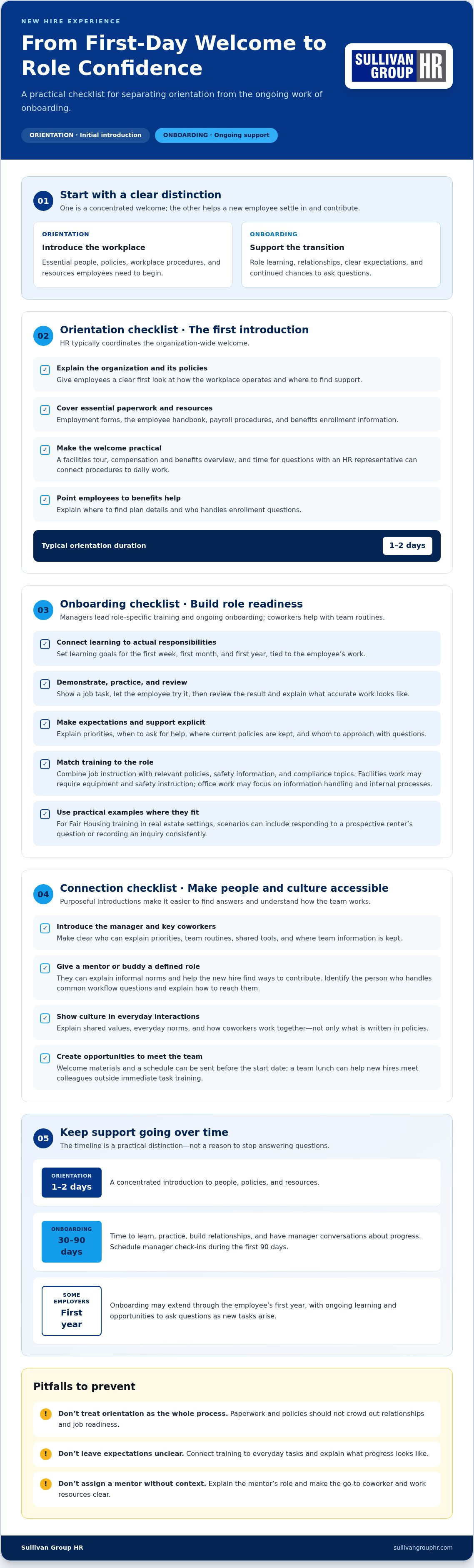
New hire orientation typically lasts one or two days, while onboarding commonly lasts 30-90 days. This timeline is a practical distinction in new hire orientation vs onboarding: orientation offers a concentrated introduction, and onboarding gives employees time to learn, practice, and seek support.
Some employers extend onboarding through an employee’s first year. A useful timeline allows for role-specific learning, introductions to key coworkers, and manager conversations about progress. One welcome event cannot replace continued opportunities to ask questions as new tasks arise.
Onboarding mistakes often start when paperwork and policies take priority over relationships and job readiness. Avoid treating orientation as the entire process, leaving expectations unclear, or assigning a mentor without explaining their role. Give the new employee a go-to coworker, explain which resources support their work, and schedule manager check-ins during the first 90 days. These steps connect training to everyday tasks and help managers identify questions that need attention.
Orientation activities and responsibilities
A well-planned orientation gives each employee a clear first look at the organization, its workplace, and key resources. Onboarding then turns that welcome into practical learning through training, follow-up, and connections with coworkers.
Orientation Activities and Purpose
Orientation is a structured introduction to the organization, its policies, and the resources employees need to begin work. Its purpose is to help each new employee understand how the workplace operates and where to find support.
For example, an orientation session can include a facilities tour, an overview of compensation and benefits, and time for questions with an HR representative. These activities connect workplace procedures with daily tasks, rather than leaving a new employee with a stack of documents and no context.
Orientation and Onboarding Responsibilities
HR typically coordinates organization-wide orientation, while managers lead role-specific training and ongoing onboarding. Coworkers can support the process by explaining team routines and pointing new hires to useful workplace resources.
Clear ownership matters. HR can organize paperwork and explain policies; the manager can outline responsibilities, demonstrate job tasks, and set priorities. For instance, a manager might schedule a first-week meeting to review the employee’s work schedule and identify training needs.
Paperwork is one part of orientation, not its whole purpose. New hires may complete employment forms, review the employee handbook, learn payroll procedures, and receive information about benefits enrollment. A benefits overview should explain where to find plan details and who handles enrollment questions. Organizing employee benefits management can support a clearer introduction to those resources.
Employee onboarding can also extend beyond the first-day meeting. Employers can send welcome materials and a schedule before the start date, then use monthly activities to introduce new hires to community points of interest. A team lunch, for example, can help an employee meet colleagues outside immediate task training. Pairing that welcoming activity with job training helps new hires build workplace connections while developing practical skills.
Role-specific training and performance expectations
Role-specific training turns general workplace knowledge into the skills an employee uses each day. A useful onboarding plan sets learning goals for the first week, first month, and first year, then connects each goal to actual responsibilities.
For example, a new customer service employee might first learn the organization’s systems, then practice handling common customer questions with a manager. The manager can explain what accurate work looks like, how priorities are set, and when to ask for help. Clear expectations make success easier to understand and progress easier to discuss.
A comprehensive training plan can combine job instruction with policies, safety information, and role-relevant compliance topics. The content should match the employee’s work. For example, a facilities role may require instruction on equipment and safety procedures, while an office role may focus on information handling and internal processes. Explain how employees can find current policies and whom to approach with questions.
In real estate settings, Fair Housing training can use practical scenarios, such as responding to a prospective renter’s question or recording an inquiry consistently. The goal is to help employees understand the organization’s policies and apply them in real interactions. Distinguish general company guidance from role-specific procedures so employees know what applies to their tasks.
- Job skills: Demonstrate a task, let the employee practice, then review the result.
- Policies: Explain relevant procedures with examples employees may encounter.
- Safety and compliance: Connect workplace guidance to the employee’s actual duties.
- Advancement: Identify skills that can open future training and development opportunities.
Orientation can introduce the organization’s values, but follow-up training helps employees apply those values in daily decisions. A manager can revisit learning goals during regular check-ins, recognize progress, and adjust instruction when tasks change. Ongoing support helps employees move from initial training to confident performance.
Company culture, values, and workplace norms
Orientation introduces the organization’s mission, values, and culture; onboarding shows employees how those ideas shape daily work. A mission statement becomes meaningful when a manager connects it to a real decision, such as how a team handles a customer concern or shares feedback.
Workplace norms are the practical habits that guide collaboration. Explain how employees communicate, share information, and ask for help. For example, show a new hire where project updates are recorded and whether urgent questions belong in a meeting or a direct message. These examples make expectations clear instead of leaving employees to guess.
Culture also takes shape through relationships. A manager can introduce the new employee to colleagues they’ll work with, then explain how each role contributes to a shared goal. During a team meeting, coworkers can describe how they coordinate handoffs or recognize completed work. These interactions help new employees see how the organization’s stated values appear in practice.
Paperwork matters, but it shouldn’t crowd out meaningful conversations. Pair policy documents with explanations of how a rule affects everyday decisions. For instance, after sharing communication guidelines, a manager can demonstrate how the team gives constructive feedback. This helps employees connect formal expectations with the working relationships they’re building.
Make culture an ongoing part of onboarding, not a one-time presentation. Managers can revisit team norms during check-ins, invite questions after a project handoff, and explain changes as team practices evolve. If the organization values collaboration, give a new employee a clear opportunity to contribute to a shared task and review how the team worked together.
- Mission: Connect the organization’s purpose to a real team decision.
- Values: Show how a value appears in feedback, service, or teamwork.
- Norms: Explain communication channels, meeting habits, and shared responsibilities.
Build a more consistent employee experience with support for your people processes.
Sullivan Group HR: HCM
Sullivan Group HR offers HCM to help businesses manage connected employee processes. When hiring, payroll, and employee information are difficult to coordinate, HCM can bring these functions together.
Turn to Sullivan Group HR for Payroll Outsourcing, Payroll Administration, or an Applicant Tracking System. These services support key parts of the employee journey, from recruiting and hiring through payroll administration. Choose the support that aligns with the processes your organization needs to manage.
To discuss how Sullivan Group HR can support your workforce processes, visit sullivangrouphr.com.
Build a stronger start for every new employee
Make the next step a practical review of your employee experience. Look at the handoffs between hiring, the first day, and the weeks that follow. Where do new employees still need to chase information, repeat questions, or guess who owns the next step? These points can reveal where clearer coordination would help.
Understanding how new hire orientation compares with onboarding can help your team decide which parts need a consistent process and which require manager involvement. Choose one improvement to put into practice, then gather feedback from new employees and the people supporting them. Their perspectives can show whether the process works in real conditions, not just on paper.
If you’re ready to strengthen the systems behind your employee experience, contact Sullivan Group HR to discuss your organization’s needs. A thoughtful, people-focused approach can help your team create a more confident start for every new hire.
Frequently Asked Questions
What Is Employee Onboarding?
Employee onboarding is the process of helping a new hire become capable and connected in their role. It can begin before the first workday, with a welcome email or schedule, and continue through job training and manager conversations. For example, a manager might review a new employee’s first assignment, answer questions, and adjust guidance as the employee takes on more responsibilities.
What Is Employee Orientation?
Employee orientation is a structured introduction to the organization and the practical information a new hire needs to get started. It often brings employees together to learn about workplace resources, policies, and services. For example, an orientation session can explain where staff find internal procedures and how to access workplace technology, giving new hires a useful reference after the session.
What Is Included in New Hire Onboarding?
New hire onboarding can include pre-start welcome materials, paperwork, role training, and regular conversations with a manager. It may also introduce the employee to coworkers through a staff announcement or planned one-on-one meetings. For example, sharing a first-week schedule before the start date shows a new hire when training, team introductions, and time for questions are planned.
What Are the Benefits of Onboarding?
Onboarding helps employees connect job expectations with the people and information they need to meet them. It gives managers opportunities to spot confusion early and tailor support to the work. For example, after an employee practices a new task, a manager can review the result and explain the next skill to develop, creating a clearer path toward independent work.
What Are the Benefits of Orientation?
Orientation gives new hires a shared starting point and helps them find essential information without relying on guesswork. Employees can hear consistent explanations of workplace resources and ask questions in a dedicated setting. For example, an HR representative can clarify where to direct a benefits question, while a technology introduction can show employees how to access the tools their team uses.
What Does Orientation Include?
Orientation may include a welcome, an overview of the organization’s mission and values, introductions, and time for new-hire paperwork. It can also cover benefits, compensation information, administrative services, and workplace policies. A facility tour can help employees locate shared spaces, while a question period gives them a chance to raise practical concerns before handling routine tasks.


