

What if a more competitive benefits package didn’t require a bigger budget? Offering competitive benefits on a budget starts with understanding what employees value, not adding every available option. Rising benefit expenses can make it difficult to balance employee needs with business capacity. A thoughtful strategy helps you make each benefit count.
This guide explains how to prioritize benefits based on employee needs and what your organization can sustain. You’ll compare employer-paid and employee-paid options, consider valuable offerings beyond larger employer contributions, and build a plan employees can understand and use. The goal isn’t to offer more for the sake of it. It’s to invest with purpose.
You’ll learn how to gather employee input, weigh costs and value, and communicate choices clearly. Coordinating benefits administration with payroll and employee records can also make the program easier to manage. With a practical plan and consistent administration, you can support your team while keeping your budget in view.
Key Takeaways
- Make benefits competitive by focusing on relevance, clarity, and sustainability rather than offering the most options.
- Before choosing benefits, map your budget and workforce priorities. Separate ongoing commitments from variable and one-time costs.
- Compare health-related options, voluntary benefits, retirement offerings, flexibility, and development by employee value, cost responsibility, and administrative effort.
- Offering competitive benefits on a budget starts with listening to employees and choosing options that fit their needs and your organization’s capacity.
- Clear communication and coordinated HR, benefits, and payroll administration can make your benefits mix easier to understand and manage.
What Makes Employee Benefits Competitive When the Budget Is Tight?
Competitive employee benefits are relevant, understandable, and sustainable offerings that support employees’ needs and fit an employer’s capacity. They aren’t a race to provide the longest list. Benefits are part of total compensation, but they differ from wages: pay is cash compensation for work, while benefits are non-wage offerings such as health coverage, retirement plans, paid time off, or workplace flexibility. For a useful overview of the concept of employee benefits, consider how these offerings complement pay and the broader work experience.
A strong package works alongside fair compensation, a respectful workplace, flexibility, and development opportunities. For example, schedule flexibility may matter to an employee balancing caregiving, while career development may be more relevant to someone building new skills. Neither replaces wages, and neither carries equal weight for everyone. The aim of offering competitive benefits on a budget is to choose a mix employees can use and the business can maintain.
How employees judge the value of a benefits package
Employees don’t judge a benefit by its name alone. They consider whether they’re eligible, how easily they can access it, whether it fits their circumstances, and whether they understand how it works. A benefit that’s difficult to use or poorly explained may feel less valuable, even when the employer invests in it.
Needs vary by life stage, role, and workforce circumstances. One employee may prioritize health-related support; another may value schedule flexibility or help planning for retirement. Gather input through surveys or listening sessions, then look for recurring themes. Don’t assume one popular option is a priority for everyone.
Why budget-conscious benefits planning supports workforce goals
Benefits can contribute to recruitment, retention, wellbeing, and trust, but they can’t guarantee those outcomes. Their impact depends on what employees need, how the offer compares with their expectations, and how consistently the organization delivers and explains it. A package that fits the workforce and is communicated clearly can show employees that their needs are taken seriously.
Budget-conscious planning also helps employers avoid commitments that seem appealing initially but are difficult to sustain. Set priorities, understand the responsibilities attached to each option, and review whether employees can access and understand what’s offered. For a deeper look at aligning benefit choices with workforce goals, explore strategic benefits management solutions. A clear strategy gives employers a practical way to balance employee value with business capacity.
How to Set a Benefits Budget Before Choosing Options
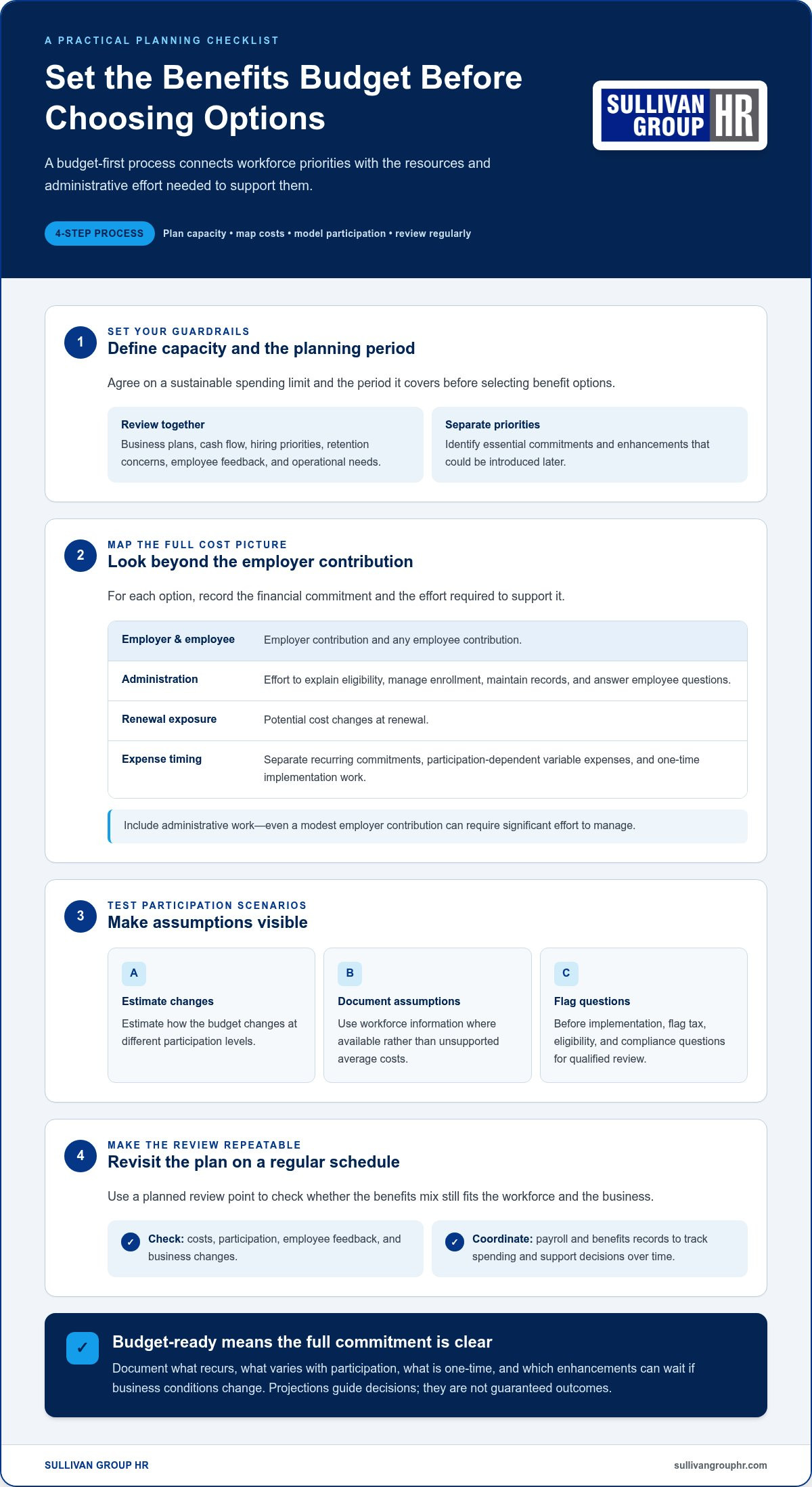
Set spending guardrails before selecting benefits. Choosing options without understanding business capacity can lead to a package that’s difficult to sustain. A budget-first process connects workforce priorities with the resources and administrative effort needed to support them.
- Define business capacity and the planning period. Leaders should agree on a sustainable spending limit and the period it covers. Review business plans, cash flow, hiring priorities, retention concerns, employee feedback, and operational needs together. Separate essential commitments from enhancements that could be introduced later.
- Map the full cost picture. For each option, record the employer contribution, any employee contribution, administrative effort, and potential renewal exposure. Separate recurring commitments from variable expenses, such as costs that depend on participation, and one-time implementation work. The Bureau of Labor Statistics provides information on employer costs for employee compensation, which can help frame benefits as part of the broader compensation picture.
- Model participation scenarios. Estimate how the budget would change at different participation levels, and document the assumptions behind each scenario. Use your workforce information where available rather than relying on unsupported average costs. Before implementation, flag tax, eligibility, and compliance questions for qualified review.
- Set a regular review point. Revisit costs, participation, employee feedback, and business changes on a planned schedule. Consistent payroll and benefits records can help you track spending and support decisions over time.
Compare the full commitment, not just the contribution
A benefit’s budget impact includes more than the amount an employer pays toward it. Consider the time needed to explain eligibility, manage enrollment, maintain records, and answer employee questions. Even an option with a modest employer contribution may require significant administrative work. Include that effort in your comparison so the plan is realistic for the people responsible for managing it.
Clear assumptions make the budget easier to adjust. Document how participation could affect costs, which expenses recur, and which enhancements can wait if business conditions change. This gives leaders a practical basis for decisions without treating projections as guaranteed outcomes.
Make the review process repeatable
Consistent records help connect benefit activity with payroll and employee information. Coordinated administration can organize records and make spending easier to review, while reducing the burden of managing separate processes. Payroll administration outsourcing can also support organized payroll operations.
Offering competitive benefits on a budget takes ongoing attention, not a one-time calculation. HR consulting and employee benefits management can help employers organize decisions alongside broader HR operations. Learn how coordinated HR and benefits support can fit into that process.
Which Lower-Cost Benefits Approaches Can Still Feel Valuable?
Lower-cost doesn’t mean no-cost, and an option that works well for one workforce may not suit another. Compare each benefit by employee relevance, employer commitment, administrative effort, and how clearly people can understand and use it. Cost responsibility and perceived value are different measures: an employee-paid option may limit the employer’s direct contribution, but it can still feel valuable if it meets a real need and is easy to access.
| Benefit category | Potential employee value | Cost responsibility | Administration needs |
|---|---|---|---|
| Health-related plan choices | Access to coverage suited to employees’ circumstances | May be shared between employer and employee, depending on plan design | Explain eligibility, enrollment, contributions, and plan terms clearly |
| Voluntary benefits | Choice of additional protections or services that match individual needs | Employees may pay some or all of the premium; employer costs can still include administration | Communicate options, enrollment steps, eligibility, and payroll deductions |
| Retirement offerings | Support for employees’ long-term financial goals | Employee contributions and any employer contribution depend on the arrangement | Coordinate enrollment, records, payroll deductions, and clear explanations |
| Flexibility | More control over schedules or how work is organized | Often involves limited direct benefit spending, but may require operational adjustments | Set consistent expectations and manage access fairly across roles |
| Learning and development | Opportunities to build skills and progress at work | May involve employer spending, employee time, or both | Connect opportunities to role needs, scheduling, and development goals |
Employer-funded and employee-paid benefits
An employer contribution can make a benefit more accessible, while voluntary options can expand employee choice without requiring the employer to fund the full premium. But employee-paid doesn’t mean no effort for the employer. Employers still need to communicate options, manage enrollment details, and coordinate relevant records and payroll deductions. Eligibility, participation, plan terms, and administration all shape practical value.
Don’t select a health or retirement plan based on cost alone. Compare how it fits workforce needs and business capacity, and have plan, tax, and eligibility details reviewed by qualified experts before implementation.
Non-cash benefits still need a plan
Schedule flexibility, timely manager recognition, learning opportunities, and supportive workplace practices can matter to employees without functioning like a new insurance benefit. They still require clear expectations, consistent access, and thoughtful management. Flexibility may be easier to apply in some roles than others, so define how it works across the organization. No non-cash option is a universal substitute for compensation or core coverage.
When offering competitive benefits on a budget, weigh potential value against employer commitment and operational effort. Look for a fit, not a guaranteed outcome. A benefit may support employee wellbeing or engagement, but its impact depends on workforce needs and how it’s delivered.
How to Choose and Communicate a Benefits Mix Employees Will Use
Good decisions require honest employee input and a clear view of what the organization can support. Use this checklist to test each option before committing:
- Employee input: Does feedback point to a recurring need?
- Business priorities: Does the option support current workforce or operational goals?
- Affordability: Can the organization sustain its share over time?
- Usability: Can eligible employees understand and access the benefit?
- Administration: Can the team manage enrollment, records, questions, and follow-up?
Gather employee input before finalizing choices
Use concise surveys and listening sessions to ask which benefits employees value, what’s difficult to access, and where they see unmet needs. Review responses alongside existing workforce information, looking for patterns across roles or groups without assuming everyone has the same priorities. Tell employees how their feedback will inform decisions, and limit access to sensitive information to those who need it.
Make the benefits offer easy to understand and use
Create a simple summary for each benefit that explains who’s eligible, when and how to enroll, what the employer provides, and what the employee is responsible for. State important limitations plainly instead of hiding them in dense material. Use consistent reminders during onboarding, enrollment, and relevant life or job changes so employees know what action to take and when.
Clear communication matters, but it can’t compensate for a confusing process. Coordinate benefit information with the records and payroll steps employees need to complete, and make current instructions easy to find.
Review results and adjust thoughtfully
Track participation, employee questions, feedback, and budget fit over time. Protect employee information by sharing only the details needed for review and focusing on overall patterns. If participation is low, first check whether people understand the offer and know how to enroll. This can help distinguish a communication gap from a benefit-design issue before you make changes.
Offering competitive benefits on a budget takes listening, clear guidance, and steady follow-through. Employee benefits management can help coordinate benefit processes with broader HR operations. Explore benefits management support as part of your organization’s approach.
Turn a Benefits Budget into a Sustainable People Strategy
A budget becomes a people strategy when it guides clear, repeatable decisions. Set business capacity, learn employee priorities, compare suitable options, explain your choices, and review how the plan is working. This sequence keeps benefits connected to workforce needs and business realities rather than treating enrollment as a once-a-year task.
Coordinate benefits with the rest of HR operations
Benefits administration involves more than enrollment. It also connects with payroll processes and employee records, so coordinated workflows can help keep information and responsibilities organized. Sullivan Group HR provides employee benefits management, HR consulting, and payroll administration to help employers organize these activities together.
Access to the isolved HCM platform can be part of a broader approach to organizing HR operations. An HCM platform may support connected workflows, but the organization still needs to define the right processes and responsibilities. For more on the role of HCM in business planning, read human capital management and business growth.
Create a benefits plan that can adapt over time
Set an annual review rhythm, with clear ownership for decisions, communication, and administration. A simple schedule can include a budget and priority review, an employee feedback check, and a review of participation and recurring questions. Clear ownership keeps important follow-up from getting lost between teams.
Revisit the mix when workforce needs shift, feedback reveals a pattern, or business capacity changes. A benefit that made sense under one set of circumstances may later need clearer communication or a different place in the plan. Keep a record of the assumptions behind decisions so future reviews can build on what the organization has learned.
Offering competitive benefits on a budget is an ongoing practice: set limits, listen, compare, communicate, and adjust. Coordinating HR, benefits, and payroll administration can support consistent processes while reducing the burden of managing separate tasks. The goal is a plan employees can understand and the organization can maintain.
If you’re ready to shape a practical benefits approach around your workforce and business priorities, talk with Sullivan Group HR about benefits management.
Build a Benefits Strategy You Can Sustain
Offering competitive benefits on a budget is about making deliberate choices, not trying to offer everything. Start with what your organization can sustain, use employee feedback to identify priorities, and compare each option by its value, cost responsibility, and administrative needs. Then explain the benefits clearly and review how well the mix works over time.
Good administration helps turn those choices into a consistent employee experience. Sullivan Group HR provides employee benefits management, HR consulting, and payroll administration, with access to isolved to support broader HR operations. Coordinating these areas can help employers organize benefits alongside payroll and employee records.
Your benefits strategy can evolve as your team and business needs change. Build a benefits approach that works for your people and your business with support from Sullivan Group HR. A thoughtful plan is a practical step toward supporting your people with confidence.
Frequently Asked Questions
How can a small business offer competitive benefits on a budget?
Start by setting a sustainable spending limit, then use employee feedback to prioritize benefits people can understand and use. Compare each option’s employer contribution, employee responsibility, participation assumptions, and administrative effort. A useful package doesn’t need to include every available benefit. Clear communication, consistent access, and a review process help a small business make thoughtful choices without committing to offerings it can’t maintain.
What benefits do employees value most besides health insurance?
Priorities differ by workforce, so ask employees rather than assuming one option matters to everyone. Retirement offerings, paid time off, schedule flexibility, learning opportunities, and recognition may be valuable to different people for different reasons. Consider how each fits employees’ roles and circumstances, and explain eligibility and access clearly. A benefit’s practical value depends not only on what it offers, but also on whether employees can use and understand it.
Are voluntary benefits a good option for employers with limited budgets?
Voluntary benefits may expand employee choice when employees pay some or all of the premium, but they aren’t automatically cost-free for employers. Communication, enrollment, payroll coordination, and recordkeeping still take effort. Before adding an option, consider whether it addresses a need employees have expressed, how participation may affect administration, and whether the terms are easy to explain. Review plan, tax, and eligibility details with qualified experts before implementation.
Can non-monetary benefits help attract and retain employees?
Non-monetary benefits, such as schedule flexibility, learning opportunities, and supportive management practices, may contribute to a positive employee experience. They don’t guarantee recruitment or retention results, and they aren’t a universal substitute for wages or core benefits. Make expectations clear and consider how access will work across different roles. Consistent, fair implementation matters: an option employees can’t realistically use may have limited practical value.
How should an employer decide how much to spend on employee benefits?
Set a spending limit based on business capacity and a defined planning period before selecting options. Map recurring employer commitments, variable expenses tied to participation, employee contributions, and one-time implementation work. Model different participation scenarios using your own assumptions, and document them. Include the administrative effort required to manage each option. Review costs alongside workforce priorities so the budget reflects both what the business can sustain and what employees need.
How often should a business review its employee benefits package?
Plan a regular review at least annually, and revisit the package sooner if business capacity, workforce needs, or employee feedback changes. Look at costs, participation, recurring employee questions, and whether people understand how to use each benefit. Low participation may point to a communication issue or a design mismatch, so investigate the reason before making changes. Assign clear owners for decisions, communication, and administration.
What should employers consider before changing their benefits offerings?
Consider employee needs, affordability over time, eligibility, participation, administrative workload, and how a change may affect current employees. Explain what’s changing, when it takes effect, who is affected, and what action employees need to take. Review relevant plan, tax, and eligibility details with qualified experts before implementation. Coordinate benefits information with payroll and employee records, and give employees a clear explanation of the updated offer.


