
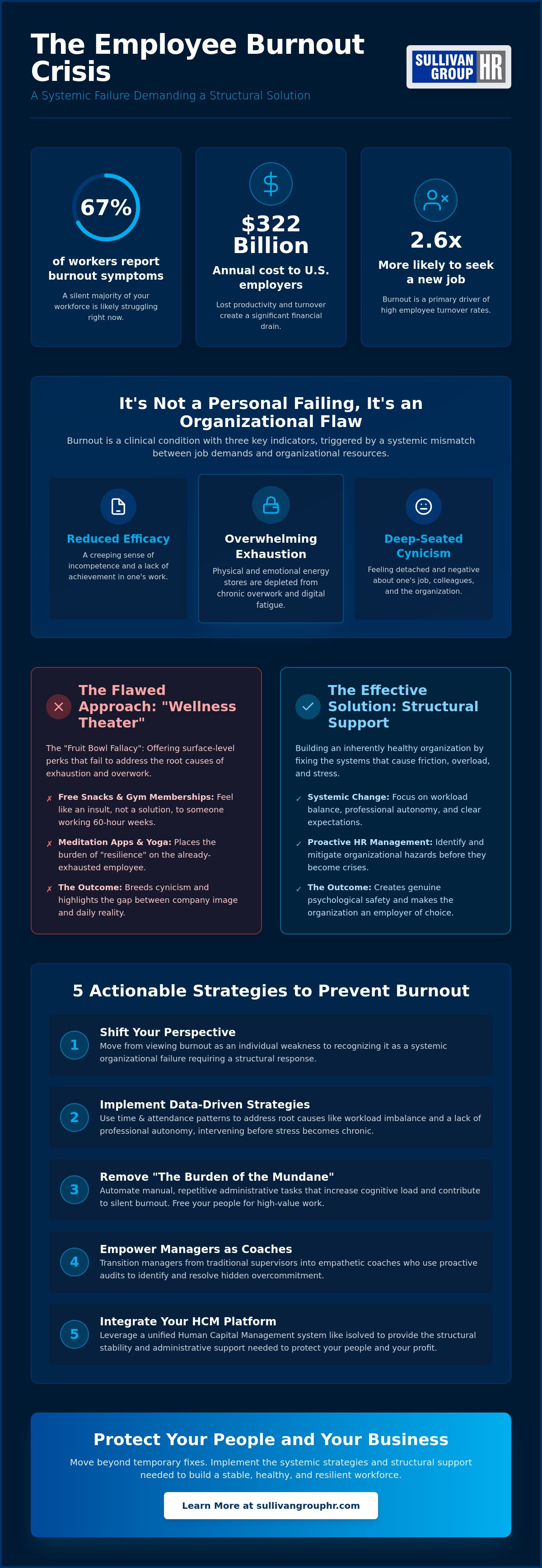
Did you know that 67% of your workforce is likely struggling with burnout symptoms at this very moment? In 2026, employee exhaustion isn't just a HR concern; it's a financial crisis costing U.S. employers an estimated $322 billion annually. You likely feel the weight of this through high turnover rates and managers who are stuck in a cycle of constant firefighting. It's frustrating to watch manual processes drain the energy out of your best people while you are trying to grow.
We believe your business deserves a stable, healthy workforce where people can thrive. You're looking for solutions that actually work, and we are here to provide the roadmap. This guide helps you move beyond surface-level wellness perks to implement systemic, HCM-driven preventing employee burnout strategies that protect your team’s mental health and your organization’s bottom line. We'll explore a 2026 structural framework for leaders that focuses on three pillars: regulatory compliance, administrative efficiency, and cultural resilience. From mandatory OSHA mental health training to reducing friction through human capital management, you'll gain the tools to become an employer of choice.
Key Takeaways
- Shift your perspective from viewing burnout as an individual weakness to recognizing it as a systemic organizational failure that requires a structural response.
- Discover how to implement data-driven preventing employee burnout strategies that address root causes like workload imbalance and a lack of professional autonomy.
- Identify and remove "the burden of the mundane" by automating the manual, repetitive tasks that increase cognitive load and contribute to silent burnout.
- Empower your managers to transition from traditional supervisors into empathetic coaches who use proactive audits to identify and resolve hidden overcommitment.
- Learn how an integrated HCM platform like isolved provides the structural stability and administrative support needed to protect your people and your profit.
Understanding Employee Burnout: The 2026 Landscape
Burnout is often mislabeled as a personal hurdle. In 2026, we recognize it as a systemic organizational failure. It happens when the workplace environment demands more than a human can sustainably give. To build effective preventing employee burnout strategies, leaders must first understand the clinical reality of the condition. For a deeper look at the history and clinical definitions, Understanding Occupational Burnout reveals it as a three-part signature: overwhelming exhaustion, deep-seated cynicism, and a sense of reduced professional efficacy.
The "Always-On" paradox of 2026 has fundamentally shifted these triggers. While digital connectivity promised freedom, it delivered a tether. Your team isn't just working hard; they are managing a constant stream of notifications that bypass traditional rest periods. This digital fatigue creates a state of perpetual alertness. When employees can't disconnect, their cognitive tanks never refill. This isn't a lack of discipline; it's a structural flaw in how we communicate.
The cost of inaction is staggering. Research indicates that 67% of workers currently report burnout symptoms. This isn't just a morale issue. It's a financial drain. Burnout costs U.S. employers approximately $322 billion annually due to lost productivity and turnover. Employees at their breaking point are 2.6 times more likely to seek a new job. Ignoring these signals invites high absenteeism and the rise of "quiet quitting" within your ranks. Stability, security, and support are the only ways forward.
The Evolution of Workplace Stress
The traditional 9-to-5 boundary has effectively dissolved. In 2026, work happens everywhere, leading to a loss of psychological safety as economic uncertainty lingers. Your team feels the pressure to be constantly available to prove their value. This leads to a dangerous erosion of personal time. In 2026, burnout is defined as a mismatch between job demands and organizational resources.
Spotting Early Warning Signs
Identifying burnout before it peaks is essential for preventing employee burnout strategies to take hold. Watch for behavioral shifts where high-engagement stars suddenly drop to minimal viable effort. Use your time and attendance patterns to flag chronic overwork rather than temporary spikes. While temporary stress is a sprint, chronic burnout is a treadmill that never stops. Recognizing the difference allows you to intervene with supportive coaching before a resignation letter hits your desk.
Why Perks Fail: Moving Toward Systemic Burnout Prevention
Why do so many wellness programs fail to move the needle? It's often because they suffer from what we call the "Fruit Bowl Fallacy." Many business owners hope that gym memberships, free snacks, or a meditation app will fix a team that is drowning in a toxic workload. These perks are nice, but they don't address why people are exhausted. When you offer a yoga class to someone working 60 hours a week, it doesn't feel like a gift. It feels like another item on their to-do list. This is why preventing employee burnout strategies must move beyond "wellness theater" and toward systemic change.
Wellness theater actually breeds cynicism and resentment. Employees see the massive gap between the "supportive" brand image and the daily reality of mismatched expectations. If workers lack control over their schedules or receive poor rewards for their effort, a beanbag chair in the breakroom won't help. We must shift the focus from asking individuals to be more resilient to building an organization that is inherently healthy. True leadership means protecting your team from the friction that wears them down.
The Limits of Individual Resilience
You cannot "yoga" your way out of a staffing shortage or a broken administrative process. Placing the burden of self-care on already exhausted employees is both unfair and ineffective. It suggests that if they just managed their stress better, the systemic issues would disappear. Instead, leaders should look toward proactive HR risk management. This involves identifying the organizational hazards that cause stress before they lead to a crisis. For those looking for Actionable Strategies to Prevent Burnout, the focus should always remain on the environment, not just the person.
The Power of Structural Support
True support is structural. It means having clear roles, manageable workloads, and fair compensation. These three pillars create a sense of security that no "perk" can match. When employees know that "the basics" like payroll, benefits, and compliance are handled perfectly, it removes a massive layer of background anxiety. This is where professional human resources management services become vital for growth. By outsourcing administrative friction, you free up your internal leaders to focus on people, not paperwork. At Sullivan Group HR, we help you build that foundation of stability so your team can finally breathe.
Strategies for Reducing Administrative Friction and Burnout
Have you ever considered how much energy your team wastes on broken processes? Burnout isn't always about the volume of work. Often, it's about the type of work. Manual, repetitive, and redundant tasks create what we call "The Burden of the Mundane." This administrative friction adds a heavy layer of cognitive load that slowly erodes employee morale. According to Gallup research on employee burnout, unfair treatment and unmanageable workloads are top drivers of exhaustion. Inefficient systems often feel like unfair treatment because they force talented people to waste their skills on data entry rather than meaningful work.
Manual Tasks vs. Strategic Focus
Do you want your managers leading people or chasing spreadsheets? Think about the difference between manual payroll tracking and a modern automated system. One requires constant vigilance and a high risk of error. The other runs quietly in the background. When you implement modern workforce management solutions, you aren't just buying software. You are buying back your team's mental bandwidth. This allows your top talent to focus on creativity and problem-solving rather than administrative noise. The ROI of reducing this friction is immediate: a healthier, more stable workforce.
The Role of Unified HCM Technology
Why does a single source of truth matter? Without it, departments end up working in silos. This leads to cross-departmental friction, blame, and data errors. A unified HCM platform ensures that everyone is looking at the same information at the same time. By using integrated applicant tracking and onboarding, you set healthy expectations from the first day. You show new hires that your organization is organized and supportive. Unified technology serves as a protective buffer against burnout by removing the technical hurdles that lead to daily frustration.
5 Actionable Strategies to Prevent Employee Burnout
How do you turn structural insights into a protective shield for your business? Implementing effective preventing employee burnout strategies requires a move from abstract ideas to concrete, daily actions. It's about building a framework that supports your team while securing your company's future. Here are five actionable steps to lead the way:
- Audit Workloads Regularly: Don't guess who is overextended. Use your HCM data to identify "hidden" overcommitment. Look for employees consistently hitting 50 plus hours or those who haven't taken a day off in months.
- Empower Managers with Training: Your managers are your frontline defense. Shift their role from traditional supervisors to empathetic coaches. Give them the skills to recognize early signs of fatigue before they lead to resignation.
- Optimize Benefits for Mental Health: Traditional health plans aren't enough in 2026. Incorporate benefits management solutions that prioritize psychological safety, counseling access, and stress reduction resources.
- Establish Clear Communication Protocols: End the expectation of 24/7 digital availability. Set firm boundaries on after-hours emails and notifications to allow your team to truly disconnect and recharge.
- Leverage Professional HR Consulting: Sometimes you're too close to the problem to see it. An outside perspective can identify cultural stressors and systemic friction points that internal teams might overlook.
Cultivating a Culture of Recovery
Stability begins with rest. To prevent chronic exhaustion, you must normalize time off from the C-suite down. When leaders don't take vacations, employees feel they shouldn't either. Encourage micro-breaks throughout the day to allow for cognitive recovery. Many successful firms in 2026 are also implementing "No-Meeting" days. This gives your team the space for deep, focused work without the constant interruption of video calls, reducing the mental drain of context switching.
Supporting the 'Middle Layer'
We cannot ignore that managers are at the highest risk for burnout in 2026, with research showing a 71% burnout rate among mid-level leaders. They are squeezed between executive demands and team needs. You must provide them with the tools to have difficult conversations about stress without feeling overwhelmed themselves. One of the most effective ways to support them is by reducing their administrative load. By utilizing payroll administration outsourcing, you remove the burden of manual data entry and compliance tracking. This allows your managers to focus on what they do best: leading people. If you're ready to strengthen your middle management, contact Sullivan Group HR for a structural HR audit today.
The Sullivan Group HR Approach: Protecting Your People and Your Business
What if you could remove the administrative weight that pulls your team down? At Sullivan Group HR, we understand that your business's success is tied directly to the health of your people. We don't just provide software; we provide a protective shield that allows your organization to thrive. By integrating sophisticated technology with empathetic expertise, we help you implement preventing employee burnout strategies that actually stick. Our approach is built on a simple, three-part promise: Stability, Security, and Support. We believe that when the foundation of your HR is solid, your employees feel safe enough to do their best work.
Outsourcing your HR functions is more than a cost-saving measure. It is a direct investment in your team’s mental health. When you remove the friction of payroll errors, confusing benefits enrollment, and manual time tracking, you give your employees their time and energy back. Partnering with experts allows you to move from a reactive state of firefighting to a proactive culture of growth. We act as your coach and ally, ensuring your organization is resilient enough to handle the challenges of the 2026 workforce.
Leveraging the isolved People Cloud
Our integrated HCM platform, isolved, is the engine that drives your organizational health. By automating the mundane, repetitive tasks that we identified earlier as "The Burden of the Mundane," we allow your team to focus on work that truly matters. This platform simplifies Human Capital Management for mid-market businesses, providing a single source of truth for all your people data. Beyond simple automation, isolved utilizes predictive analytics. These tools help you spot burnout trends, such as chronic overwork or unusual absenteeism, before they lead to costly turnover. It’s about using data to be more human, not less.
Your Partner in Long-Term Success
Technology is only half of the equation. The true value of Sullivan Group HR lies in our professional human resources consulting. We bring decades of regional expertise to the table, helping you navigate the specific nuances of your local territory. We don't believe in one-size-fits-all solutions. Instead, we work with you to assess your current organizational stress levels and build a tailored framework for preventing employee burnout strategies. Whether it is adjusting your benefits package or refining your communication protocols, we are here to ensure your business remains a place where people want to work. The first step toward a healthier workforce is admitting that you don't have to carry the administrative burden alone. Let us help you protect what you've built.
Securing Your Team's Future in 2026
Are you ready to stop the cycle of turnover and fatigue? We've explored how preventing employee burnout strategies must move beyond superficial perks to address systemic administrative friction. By prioritizing structural stability and removing the "burden of the mundane," you protect your most valuable asset: your people. A healthy workforce isn't built on gym memberships; it is built on clear roles, manageable workloads, and reliable technology.
With 25 plus years of HR excellence, Sullivan Group HR provides the national compliance and payroll expertise you need to lead with confidence. As a premier isolved HCM platform provider, we empower you to automate complex functions and focus on human connection. It's time to transition from constant firefighting to proactive advocacy. Discover how Sullivan Group HR can help you build a more resilient workforce today. You have the potential to be the employer of choice in your region. We are here to help you get there.
Frequently Asked Questions
What are the most effective strategies for preventing employee burnout?
The most effective preventing employee burnout strategies focus on systemic changes rather than superficial perks. You must address the root causes: unmanageable workloads, lack of control, and poor reward systems. By implementing a structural framework that prioritizes administrative efficiency and psychological safety, you create an environment where high performance is sustainable. It’s about building a foundation of stability, security, and support for every team member.
How can HR technology help reduce employee stress levels?
HR technology reduces stress by removing the "burden of the mundane" from your team's daily routine. When you utilize a unified HCM platform like isolved, you eliminate the frustration of manual data entry and broken processes. Self-service portals empower employees to manage their own information, which builds a sense of autonomy. This reduces the cognitive load of navigating complex administrative hurdles and prevents learned helplessness.
Is manager training enough to stop burnout in a high-growth company?
Manager training is a critical component, but it cannot stand alone in a high-growth environment. While empathetic coaching is vital, your managers also need structural support and manageable workloads to be effective. If the organization's systems are broken, even the best-trained manager will eventually succumb to exhaustion. You must pair leadership training with efficient human capital management to protect your "middle layer" from fatigue.
How do I measure the ROI of burnout prevention programs?
Measuring ROI involves tracking specific metrics like turnover rates, absenteeism, and healthcare costs. In 2026, burnout costs U.S. employers $322 billion annually in lost productivity. By comparing the cost of implementing preventing employee burnout strategies against the savings from reduced recruitment and training expenses, you can see the financial benefit. A stable, engaged workforce consistently delivers higher output and better long-term organizational security.
Can outsourcing HR functions actually improve employee retention?
Outsourcing HR functions improves retention by ensuring that the foundational "basics" of the employee experience are handled with precision. When payroll is accurate, benefits are easy to access, and compliance is managed by experts, background anxiety disappears. This stability allows your employees to focus on their professional potential rather than worrying about administrative failures. Expert partnership signals to your team that you value their time and security.
What role does workload management play in preventing chronic burnout?
Workload management is the primary defense against chronic burnout. It requires a realistic alignment between job demands and available organizational resources. By using time and attendance data to audit workloads, you can identify hidden overcommitment before it leads to a crisis. Balancing the scales ensures that your team has the mental bandwidth required for creativity. It prevents the "Always-On" culture from draining your top talent.
How do I identify burnout in remote or hybrid teams in 2026?
Identifying burnout in remote teams requires a focus on digital behavior patterns. Watch for the "Always-On" paradox, where employees are sending messages at all hours or failing to take scheduled time off. Use predictive analytics within your HCM system to flag shifts from high engagement to minimal viable effort. These behavioral cues allow for early intervention in a hybrid environment before the exhaustion becomes irreversible.
What should I do if a top performer is showing signs of exhaustion?
If a top performer shows signs of exhaustion, you must act with immediate empathy and structural support. Start a transparent dialogue to identify the specific stressors they are facing. You may need to temporarily adjust their responsibilities or reallocate tasks to provide them with the space to recover. Protecting your best talent means prioritizing their long-term health over short-term output to ensure they remain a pillar of your success.


