

What if a workers’ comp claim were easier to coordinate because everyone knew the next step? When an employee is hurt, uncertainty can spread quickly: What should happen first, who needs to be notified, and what should be recorded? A clear approach to workers comp claims management gives your team a repeatable way to respond promptly while keeping the employee’s needs in view.
Employers, employees, and insurers have different roles, and missed follow-ups or inconsistent records can make an already stressful situation harder to manage. A practical process identifies who receives the report, who submits information, where records are kept, and who follows up.
This guide explains how to respond to an injury, organize reporting and documentation, coordinate with the insurer, and support appropriate return-to-work discussions. You’ll also learn how to assign ownership for follow-up and why requirements can vary by state. Sullivan Group HR offers workers’ compensation insurance alongside broader HR support, helping employers organize related processes without taking over individual claim decisions.
Key Takeaways
- Address urgent needs first, then follow your established process for reporting and documenting an injury.
- Know where employer coordination ends and insurer or administrator claim assessment begins.
- Use a checklist to assign ownership for records, employee contact, and follow-up.
- Approach return-to-work discussions carefully. Explore possible adjustments without assuming medical fitness or a particular outcome.
- Build workers comp claims management around organized HR processes, while confirming which responsibilities belong to your insurer and your team.
What Workers’ Comp Claims Management Means for Employers
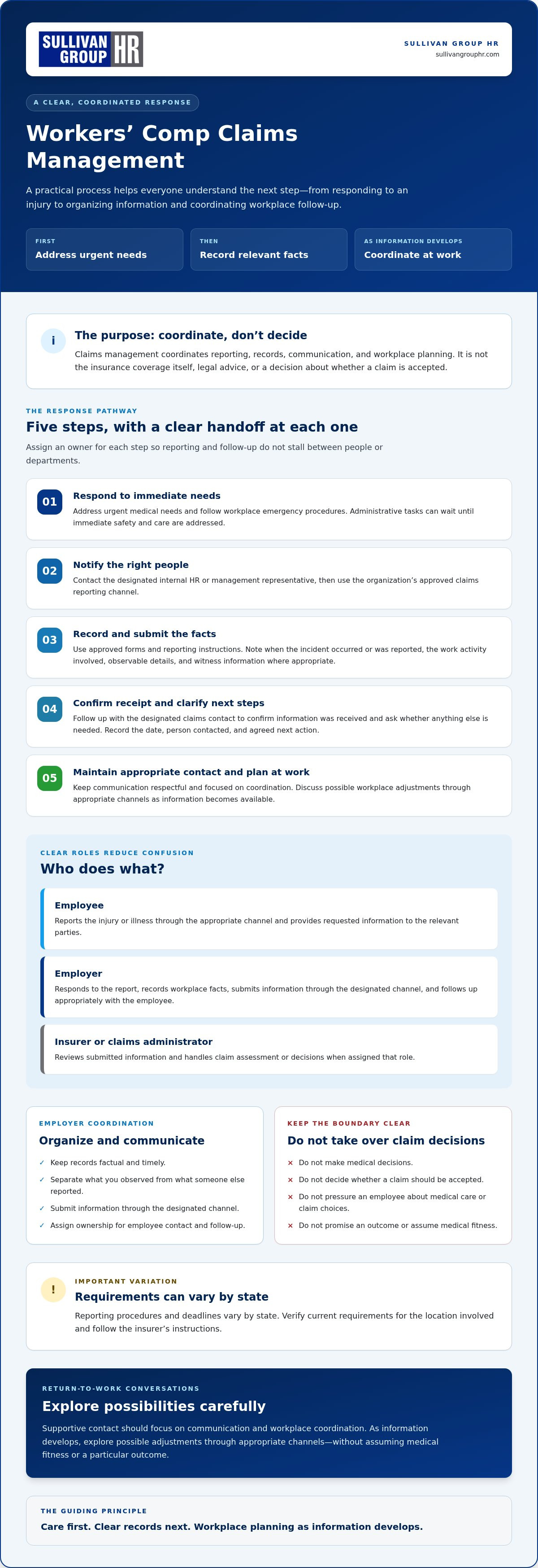
Workers’ comp claims management is the coordinated response to an employee’s work-related injury or illness, from the first report through workplace follow-up. It gives each party a clearer role: the employee can focus on care, the employer can organize and share relevant information, and the appropriate claims professionals can assess the claim.
In brief: Claims management coordinates reporting, records, communication, and workplace planning. It is not the insurance coverage itself, legal advice, or a decision about whether a claim is accepted.
That distinction matters. Employers support reporting and workplace coordination; insurers, adjusters, or third-party administrators assess claims when assigned that role. An organized process helps your team provide information and follow up consistently. Since workers’ compensation rules vary by state, review the Workers' compensation system in the U.S. for general context, then confirm the current requirements that apply where the employee works.
What does the employer do after a workplace injury?
Start with the person, not the paperwork. Address urgent medical needs and follow your workplace emergency procedures. Once immediate needs are handled, notify the designated internal contact and report the incident through your organization’s claims channel, such as the insurer’s or administrator’s reporting process.
Keep employer records factual and timely. Note when the incident happened or was reported, who was notified, and relevant workplace details. Separate what you observed from what someone else reported. Don’t make medical decisions or decide whether a claim should be accepted. Reporting procedures and deadlines vary by state, so verify current requirements for the location involved and follow your insurer’s instructions.
Who participates in managing a workers’ compensation claim?
A well-coordinated process depends on clear roles:
- Employee: Reports the injury or illness through the appropriate channel and provides requested information to the relevant parties.
- Employer: Responds to the report, records workplace facts, submits information through the designated channel, and follows up appropriately with the employee.
- Insurer or claims administrator: Reviews submitted information and handles claim assessment or decisions when assigned.
Keep supportive contact respectful. Check in about communication and workplace coordination, but don’t pressure an employee about medical care or claim choices. In workers comp claims management, assigning an owner to each step helps your team act consistently while keeping claim decisions with the appropriate claims professionals.
The Workers’ Comp Claims Management Process, Step by Step
A dependable process gives each person a clear next move. Keep one guiding principle in view: care first, clear records next, and workplace planning as information develops. The steps below help managers coordinate handoffs without trying to make medical or claim decisions.
- Respond to immediate needs. Address urgent medical needs and follow your workplace emergency procedures. Administrative tasks can wait until the employee’s immediate safety and care are addressed.
- Notify the right people. Contact the designated internal HR or management representative, then use your organization’s approved claims reporting channel. Identify who owns each handoff so a report doesn’t stall between departments.
- Record and submit the facts. Use approved forms and reporting instructions. Note when the incident occurred or was reported, the work activity involved, observable details, and witness information where appropriate.
- Confirm receipt and clarify next steps. Follow up with the designated claims contact to confirm the information was received and ask whether anything else is needed. Record the date, the person contacted, and the agreed next action.
- Maintain appropriate contact and plan at work. Keep communication respectful and focused on coordination. As information becomes available, discuss possible workplace adjustments through the appropriate channels, without promising a claim outcome or assuming medical fitness.
Workers’ compensation insurance and claims coordination are related, but they aren’t the same task. For a high-level overview of what workers' compensation covers, consult Forbes. Your insurer or assigned claims administrator can clarify claim-specific questions.
What should a manager document and report?
Stick to relevant, observable facts. Record when the incident was reported, where it occurred, the work activity involved, what was observed or described, and witness details where appropriate. Separate what you personally saw from what someone else reported. Avoid speculation, assigning blame, or collecting unnecessary medical details. Use required forms and approved reporting channels, and verify current state and insurer instructions rather than relying on a single deadline for every workplace.
How should employers coordinate with the claims contact?
Keep communication factual, timely, and stored through approved business processes. When the claims contact requests information, note who owns the response and when it was sent. Direct questions about benefits, eligibility, or claim decisions to the authorized claims professional instead of interpreting them for the employee.
A useful summary: Respond, report, record, confirm, and coordinate, while leaving medical and claim decisions to the appropriate professionals. Clear handoffs are the practical core of workers comp claims management. Employers reviewing their broader HR and workers’ compensation needs can learn about Sullivan Group HR’s services.
Common Workers’ Comp Claims Management Misconceptions
Submitting a report is an important handoff, not a signal that the employer’s work is finished. Your team may still need to answer follow-up questions, maintain appropriate workplace records, communicate with the employee, and coordinate practical work matters. Which tasks apply depends on the insurer or administrator’s assigned role and the requirements in the relevant jurisdiction.
Workplace coordination supports the process; claim adjudication determines how a claim is handled. Employers should not treat reporting as approval or denial, or predict benefits and outcomes based on general guidance. The U.S. government workers' compensation programs overview can help explain why the applicable program and process may differ. For a specific claim or legal obligation, confirm details with the authorized claims professional and consult qualified legal counsel when appropriate.
Does the insurer handle everything once a claim is filed?
Not necessarily. An insurer, adjuster, or third-party administrator may assess the claim or handle decisions when assigned that responsibility. The employer may still need to coordinate workplace communication, provide relevant records, and respond to requests. Don’t assume every policy, administrator, or state process works the same way. Confirm who owns each task, who receives questions, and how to escalate an issue with your provider.
That clarity helps prevent two common problems: assuming no further employer action is needed, or stepping into decisions that belong to claims professionals. Keep a simple list of your organization’s contacts and escalation points, and update it when responsibilities change.
Can an employer contact an injured employee during a claim?
Yes, appropriate contact can support the employee and keep practical coordination moving. Keep check-ins respectful, work-related, and focused on communication or workplace planning. For example, confirm the best way to share updates or ask whether the employee knows whom to contact with workplace questions.
Don’t pressure someone to choose a particular treatment, return before they’re ready, or accept or withdraw a claim. Leave medical questions, treatment decisions, and claim eligibility to qualified professionals. Follow your organization’s privacy practices and verify applicable legal requirements for the employee’s jurisdiction. Thoughtful workers comp claims management means staying engaged without crossing those boundaries.
Building a Reliable Claims & Return-to-Work Process
A dependable process makes responsibilities visible before an injury occurs. It should show who receives the report, where records belong, who contacts the claims provider, and who owns follow-up. This structure helps your team coordinate consistently while keeping the employee’s needs at the center.
What belongs in an employer claims-management checklist?
Keep the checklist brief enough to use under pressure, but specific enough to guide each handoff:
- Contacts: List primary and backup contacts for supervisors, HR, and the claims provider, including how to reach the appropriate person.
- Reporting: Identify approved reporting channels, forms, and instructions. Confirm applicable state requirements and the provider’s process rather than assuming one deadline fits every situation.
- Records: Specify what incident information to document, where to store it securely, and who can access it under your organization’s procedures.
- Follow-up: Assign an owner to track communications, outstanding requests, and next steps, and record when each item is completed.
Review the checklist periodically, especially when your claims provider or applicable requirements change. For broader prevention and risk practices, consult HR Risk Management: A Comprehensive Guide to Protecting Your Business in 2026.
How can employers support a safe return to work?
Start a return-to-work conversation by listening, not making assumptions. Ask what workplace coordination may be helpful, explain the duties that may be available, and document the discussion through your approved process. Don’t promise a particular role, schedule, or result before the relevant information is available.
Use medical restrictions or guidance from qualified sources to inform workplace planning, and involve the appropriate claims contact when needed. The employer can describe job duties and possible adjustments; qualified professionals provide medical guidance, and claim decisions remain with the authorized claims professional. Include the employee in practical discussions and revisit the plan if circumstances or guidance change.
Thoughtful workers comp claims management connects clear contacts, secure records, and respectful follow-up. To explore how HR support and workers’ compensation insurance may fit into your employer processes, review Sullivan Group HR’s services.
How HR Support Can Strengthen Workers’ Comp Claims Management
A clear HR owner can help connect the moving parts around an injury: incident reporting, employee records, payroll information, and workplace coordination. That doesn’t mean HR takes over claim decisions. It means your organization knows who keeps information organized, responds to internal questions, and coordinates with the insurer or assigned claims contact.
This connection matters when a claim affects more than one process. For example, a designated HR contact can help ensure relevant workplace information is handled consistently and payroll questions are directed to the right person. The goal is clear ownership, not duplicate records or assumptions about what an insurer will decide.
When should a business review its HR and claims processes?
Look for signs that the process needs attention: unclear responsibility for reports, repeated documentation gaps, or employee follow-up that varies from one incident to the next. It’s also worth reviewing whether your HR capacity and provider relationships still fit your organization’s needs. For broader context on connected people operations, see What is Human Capital Management? The 2026 Strategic Guide.
A process review can help identify where responsibilities begin and end, and which contacts need to be involved. Confirm any changes to insurer or administrator roles directly, and check applicable requirements for each work location.
What should employers ask a potential HR partner?
Ask specific questions before relying on a partner to support related processes:
- What does the workers’ compensation insurance offering include, and what support is outside its scope?
- Who receives workplace injury reports, and who communicates with the insurer?
- Who should employees or managers contact with claim-related questions?
- Does the service include HR outsourcing or payroll administration, and how are responsibilities divided?
Request clear explanations in writing. Don’t assume an HR partner adjusts claims, determines eligibility, provides legal advice, or handles every insurer interaction unless those duties are explicitly confirmed. Sullivan Group HR offers HR outsourcing and workers’ compensation insurance, alongside payroll administration. Confirm the role and support available for your organization directly.
Strong workers comp claims management depends on knowing who owns each task and where expert claim decisions belong. If you’re reviewing your HR processes or workers’ compensation insurance, discuss your needs and confirm the available service scope with Sullivan Group HR.
Make Your Claims Process Clearer and More Supportive
A reliable response starts with clear ownership. Prioritize the employee’s immediate needs, document and report the incident through the right channels, and keep follow-up respectful and consistent. Employers coordinate workplace information and communication, while the insurer or assigned claims professional handles claim assessment and decisions.
That’s the foundation of effective workers comp claims management: organized records, well-defined handoffs, and thoughtful workplace planning. Since reporting requirements and responsibilities can vary, confirm the process that applies to your organization and make sure each contact knows their role.
Sullivan Group HR offers workers’ compensation insurance and broader HR support, along with access to the isolved HCM platform. Confirm the scope of services and who handles each claims-related responsibility directly, so you can make an informed decision about the support your business needs.
Talk with Sullivan Group HR about workers’ compensation insurance and HR support. With a clear process and the right partners, your team can respond with greater confidence and keep employees at the center of the work.
Frequently Asked Questions
What is workers’ comp claims management?
Workers’ comp claims management is the coordinated response to an employee’s work-related injury or illness. It includes reporting the incident, organizing workplace records, maintaining appropriate communication, and coordinating relevant workplace follow-up. The employer supports these steps, while the insurer or assigned claims administrator assesses the claim. A clear process helps everyone understand their role without confusing workplace coordination with insurance coverage, medical decisions, or legal advice.
Who manages a workers’ compensation claim: the employer or the insurance company?
Both may have roles, but they handle different responsibilities. The employer reports the injury, provides relevant workplace information, and coordinates appropriate follow-up. The insurer, adjuster, or third-party administrator handles claim assessment or decisions when assigned. Responsibilities can vary by policy and process, so confirm who receives reports, answers claim questions, and handles each handoff. Clear contacts help prevent confusion without shifting decision-making to the employer.
How quickly does an employer need to report a workers’ comp claim?
Report an injury promptly through your organization’s designated claims channel, and verify applicable state requirements and insurer instructions. There isn’t one reporting deadline that applies universally across the country. Requirements can depend on where the employee works and the circumstances of the incident. Keep a record of when the injury was reported, when your organization submitted information, and any follow-up instructions from the insurer or claims administrator.
What information should an employer document after a workplace injury?
Record relevant, factual details such as when and where the incident occurred, the work activity involved, what was observed or reported, and witness information where appropriate. Note when the report was received and who was notified. Use approved forms and secure business processes. Avoid speculation, blame, and unnecessary medical details. Keep employer observations separate from information reported by others, and follow the insurer’s instructions for any additional documentation.
Can an employer contact an employee while a workers’ comp claim is open?
Yes. A respectful check-in can support the employee and help coordinate practical workplace communication. Keep contact appropriate and focused, for example, confirming who the employee can reach with work-related questions. Don’t pressure them about treatment, claim choices, or returning before appropriate guidance is available. Follow your organization’s privacy policies and verify requirements that apply in the employee’s jurisdiction. Direct medical or claim-specific questions to qualified professionals.
How can an employer support an employee returning to work after an injury?
Discuss possible duties or workplace adjustments with the employee and relevant claims contacts, using medical restrictions or guidance from qualified sources to inform planning. Be clear about the work available, document the conversation through approved processes, and revisit the plan if circumstances or guidance change. Avoid assuming an employee is medically ready, promising a particular role or outcome, or treating a return-to-work discussion as a substitute for appropriate medical guidance.
Does workers’ comp claims management mean the employer decides whether a claim is approved?
No. The employer’s role is generally to report the incident, provide relevant workplace information, and coordinate appropriate follow-up. The insurer, adjuster, or third-party administrator handles claim assessment and decisions when assigned that responsibility. Employers should avoid representing a claim as accepted or denied unless the authorized claims professional has confirmed its status. Direct questions about eligibility, benefits, or claim decisions to the appropriate claims contact.
Can an HR outsourcing provider help with workers’ comp claims management?
An HR outsourcing provider may help employers keep related responsibilities and records organized, depending on the agreed service scope. Sullivan Group HR offers HR outsourcing and workers’ compensation insurance, but it doesn’t directly adjust, adjudicate, or administer individual claims based on the information available. Before engaging a provider, confirm who receives injury reports, who communicates with the insurer, and what support is included. Claim decisions remain with the authorized claims professional.


