

What if your workers’ compensation policy is only one part of protecting your business? Workers compensation risk management services can involve more than insurance: workplace practices, incident records, HR processes, and payroll details all play a part. When those pieces aren’t coordinated, it can be harder to keep information consistent and respond confidently when an injury occurs.
It can be difficult to tell where insurance ends and risk management begins, especially when safety, claims, and employee records involve different people and systems. This guide explains what workers’ compensation risk management can involve, how to assess your needs, and which day-to-day practices can support safer work and more consistent administration.
You’ll also see how workers’ compensation insurance can fit alongside HR consulting, payroll administration, and time and attendance tools on the isolved HCM platform. Bringing these functions into one broader view can help employers organize coverage and workforce administration without treating a policy as the whole plan.
Key Takeaways
- Workers compensation risk management services can coordinate insurance administration, workplace practices, and employer processes.
- Separate what a policy covers from prevention, documentation, and review activities that support day-to-day risk management.
- Compare support by examining insurance administration, HR coordination, safety resources, and the scope of ongoing assistance.
- Use a repeatable workflow to review workplace exposures, assign responsibilities, and revisit processes as business needs change.
- Workers’ compensation insurance can work alongside HR consulting, payroll administration, and the isolved HCM platform.
What Workers Compensation Risk Management Services Address for Employers
Workers compensation risk management services coordinate efforts to identify workplace risks, organize insurance administration, and align related employer processes such as HR and payroll. The goal is to manage prevention and administration as connected responsibilities, rather than treating a workers’ compensation policy as the entire program. A clear process can establish who handles workplace concerns, employee information, and insurance-related records.
Workers’ compensation insurance and risk management are connected, but they serve different purposes. Insurance provides financial protection for covered losses according to the policy’s terms and applicable requirements. Risk management is the ongoing work of reviewing workplace practices and administrative processes related to those risks. For a general overview of how workers’ compensation functions, see What is Workers' Compensation.
How risk management differs from workers compensation insurance
A policy defines a coverage framework. It doesn’t organize daily workplace practices or employee records by itself. Risk management can include reviewing how work is performed, clarifying how concerns are raised, and coordinating information across managers, HR, and payroll. For example, keeping job and payroll records aligned can support consistent administration, while reviewing work practices can help employers identify issues to address. Coverage details and employer duties vary by policy and jurisdiction, so general guidance isn’t a universal legal conclusion.
Prevention and sound administration support risk control, but they can’t guarantee fewer claims, lower premiums, or a particular safety result. A coordinated process helps employers respond thoughtfully, but it doesn’t remove uncertainty or replace qualified safety guidance when needed.
Which employers may benefit from coordinated support?
Small and mid-sized employers may find coordination useful when HR responsibilities sit with a small team or are shared across managers. It can also help businesses keep processes organized as job duties, payroll records, or workforce needs change.
Start with the work itself. When employees have different roles, keep role information, payroll administration, and workplace procedures aligned as responsibilities shift. Risk priorities depend on the duties people perform, how the business operates, and the jurisdiction involved. A useful approach starts with the employer’s actual operations, not a one-size-fits-all checklist.
In short, workers compensation risk management services connect coverage, workplace practices, and employer administration. That broader view helps businesses identify how their processes fit together and where clearer ownership may help.
What Workers Compensation Risk Management Services Can Include
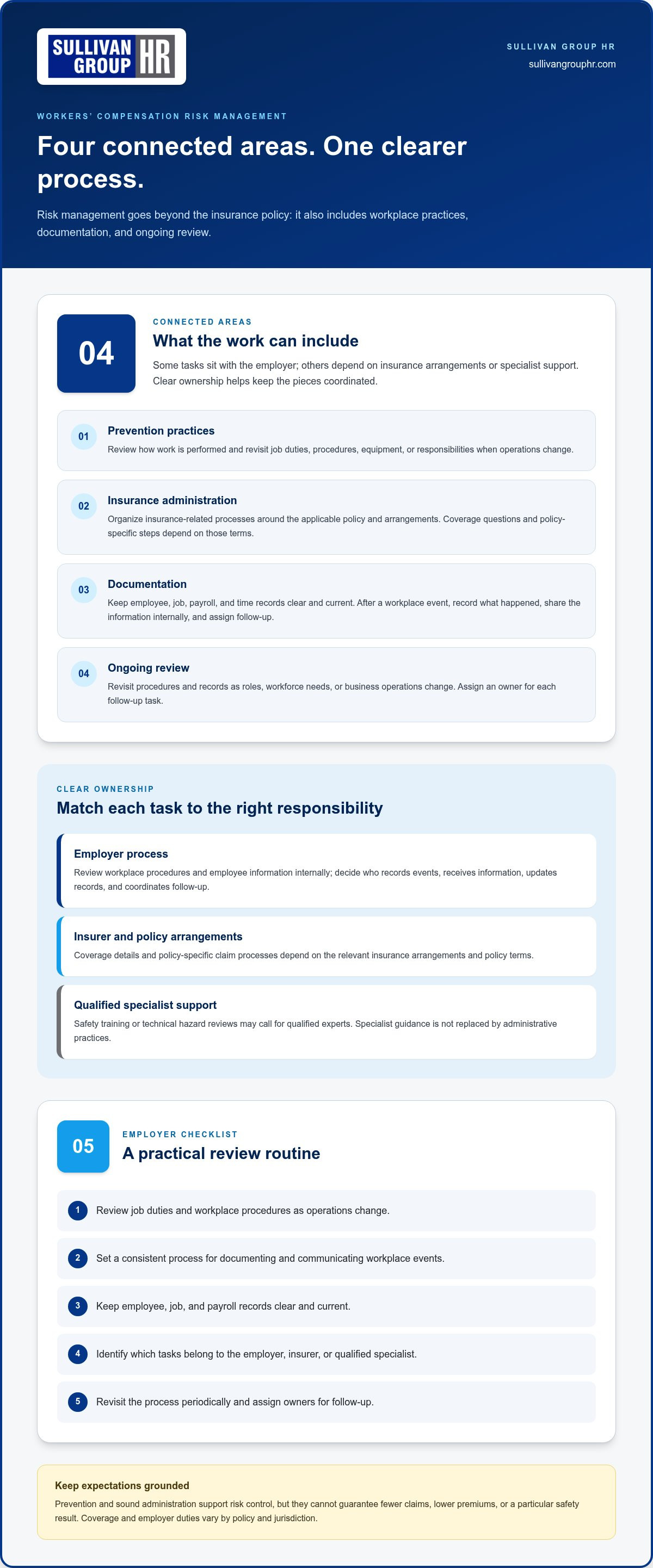
Workers compensation risk management services can span four connected areas: prevention practices, insurance administration, documentation, and ongoing review. Some activities belong to the employer’s internal process; others depend on the insurer, policy terms, or a qualified specialist. Assigning clear ownership helps coordinate these areas without assuming they all come from one source.
Employers can review workplace procedures and employee information internally, while coverage questions and policy-specific processes depend on the relevant insurance arrangements. Safety training or technical hazard reviews may call for qualified experts. The U.S. Department of Labor outlines federal workers' compensation programs and related resources, which illustrate that programs and processes can differ.
Workplace practices, documentation, and follow-up
After a workplace event, consistent documentation and prompt internal communication help keep the facts organized. Establish who records what happened, who receives the information, and how follow-up is assigned. This is an administrative practice, not a substitute for policy-specific claim instructions or specialist guidance.
Review job duties and workplace procedures when operations, equipment, or responsibilities change. Employers can also coordinate safety training and hazard reviews with qualified experts where appropriate. Keep practices relevant to the work being done, then revisit them when circumstances shift.
Payroll and HR processes that support administration
Accurate employee and payroll information supports orderly insurance administration. Clear job information, onboarding records, and time records help connect each employee’s role with how their employment information is maintained. Make it clear who updates and reviews these records, especially when roles or workforce needs change.
For more detail on organizing payroll workflows, read the payroll administration outsourcing guide. Sullivan Group HR provides workers’ compensation insurance alongside payroll administration and HR support. Learn more about workers’ compensation and HR support.
Employer checklist:
- Review job duties and workplace procedures as operations change.
- Set a consistent process for documenting and communicating workplace events.
- Keep employee, job, and payroll records clear and current.
- Identify which tasks belong to the employer, insurer, or qualified specialist.
- Revisit the process periodically and assign owners for follow-up.
How to Compare Workers Compensation Risk Management Support
Different types of support serve different purposes. A policy provides coverage under its terms, a resource library offers information, a technology platform organizes records, and hands-on HR support helps coordinate employer processes. None can promise a specific premium or claims outcome. Compare the scope of support, how responsibilities are divided, and whether the approach fits your workforce and internal capacity.
| Support type | Insurance administration | HR coordination | Safety resources | Ongoing support |
|---|---|---|---|---|
| Insurance policy | Defines coverage subject to policy terms. | Doesn’t by itself coordinate HR workflows. | Doesn’t itself establish workplace practices. | Policy-related support depends on the insurance arrangement. |
| Resource library | May offer general information, not policy-specific administration. | Usually provides materials rather than hands-on coordination. | Can offer reference materials and safety content. | Access to resources isn’t the same as ongoing guidance. |
| Technology platform | Can help organize information, depending on its functions. | Can support HR recordkeeping and related workflows. | Doesn’t replace qualified safety judgment. | Platform access isn’t a substitute for human support. |
| Hands-on HR support | Can help coordinate relevant employer processes. | Can connect payroll and employee administration. | May help organize responsibilities, not replace specialist safety guidance. | Clarify the scope and continuity of support. |
Questions that reveal the scope of support
Map out how responsibilities are divided. Who handles insurance administration, and who advises on workplace practices? How are employee, payroll, and incident-related details organized and kept consistent? The answers show whether the support is a policy, a set of resources, a platform, or a more hands-on relationship. For further context on managing worker risk, RIMS discusses risk and workers’ compensation as connected concerns.
Fit matters, too. A business with limited in-house HR capacity may need more help coordinating records and responsibilities than one with established internal processes. Workforce size, job mix, and operational changes can shape what’s useful. Look for clear ownership and a process that can adapt as needs shift.
How technology and human guidance fit together
Technology can help organize HR information, but it doesn’t make professional judgments or determine which workplace practices are appropriate. Sullivan Group HR clients access the isolved HCM platform, which includes functions such as time and attendance. The platform works alongside HR consulting and payroll administration. It doesn’t independently provide insurance or guarantee risk outcomes. For broader context, explore this HR risk management guide.
Sullivan Group HR provides workers’ compensation insurance alongside relevant HR and payroll services, bringing these areas into a broader support offering. Learn more about Sullivan Group HR’s support.
A Practical Framework for Managing Workers Compensation Risk
A repeatable review connects day-to-day operations with insurance and HR administration. Use this workflow to organize the work, assign responsibility, and spot processes that need attention. It’s an operational guide, not legal advice or a substitute for qualified safety guidance. Workers’ compensation requirements vary by state, so verify applicable rules with the relevant state agency and follow your policy’s procedures.
A five-step review employers can use
- Review workplace exposure. Inventory job roles, work locations, and the tasks employees perform. Note changes such as new equipment, different work processes, or shifting responsibilities that may affect how work is carried out.
- Check records for consistency. Review relevant employee, job, payroll, and insurance information. Look for mismatches, such as a job description that no longer reflects an employee’s duties, and identify who can correct or update the information.
- Set incident and communication procedures. Document how employees report an incident, who receives the information, and how follow-up is recorded. Keep the process aligned with applicable reporting procedures and the employer’s established practices.
- Assign owners. Name the person responsible for each task, including record updates, internal communication, and coordination with appropriate insurance contacts. Clear ownership helps prevent important steps from being overlooked.
- Schedule a regular review. Set a recurring time to revisit roles, records, and procedures, and update them when the business changes. Regular review matters because jobs and staffing change, and yesterday’s process may no longer match today’s work.
What to do after an incident or operational change
After an incident, follow applicable reporting processes and the employer’s established procedures. Preserve accurate records, communicate with the appropriate insurance contacts, and keep internal updates clear and factual. When operations change, consider whether job information, training, documentation, or HR workflows need revision. In either situation, record who will handle each follow-up item.
Keep the review practical. Bring together the people responsible for operations, HR, and payroll to check that records and responsibilities still match how work is performed. If a concern calls for technical safety guidance, involve a qualified expert rather than treating a general checklist as a safety assessment.
Coordinating workers compensation risk management services with insurance and HR processes can help employers create a clearer routine for reviewing exposures and managing records. Explore Sullivan Group HR’s workers’ compensation and HR support to see how these areas can work together.
How Sullivan Group HR Connects Workers Compensation and HR Support
Workers’ compensation administration is connected to the rest of the employee experience. Coverage, payroll records, HR processes, and benefits all relate to how an employer manages its workforce. Sullivan Group HR provides workers’ compensation insurance, HR outsourcing, and payroll administration, bringing these connected responsibilities into a broader support offering.
A connected view of insurance, payroll, and HR
Coordination starts with clear processes. Employee and payroll information should support consistent administration, while HR practices help employers manage workforce records and responsibilities. Bringing these areas into view can make it easier to see who handles each task and where information needs to move. The right scope depends on the employer’s workforce and operating needs. For broader context, see the HR outsourcing and human resources services guide.
Sullivan Group HR also provides HR consulting and employee benefits management. Clients access the isolved HCM platform for functions including time and attendance. The platform supports HCM processes, while workers’ compensation insurance remains a distinct coverage offering. Together, these services connect insurance with relevant HR and payroll administration without implying that a technology platform provides insurance or guarantees a particular claims or premium result.
Coordination can be useful when responsibilities are spread across different people or systems. For example, an employer can review how payroll administration, time records, employee information, and insurance-related processes fit together, then identify where clearer ownership or more consistent handling would help. Apply the framework by reviewing the process, identifying gaps, and deciding what kind of support fits.
Turn the framework into a next step
Before exploring support, list the administrative tasks that are hardest to manage. Are payroll and employee records kept consistently? Is it clear who handles insurance administration? Do HR responsibilities match the business’s current staffing and operations? These questions help define the need without assuming every employer requires the same arrangement.
The right scope depends on your workforce, job mix, internal HR capacity, and operating needs. There’s no single setup that fits every business, and coordinated support can’t guarantee fewer claims, lower premiums, or specific safety outcomes. It can help bring related responsibilities into a clearer working picture.
Ready to explore how insurance, payroll, and HR support could fit your organization? Explore Sullivan Group HR support and identify a practical next step for your needs.
Build a More Connected Approach to Workplace Risk
Strong workers compensation risk management services bring insurance, workplace practices, and employer administration into a coordinated process. Start by clarifying responsibilities, keeping employee and payroll information consistent, and reviewing procedures as jobs or staffing change. Regular attention helps keep your approach connected to how the business operates, though it can’t guarantee fewer claims or lower premiums.
Support can also fit alongside everyday HR work. Sullivan Group HR provides workers’ compensation insurance, payroll administration, and HR outsourcing, with clients accessing the isolved HCM platform. These offerings give employers a broader view of coverage and workforce processes.
Every organization has different roles, records, and internal capacity. Identify the administrative gaps that matter most to your team, then explore a support approach that fits your needs. Explore Sullivan Group HR support and take a practical next step toward clearer, more coordinated processes.
Frequently Asked Questions
What are workers compensation risk management services?
Workers compensation risk management services are coordinated activities that help employers address workplace risks, insurance administration, records, and related HR processes. The scope can include reviewing work practices, organizing employee and payroll information, documenting internal responsibilities, and checking whether processes still fit the business. Insurance provides financial protection for covered losses under policy terms, while risk management focuses on ongoing practices and administration. Neither approach can guarantee a particular claims or premium outcome.
Can workers compensation risk management services lower insurance premiums?
They can’t guarantee lower premiums. Prevention practices, accurate records, and orderly administration support a thoughtful approach to workplace risk, but premiums depend on policy terms and other considerations outside an employer’s direct control. Treat risk management as a way to organize responsibilities and review processes, not as a promise of savings. Review your coverage terms and how your records and procedures are maintained.
What does a workers compensation risk management provider do?
The provider’s role depends on the services involved. Support may relate to workers’ compensation insurance, HR coordination, payroll administration, technology, or safety resources. These functions aren’t interchangeable: a policy addresses coverage under its terms, a platform helps organize information, and HR support can help coordinate employer processes. Clarify who handles insurance administration, who supports HR or payroll workflows, and what responsibilities remain with the employer or a qualified safety specialist.
How can payroll records affect workers compensation administration?
Accurate payroll and employee records help keep insurance administration orderly. Job information, payroll data, and time records should reflect the workforce and work being performed. For example, if an employee’s duties change but the relevant records don’t, the employer may need to review and update its information. Clear processes for maintaining records support consistent administration, but policy-specific requirements vary. Follow the processes applicable to your coverage and keep responsibility for record updates clear.
What should an employer review when comparing workers compensation risk management services?
Compare the scope of support, not just the label. Identify how insurance administration, HR coordination, payroll records, safety resources, and ongoing guidance are handled. Distinguish a policy from a resource library, technology platform, or hands-on support, and clarify who owns each task. Consider your workforce size, job mix, internal HR capacity, and how responsibilities may change. No service can promise a specific premium or claims result, so look for an approach that fits your operations and makes responsibilities clear.
Does workers compensation risk management include workplace safety training?
It may include or help coordinate safety resources, but training isn’t automatically part of every arrangement. The scope depends on the provider, insurer, policy, and specialists involved. Employers can review the work employees perform, identify where training or hazard guidance may be useful, and coordinate with qualified safety experts where appropriate. Keep training relevant to actual duties and workplace procedures. General risk-management guidance isn’t a substitute for qualified safety advice.
How often should a business review its workers compensation risk processes?
Set a regular review cadence, and revisit processes when jobs, staffing, work locations, or operations change. Review after an incident as well, following applicable reporting processes and established procedures. Check whether employee, payroll, and insurance-related records remain consistent, and confirm that responsibilities for communication and follow-up are still clear. Requirements vary by jurisdiction, so verify applicable rules with authoritative sources. Regular review helps keep procedures aligned with the work being done.


