

What if the best way to reduce risk of employee lawsuits isn’t a complicated new system, but more consistent everyday practices? Policies can become outdated, employee concerns need attention, and hiring, pay, leave, or termination records can end up scattered across busy teams. No process can eliminate legal risk, but clear policies, careful documentation, and timely responses can help prevent avoidable disputes.
This 2026 guide explains how to review workplace practices, respond consistently to employee concerns, and keep useful records of decisions and performance issues. It also covers when to involve HR and when a question calls for employment counsel. From hiring and pay to leave requests and termination decisions, repeatable processes make employee administration clearer. Tools such as applicant tracking, time and attendance, and integrated workforce records can help keep information organized.
Key Takeaways
- Reducing lawsuit risk means lowering preventable exposure, not guaranteeing that no employee will sue.
- Review hiring, pay, timekeeping, leave, workplace treatment, and separation practices for inconsistent processes or missing records.
- Use a clear response sequence for complaints, from prompt acknowledgment and factual documentation to follow-up.
- To reduce risk of employee lawsuits, build a regular review cycle for policies, manager practices, records, and payroll workflows.
- Clarify how managers, HR support, HCM tools, and employment counsel each contribute to consistent employee administration.
What does it mean to reduce the risk of employee lawsuits?
To reduce risk of employee lawsuits, employers focus on lowering preventable exposure through clear, consistent people practices. That doesn’t mean promising no employee will sue. Even a careful employer may face a claim, and no policy or checklist can resolve every workplace concern.
Employment-risk prevention means using fair, repeatable workplace processes and reliable records to reduce avoidable disputes. Policies set expectations, managers put them into practice, employee communications shape how concerns are understood, and records help show what happened and why. When those pieces don’t align, even a routine decision can be harder to explain or review.
HR guidance can help employers organize workflows, review practices, and respond consistently. It isn’t legal advice, courtroom representation, or a guarantee of compliance. Questions about how a law applies to a specific situation, or how to respond to a potential claim, may call for employment counsel. For practical ways to organize prevention efforts, see these HR risk management practices.
Which workplace disputes can employers help prevent?
Disputes may involve discrimination, harassment, retaliation, pay, leave, or termination. Employers can reduce preventable friction by communicating expectations, applying processes consistently, and taking concerns seriously. Whether conduct amounts to a legal claim depends on the facts, applicable law, and the employee’s circumstances. A disagreement doesn’t automatically become a lawsuit, and a checklist can’t determine the right response in every case.
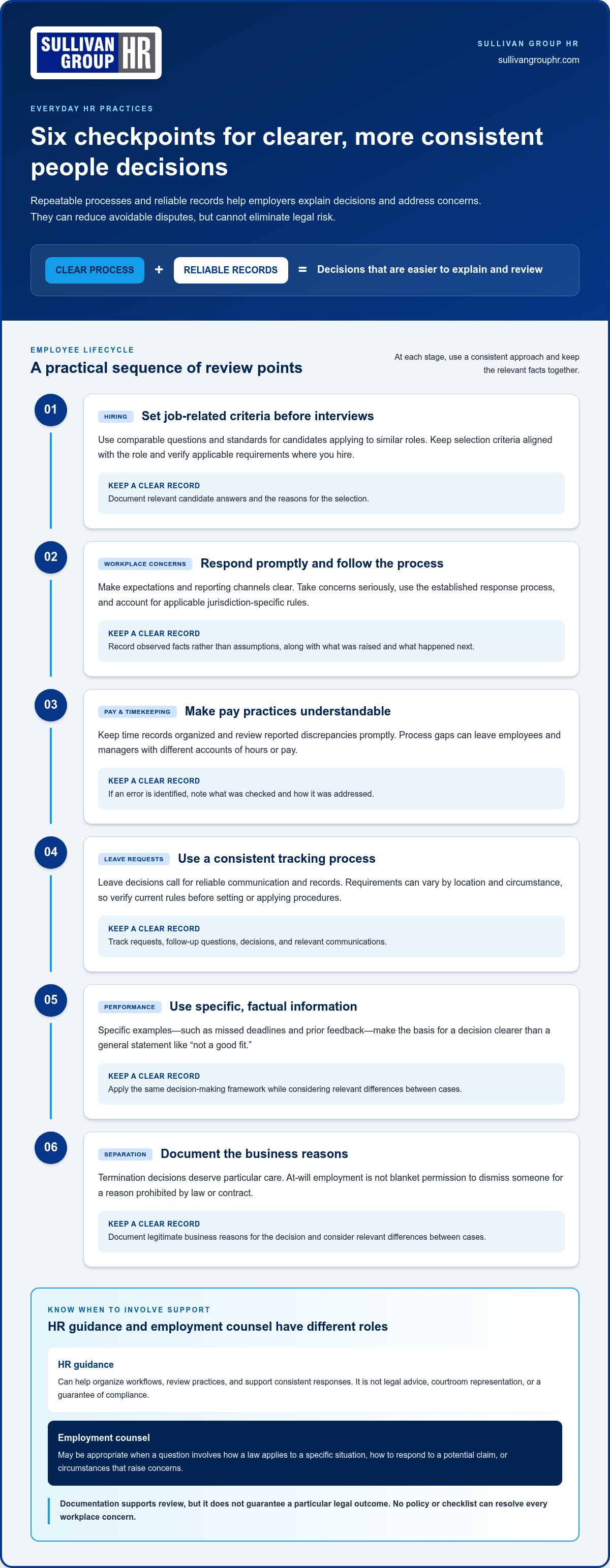
Termination decisions deserve particular care. The At-will employment doctrine is a general employment principle, not blanket permission to dismiss someone for a reason prohibited by law or contract. Document the legitimate business reasons for a decision, and seek legal guidance when the circumstances raise concerns.
Why do consistent processes matter?
Imagine two employees with similar performance issues receiving different discipline without a clear reason. Even if their situations aren’t identical, unexplained differences can create a perception of unfair treatment and make a decision harder to support. Clear policies help employees understand expectations and give managers a shared framework for responding. Consistency doesn’t require identical outcomes in every case. It means considering relevant differences and documenting the reasoning, so decisions are easier to explain and concerns easier to assess.
Which everyday HR practices create preventable employee lawsuit risk?
Risk can build across routine moments in the employee lifecycle. A hiring decision, payroll adjustment, complaint response, leave request, or termination may be harder to explain when the process varies by manager or the record is incomplete. These conditions don’t automatically establish wrongdoing or mean a lawsuit will follow. They can make a workplace dispute more difficult to assess and resolve.
Consistent processes and accurate records help employers explain decisions clearly and address concerns before avoidable problems grow.
Where can hiring and workplace decisions go wrong?
Start with hiring. If interviewers use different standards for similar roles or can’t explain why one candidate was selected, the decision may appear inconsistent. Define job-related criteria before interviews, ask candidates comparable questions, and document relevant answers and selection reasons. Keep the criteria aligned with the role, and verify applicable requirements in the jurisdictions where you hire.
After hiring, employees need clear conduct expectations and a dependable way to raise concerns. If a manager dismisses one complaint but promptly investigates a similar one, employees may view the difference as unfair. Delayed responses, unclear reporting channels, and notes based on assumptions rather than observed facts can complicate a later review. Respond promptly, follow your established process, and account for applicable jurisdiction-specific rules.
How can pay, timekeeping, and termination practices increase exposure?
Pay and timekeeping deserve close attention because process gaps can leave employees and managers with different accounts of hours or pay. Keep time records organized, make pay practices understandable, and review reported discrepancies promptly. If you identify an error, record what was checked and how it was addressed. For help organizing payroll workflows, explore payroll administration outsourcing.
Leave decisions also call for reliable communication and records. Track requests, follow-up questions, decisions, and relevant communications through a consistent process. Requirements can vary by location and circumstance, so verify current rules before setting or applying procedures.
For performance and separation decisions, use specific, factual information. A manager who documents missed deadlines and prior feedback can explain the basis for a decision more clearly than one who relies on a general statement such as “not a good fit.” Apply the same decision-making framework while considering relevant differences between cases. Documentation supports review, but it doesn’t guarantee a particular legal outcome.
To reduce risk of employee lawsuits, employers can strengthen day-to-day workflows with organized HR records and ongoing guidance. Sullivan Group HR’s HR consulting and administration support can help make people processes clearer and more repeatable.
How should employers document decisions and respond to employee complaints?
A steady response helps employees feel heard and gives the employer a clearer record of what was raised and what happened next. Managers don’t need to decide on the spot whether a complaint is legally valid. They do need to take it seriously, preserve relevant information, and follow the organization’s process.
Use this sequence as a practical starting point:
- Receive: Listen without interrupting or making promises about the outcome.
- Acknowledge: Confirm that the concern has been received and explain what will happen next.
- Assess immediate safety: Consider whether anyone may need prompt protection or support, and escalate urgent concerns through the appropriate channel.
- Document and review: Record the report and examine relevant information, including available records and accounts from people involved.
- Act and follow up: Take appropriate next steps, record actions, and check back with the employee as suitable.
What should a manager record when an issue is raised?
Write down the date, who was present, what the employee said as accurately as possible, and context that may help explain the concern. Separate direct observations from information reported by someone else. Avoid labels, guesses about motives, or conclusions that haven’t been established. For example, record “the employee said the comment was made after the team meeting,” rather than presenting as fact something the manager didn’t witness.
Keep notes and related records in approved, access-controlled systems, and limit sharing to people who need the information to respond. Don’t promise absolute secrecy. Explain that information may need to be shared with appropriate people to review the concern. Follow record-retention practices reviewed for applicable requirements, which can vary by jurisdiction and record type.
How can employers respond without creating retaliation concerns?
Respond promptly, explain the next step, and avoid prejudging what a review will find. Managers should also avoid adverse treatment connected to someone raising a concern or participating in a review. If a separate performance or attendance issue arises during this period, document the facts and consult HR before acting. That pause helps distinguish a legitimate business decision from an action that could appear connected to the complaint.
Escalate allegations involving safety, harassment, discrimination, retaliation, or other serious concerns to HR promptly. HR can help coordinate a consistent process and identify when the facts call for employment counsel. If a complaint intersects with a separation decision, review termination compliance guidance and involve the appropriate HR and legal support before proceeding.
Clear notes and timely follow-through can’t guarantee that a dispute will be avoided. They can help employers understand concerns, respond thoughtfully, and explain the steps they took.
What practical steps can employers take to strengthen lawsuit prevention?
Prevention works best as a recurring management habit, not a one-time handbook edit. Set a regular review schedule, then revisit key processes after significant changes such as restructuring, rapid hiring, or new workforce practices. Employment requirements can differ by jurisdiction, workforce, and situation, so verify applicable rules before changing or applying a policy.
A focused review can help reduce risk of employee lawsuits by surfacing patterns early. Look for recurring payroll corrections, employee concerns that stall without follow-up, or managers handling similar situations differently. Address the underlying process gap, assign someone to own the fix, and set a date to assess whether it is working.
How can an employer audit HR policies and records?
Compare written policies with what managers actually do and what employees are told. A policy may describe one process while day-to-day practice has drifted. Review a sample of hiring, timekeeping, performance, leave, and separation records for missing information, inconsistent storage, or unclear decision notes. Focus the review on improving the workflow, not simply collecting documents.
Make each finding actionable. Name an owner, record the next step, and set a review date. Revisit the checklist quarterly or after a significant organizational change:
- Check whether policies and employee communications match current practices.
- Review manager training and the process for raising workplace concerns.
- Look for gaps or recurring corrections in hiring, time, pay, performance, leave, and separation records.
- Assign an owner and due date to each improvement, then confirm it was completed.
When should employers involve HR or employment counsel?
Bring HR into concerns involving safety, discrimination, harassment, retaliation, or significant pay issues promptly. HR expertise can help organize the response, records, and repeatable workplace processes. Employment counsel is appropriate when an employer needs legal interpretation or advice about specific facts, particularly before a consequential decision.
Tools and services can support the process, but they can’t replace sound judgment. HCM software may help organize workforce information, and payroll administration can support repeatable workflows, but people still need to review concerns and make decisions thoughtfully. Workers’ compensation insurance and outsourced administration serve distinct operational purposes; neither replaces careful management or legal advice.
Building a practical review cycle takes coordination across policies, records, payroll, and manager practices. Learn about HR consulting and workforce administration support.
How can ongoing HR support help reduce employee lawsuit risk?
Consistent HR administration helps turn policies into repeatable day-to-day practices. Clear employee, time, and payroll information can make it easier to review decisions, spot process gaps, and keep records organized. Support can strengthen how work gets done, but it can’t guarantee legal compliance or prevent every claim.
| Role | What it supports | What it doesn’t replace |
|---|---|---|
| Managers | Communicating expectations, addressing concerns, and documenting day-to-day decisions. | HR guidance on complex or sensitive situations. |
| HR support | Building repeatable processes for employee administration, policies, and workplace concerns. | Legal advice or representation. |
| HCM tools | Organizing employee lifecycle, time, and payroll information to support consistent administration. | Human review, sound decisions, or legal judgment. |
| Employment counsel | Interpreting legal issues and advising on specific facts or potential claims. | Routine HR administration and ongoing workforce recordkeeping. |
What can HR outsourcing and HCM tools support?
HR outsourcing and consulting can help employers organize recurring administration and establish clearer workflows. Sullivan Group HR provides HR consulting, payroll administration, employee benefits management, workers’ compensation insurance, and access to isolved HCM. Applicant tracking and time and attendance capabilities help organize information across hiring and ongoing employment, while payroll workflows support accurate, consistent administration.
These tools and services support the process, not the outcome. They don’t make decisions for managers, interpret every legal requirement, or ensure that a particular practice complies with every rule. Employers still need to review their processes and seek legal counsel when a situation requires case-specific legal advice.
What is a sensible next step for an employer?
Choose one process gap to address, such as scattered employee records or unclear ownership of payroll corrections. Assign a responsible owner, define the next action, and set a review date. A focused first step is easier to carry through than trying to overhaul every HR process at once. Over time, a steady cycle of review and follow-through can help reduce risk of employee lawsuits by supporting clearer, more consistent administration.
Sullivan Group HR partners with employers on HR administration and consulting, helping organize workforce processes without replacing employment counsel or providing legal defense. Explore HR support for your business.
Build stronger, more consistent people practices
Reducing preventable workplace disputes starts with the habits behind everyday decisions. Keep policies aligned with actual practice, respond to concerns promptly, and maintain clear records of hiring, pay, leave, performance, and separation decisions. These steps can help reduce risk of employee lawsuits, but they can’t eliminate legal risk or replace case-specific employment counsel.
Ongoing HR support can help make those habits easier to sustain. Sullivan Group HR offers HR consulting, payroll administration, benefits management, and time and attendance support, with access to the isolved HCM platform. Organized workflows and workforce information can support clearer administration while managers remain responsible for thoughtful, fair decisions.
Start with one process that needs attention. Give it an owner, agree on a next step, and set a date to review progress. Then build from there. For practical support with your HR operations, contact Sullivan Group HR about HR support for your business. With steady attention and the right partnership, your people practices can become clearer, more consistent, and easier to manage.
Frequently Asked Questions
Can an employer prevent employees from filing lawsuits?
No. Employers can’t guarantee that an employee won’t file a lawsuit, even when policies are clear and processes are followed. They can reduce preventable problems by applying workplace practices consistently, responding to concerns promptly, and keeping accurate records. The goal is to reduce risk of employee lawsuits, not to block employees from exercising legal rights. For a specific dispute or legal concern, seek advice from employment counsel.
What are the most common reasons employees sue their employers?
Workplace lawsuits may involve discrimination, harassment, retaliation, pay disputes, leave, or termination. The circumstances matter: the same workplace event can raise different issues depending on the facts, applicable law, and the employee’s situation. A disagreement alone doesn’t necessarily mean a legal claim exists. Employers can make concerns easier to address by communicating expectations, following consistent procedures, and keeping clear records of decisions and responses.
How should a business document employee complaints?
Record when the complaint was made, who was involved, what the employee said, and any relevant context. Separate firsthand observations from information reported by others, and avoid speculation or conclusions that haven’t been established. Note the steps taken and any follow-up. Store the record in an approved, access-controlled system and share it only with people who need it to respond. Don’t promise absolute confidentiality; explain that limited sharing may be necessary.
Can an employee sue for unfair treatment without written proof?
Possibly. The absence of written proof doesn’t by itself determine whether an employee can bring a claim or whether it will succeed. Relevant information may include the employee’s account, witness statements, messages, schedules, pay records, or how similar situations were handled. The legal significance depends on the facts and applicable law. Employers should take concerns seriously, preserve relevant records, and consult employment counsel when a specific situation raises legal questions.
What happens if an employee reports discrimination or harassment?
Acknowledge the concern promptly, listen without prejudging the outcome, and follow your established reporting and review process. Assess whether immediate safety steps are needed, document the report factually, and involve HR promptly so the concern can be reviewed consistently. Share information only with people who need it to respond, without promising complete secrecy. Managers should avoid adverse treatment connected to the employee raising or participating in a concern.
How often should an employer review its HR policies?
Review HR policies at least annually, and revisit them when laws, workplace practices, or business operations change. Compare written guidance with what managers actually do and what employees are told. Check that hiring, pay, leave, complaint, and separation processes remain clear and consistently followed. Requirements vary by jurisdiction and circumstances, so verify applicable rules before revising or applying a policy. Assign an owner and review date for any identified gaps.
Can HR outsourcing reduce the risk of employee lawsuits?
HR outsourcing can support more organized, repeatable administration, which may help reduce preventable workplace disputes. It doesn’t guarantee compliance or prevent every claim. Sullivan Group HR provides HR consulting, payroll administration, benefits management, workers’ compensation insurance, and access to isolved HCM, including applicant tracking and time and attendance capabilities. These resources can support workforce processes and records, while employers remain responsible for thoughtful decisions and should use employment counsel for legal advice.


