
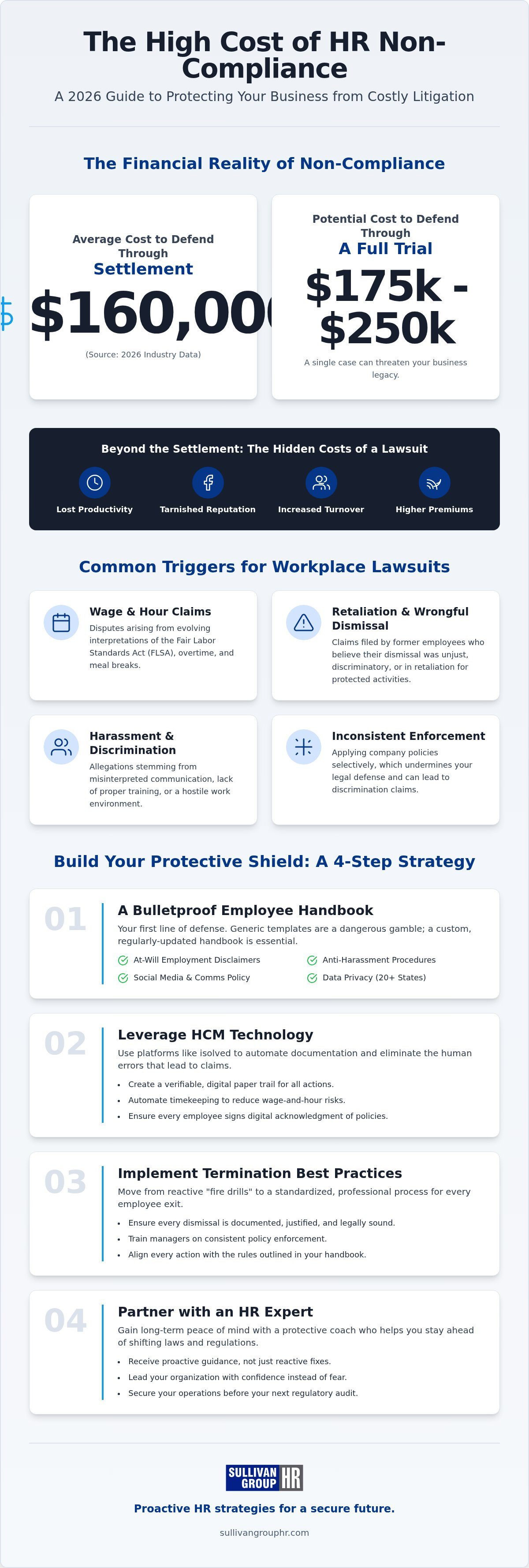
Did you know that in 2026, the average cost to defend an employment lawsuit through settlement has climbed to $160,000? For most business owners, a single legal challenge isn't just a headache; it's a direct threat to the legacy you've worked so hard to build. It's natural to feel concerned about shifting federal labor laws or the lack of standardized documentation across your growing team.
You deserve to lead your organization with confidence rather than fear. We're here to act as your protective ally, offering the clarity you need to stay safe. This guide provides the proactive HR strategies and HCM technologies that shield your business from costly litigation. By mastering employee termination best practices, you can transform high-stakes transitions into manageable, compliant processes.
We'll provide a clear roadmap for the year ahead, covering everything from understanding complex severance legislation to the benefits of the isolved platform. You'll learn how to standardize your management, secure your operations, and gain total peace of mind before your next regulatory audit.
Key Takeaways
- Identify the evolving 2026 legal risks that leave even the most well-meaning small businesses vulnerable to costly litigation.
- Strengthen your first line of defense by moving beyond generic templates to create a customized, legally sound employee handbook.
- Utilize the isolved HCM platform to automate your documentation and eliminate the human errors that often lead to wage-and-hour claims.
- Implement employee termination best practices to standardize your management processes and ensure every exit is handled with professional rigor.
- Gain the peace of mind that comes from a long-term partnership with an HR expert who acts as a protective coach for your business.
Understanding the Landscape of Employment Litigation in 2026
As we move through 2026, the regulatory environment has become a complex puzzle for even the most seasoned business owners. Federal agencies have sharpened their focus on workplace oversight. For example, the National Labor Relations Board (NLRB) has reinstated a joint-employer standard that emphasizes direct control over hiring and discipline. Are you prepared for an unexpected audit? Many small business owners believe their personal relationships with staff act as a shield against legal trouble. Unfortunately, a "friendly" culture doesn't replace legal compliance. In fact, a lack of formal structure often makes these businesses easier targets for litigation. We believe that long-term safety comes from a proactive posture. You need a strategy built on policy, technology, and partnership to stay ahead of shifting laws.
Common Triggers for Workplace Lawsuits
Workplace disputes often stem from simple misunderstandings that spiral out of control. Wage and hour claims remain a primary threat, especially as federal interpretations of the FLSA continue to evolve. Beyond payroll, many businesses struggle with retaliation claims following a dismissal. Gaining a deep Understanding Wrongful Dismissal is essential for any leader who wants to protect their brand and their bottom line. In the modern office, even subtle shifts in communication can be misinterpreted as harassment or discrimination. Integrating employee termination best practices into your daily routine ensures that every exit is documented, justified, and legally sound. It's about moving from a reactive "fire drill" mentality to a standardized, professional process.
The Financial Reality of Non-Compliance
The true cost of a lawsuit extends far beyond the final settlement check. While the average cost to defend an employment claim through settlement is approximately $160,000 in 2026, the ripple effects are even more damaging. You face lost productivity, tarnished brand reputation, and a sudden spike in employee turnover. Defending a case through a full trial can push those costs between $175,000 and $250,000. Additionally, non-compliance can lead to higher workers' compensation insurance premiums and impact your future insurability. A single audit often triggers a chain reaction of litigation, uncovering systemic issues in departments you thought were secure. By prioritizing employee termination best practices, you stop these leaks before they sink your ship and secure your legacy for years to come.
Building a Bulletproof Foundation with Employee Handbooks
Is your handbook a living document or a dusty relic? For many entrepreneurs, the employee handbook is the first line of legal defense. It sets the tone for your culture and the boundaries for your operations. Relying on "off-the-shelf" HR templates is a dangerous gamble in 2026. These generic documents often miss critical state-specific updates, such as California's Assembly Bill 692, which prohibits most "stay-or-pay" clauses as of January 1, 2026. We recommend a regular review cycle to keep your policies sharp, safe, and compliant. A handbook that is out of date is often worse than having no handbook at all.
Essential Policies for Risk Reduction
Your handbook must evolve alongside the law. While at-will employment disclaimers remain foundational, they face increasing legal limitations in several jurisdictions. You need robust anti-harassment and reporting procedures that actually work in a decentralized environment. Does your social media policy account for the modern workforce? By 2026, 20 U.S. states have enacted comprehensive privacy laws affecting employee data. Clear guidelines on remote work and data privacy help you maintain order while protecting your business from liability. These policies provide the structure your team needs to thrive.
Ensuring Consistent Policy Enforcement
Rules only protect you if you apply them to everyone. Selective enforcement is a major legal risk that often leads to discrimination claims. When you deviate from your own handbook, you hand a weapon to a plaintiff's attorney. Building a defensible paper trail requires documenting every disciplinary action with precision. This level of HR risk management ensures that if a dismissal occurs, you have the evidence to back it up. Following employee termination best practices means your handbook and your actions must always align.
Finally, ensure every employee signs a digital acknowledgment of receipt. This simple step creates a verifiable record that they understood the rules from day one. It eliminates the "I didn't know" defense during a dispute. If you need help refining your documentation to meet 2026 standards, our HR consulting experts can help you build a shield that lasts. We focus on your compliance so you can focus on your growth.
Leveraging HCM Technology to Automate Compliance
How much time does your team spend chasing paper trails? In 2026, manual record-keeping isn't just slow; it's a massive liability. Relying on spreadsheets or fragmented systems leaves your business vulnerable to simple human error. A unified digital platform acts as a technological shield, organizing every detail from the first day of work to the last. Automation handles the heavy lifting of payroll and tax filing, ensuring your calculations are accurate every single time. By using data analytics, you can identify compliance red flags, such as unusual overtime patterns, before they escalate into legal crises.
The Role of isolved in Risk Mitigation
We believe that the right technology is your most reliable ally. As an isolved HCM provider, we offer a system that centralizes all employee records for easy retrieval. Imagine a surprise Department of Labor audit. Instead of a frantic search through filing cabinets, you provide a complete, digital history of every interaction. This level of automation prevents costly FLSA violations by tracking wage-and-hour data with total precision. It simplifies your daily compliance, letting you focus on your team's growth while the system guards your security.
Tracking Time and Attendance for Legal Safety
Precise tracking is the only way to effectively defeat "off-the-clock" work claims. Your system must manage complex overtime thresholds and state-specific meal break rules. For instance, California's mandatory penalties for non-compliance with pay data reporting emphasize the need for perfect records. By integrating time and attendance with payroll administration outsourcing, you close the loops where litigation risks hide. These digital records are essential for employee termination best practices. When an employee leaves, your data proves you paid every cent owed, which is your best defense against wage disputes. Incorporating these tools into your employee termination best practices ensures that every separation is backed by undeniable evidence.
Proactive Management: Training and Termination Protocols
Your managers are your greatest asset, but they can also be your biggest legal liability. Most employment lawsuits don't start with a bad policy; they start with a bad conversation. While your digital HCM shield handles the data, your supervisors handle the people. Training your leadership team to manage daily friction is essential for long-term safety. You need a standardized performance review process that creates a defensible paper trail. This prevents surprises and ensures that if a dismissal is necessary, it's backed by a history of clear, documented communication. Never fire an employee in the heat of the moment. A mandatory cooling off period allows you to conduct a thorough internal investigation into any complaints before making a final decision.
Manager Training as a First Line of Defense
Supervisors need to know the specific dos and don'ts of legally compliant management. Can they recognize a harassment complaint before it escalates into a lawsuit? Do they understand the nuances of FMLA and ADA accommodations? Training your team on these triggers prevents discrimination claims that often arise from simple ignorance. It's about building a culture of awareness, accountability, and advocacy. When your managers understand the boundaries, they protect the entire organization from unnecessary risk. This professional rigor ensures that every interaction remains respectful and legally sound.
Handling Terminations Without Triggering Litigation
When the time comes to part ways, follow a strict termination checklist to ensure nothing is missed. This includes calculating final pay, managing mandatory COBRA notifications, and ensuring all company property is returned. In 2026, federal law allows you to charge a 2% administrative fee for COBRA coverage, but your documentation must be perfect to avoid penalties. For high-risk meetings, always have a neutral witness in the room. Utilizing human resources management services provides a professional presence that de-escalates tension and ensures compliance. Following these employee termination best practices keeps the meeting brief and professional. It protects your brand while providing the departing employee with the necessary information to move forward.
If you want to ensure your managers are prepared for the complexities of 2026, our HR consulting experts can provide the training and support you need. We act as your coach and ally, helping you master employee termination best practices for a more secure future.
Partnering with an HR Expert for Long-Term Security
Are you tired of feeling like you're one disgruntled employee away from a legal disaster? Reactive legal defense is a burden that drains your time, energy, and capital. True security comes from proactive HR risk prevention. It's about building a shield before the threat arrives. By partnering with a regional expert, you move from a state of constant worry to a position of strength. You gain a coach who understands the nuances of your territory and the weight of your responsibility. Integrating your payroll, benefits, and workers' comp into a single risk strategy ensures that no detail falls through the cracks. Move from fear to focus. Policy. Technology. Partnership.
The Benefits of Fractional HR Consulting
Accessing senior-level HR expertise shouldn't require a full-time executive salary. Fractional consulting offers you the hard-earned wisdom of a veteran professional on a schedule that fits your business. These experts conduct regular compliance audits to catch I-9 errors and documentation gaps before they become lawsuits. They provide strategic guidance on applicant tracking and onboarding to ensure you hire the right people from the start. This proactive oversight creates a foundation of stability, allowing you to focus on growth rather than administration. It's about professional rigor meeting empathetic partnership.
Total Protection: The Sullivan Group HR Approach
We believe that technology and human expertise must work in harmony. Our approach combines the power of the isolved platform with personalized, no-nonsense HR consulting. We don't just give you a login; we give you a roadmap. By embedding employee termination best practices into your core operations, we help you manage the complexity of workers' compensation and safety programs. This creates a culture of compliance that protects both the owner and the employee. Navigating multi-state compliance is daunting, but a national HR partner makes it manageable. We act as your reliable advocate, ensuring your business stays safe, secure, and successful.
Our mission is to help you master employee termination best practices while fostering long-term organizational security. We value people over systems. We prioritize your success as the primary metric of our own. Let us handle the regulatory burden so you can rediscover your professional potential. You've built a legacy; we're here to help you protect it.
Securing Your Business Legacy for 2026 and Beyond
Are you ready to move from administrative overwhelm to total organizational security? Protecting your business in 2026 requires more than just luck. It demands a continuous loop of updated policies, integrated technology, and expert advocacy. By mastering employee termination best practices, you eliminate the ambiguity that leads to costly courtroom battles. You've seen how a bulletproof handbook combined with the isolved HCM platform creates a technological shield against wage-and-hour claims. Now, it's time to put those tools to work for your organization's future.
We provide the hard-earned wisdom of an established regional expert with the power of a national reach. Our supportive, no-nonsense HR advocacy ensures you never have to face a complex compliance audit alone. You deserve to lead with confidence while we handle the regulatory burden. Protect your business with a comprehensive HR risk audit from Sullivan Group HR. Your legacy is worth the protection. Let's build a safer, more resilient workplace together.
Frequently Asked Questions
What is the most common reason employees sue their employers?
Retaliation claims remain the most frequent charge filed with the EEOC. Employees often feel penalized for reporting harassment or requesting leave. This perception of unfair treatment triggers more lawsuits than any other workplace issue. By following employee termination best practices, you ensure that every dismissal is based on performance rather than personal conflict. This documentation protects your reputation and your revenue.
Can a small business with fewer than 15 employees still be sued for discrimination?
Yes, small businesses are still vulnerable to discrimination claims. While federal Title VII requirements often apply to employers with 15 or more staff, state laws frequently have much lower thresholds. Some states apply these protections to businesses with just one employee. You can't rely on your size as a legal shield. A proactive HR posture ensures you're compliant with local territory nuances regardless of your headcount.
How often should we update our employee handbook to stay compliant?
You should review your handbook at least once a year. However, major legislative shifts require immediate updates to maintain your safety. In 2026, for example, new state-level privacy laws and the New York "No Severance Ultimatums Act" make older templates obsolete. Regular audits catch these gaps before they lead to litigation. Staying current is a continuous loop of policy, technology, and expert partnership.
Does having employment practices liability insurance (EPLI) mean I don't need HR consulting?
No, EPLI and HR consulting serve different functions. Insurance covers you after a claim occurs; consulting prevents the claim from happening in the first place. Think of insurance as the fire extinguisher and consulting as the fireproofing. By implementing employee termination best practices through expert guidance, you reduce the likelihood of ever needing to use your policy. This approach keeps your premiums low and your legacy secure.
What are the risks of misclassifying an employee as an independent contractor?
Misclassification carries heavy financial penalties. You face liability for unpaid overtime, back taxes, and workers' compensation premiums. Federal agencies have increased their scrutiny of "gig economy" arrangements in 2026. A single audit can trigger a chain reaction of fines that devastates your cash flow. We recommend a thorough review of your job descriptions to ensure every role is categorized with professional rigor and legal accuracy.
How does an HCM platform like isolved help in a Department of Labor audit?
The isolved platform acts as your digital evidence locker. It centralizes all time, attendance, and payroll records for immediate retrieval. During a Department of Labor audit, you can provide undeniable proof of compliance with a few clicks. This automation eliminates the human errors that often lead to wage-and-hour violations. It transforms a stressful audit into a manageable, organized process that demonstrates your commitment to transparency.
What documents should be kept in a personnel file to reduce legal risk?
You must maintain a complete paper trail for every staff member. This includes signed handbook acknowledgments, performance reviews, and detailed disciplinary records. Keep these separate from medical records or I-9 forms to ensure privacy compliance. A well-organized file proves that you followed a standardized process if a dispute arises. It provides the concrete evidence your legal defense team needs to protect your business from unfounded claims.
Is manager training tax-deductible as a business risk management expense?
Yes, manager training is generally considered a deductible business expense. Investing in leadership development is a recognized way to mitigate risk and improve operational efficiency. These programs teach supervisors how to recognize harassment and manage performance within legal boundaries. While you should always verify specific deductions with your tax professional, training is a high-value investment in your organization's long-term security and professional potential.


