

Gallup reports that only 14% of employees strongly agree their performance reviews motivate them to improve. A review should do more than summarize the past. If you're asking how to conduct effective performance reviews, start by treating them as part of an ongoing coaching conversation, not a once-a-year verdict.
Reviews can be difficult to get right. Managers may rely on general impressions, while employees may hear important feedback for the first time in the meeting. Without clear expectations and follow-up, even a well-intended conversation can leave both sides unsure what comes next.
A fair, useful review starts with preparation, specific examples, and room for honest discussion. This guide walks you through getting ready, leading a constructive conversation, and agreeing on practical next steps. You’ll learn how to set expectations, recognize contributions, address challenges, and keep feedback moving throughout the year so employees leave with a clearer path forward.
Key Takeaways
- Build a fair review process around role responsibilities, agreed goals, prior check-ins, and concrete work examples.
- Learn how to conduct effective performance reviews with a conversation flow that makes space for examples, employee input, and shared expectations.
- Close each review with written priorities, clear responsibilities, and a follow-up date to keep agreed actions moving.
- Consistent preparation and documentation help managers make review conversations more useful across the employee lifecycle.
- A dedicated HR specialist can help employers organize review practices, while isolved HCM technology supports broader workforce management.
Why effective performance reviews need to be more than an annual rating
A review can feel like a verdict when an employee hears meaningful feedback only once a year. Managers may struggle to explain a rating using details from months earlier, while employees may wonder why concerns weren’t raised sooner. Make the formal review one checkpoint in an ongoing conversation, not the first time performance is discussed.
An effective review is a structured conversation about an employee’s contributions, role expectations, development, and next steps. It connects the employee’s work to the needs of the role and team, then makes space to discuss what’s working and what should change. The formal meeting gives both people time to reflect and align. Regular coaching conversations throughout the review period provide context, timely feedback, and opportunities to address issues before they become surprises.
This distinction matters when learning how to conduct effective performance reviews. The formal meeting should draw on observations and conversations gathered over time, rather than carry the full weight of recognition, correction, and career planning in one sitting. That makes the process more balanced and gives both manager and employee a clearer role in what happens next.
What should a performance review accomplish?
A useful review clarifies how an employee’s work connects to role expectations and team priorities. It recognizes specific contributions, identifies development needs, and turns the discussion into realistic next actions. Instead of saying, “You’re a great team player,” a manager might describe how the employee shared useful handoff notes that helped colleagues keep work moving. Specific recognition shows what to continue, while clear expectations help focus future effort.
The conversation should also invite the employee’s perspective. They may have context the manager hasn’t seen, questions about priorities, or skills they want to develop. Agreeing on a practical next step, such as taking the lead on a defined task or building a particular skill, gives the discussion direction without turning every development goal into an immediate performance concern.
Why do employees and managers lose trust in reviews?
Trust weakens when feedback arrives as a surprise, ratings lack clear examples, or the manager does all the talking. A review should reflect work observed across the review period, not just the most recent success or setback. Keep notes on outcomes, responsibilities, and prior discussions so you can explain the assessment fairly. The broader concept of performance appraisal includes different ways to assess work, but a process earns credibility through clear expectations and evidence employees can discuss.
Shared accountability helps, too. The manager is responsible for explaining expectations and offering useful feedback. The employee should have room to respond, ask questions, and help shape next steps. When both understand what was discussed and what happens afterward, the review becomes a working agreement rather than a one-way judgment.
How to prepare for a performance review with evidence and shared expectations
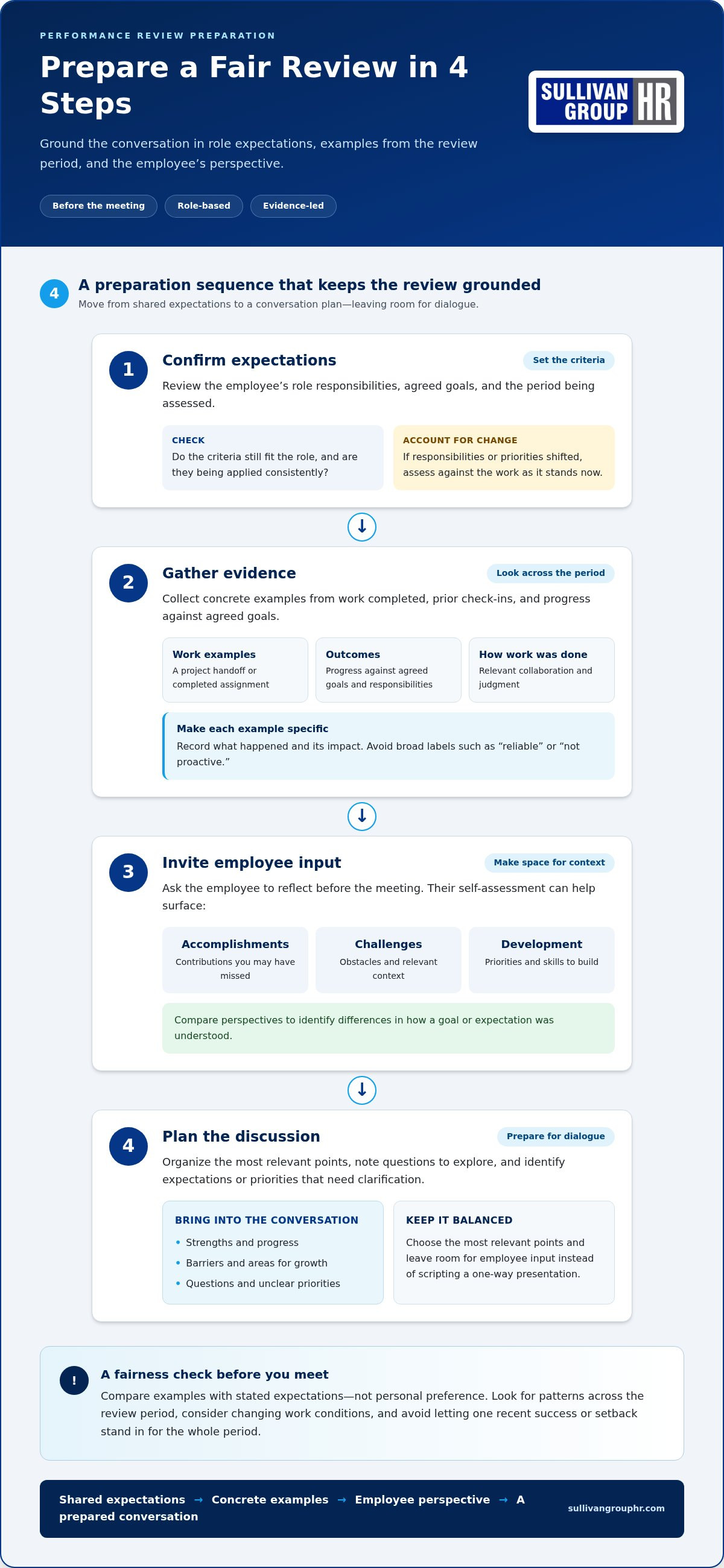
A well-prepared review starts before the meeting. Confirm what the employee was expected to do, collect examples from across the review period, and consider what context may have shaped the results. This helps keep the conversation grounded in the role rather than memory, assumptions, or a single recent event. It also gives the employee a fair chance to contribute their perspective.
Use this sequence to prepare:
- Confirm expectations. Review the employee’s role responsibilities, agreed goals, and the period being assessed. Check that the criteria still fit the role and that you’re applying them consistently. If responsibilities or priorities changed, account for that rather than judging the employee against expectations that no longer reflect the work.
- Gather evidence. Collect concrete examples from work completed throughout the period, prior check-ins, and progress against agreed goals. Consider outcomes as well as how the work was done, including collaboration and judgment when they relate to role expectations.
- Invite employee input. Ask the employee to reflect on accomplishments, challenges, and development priorities before the meeting. Their self-assessment can surface contributions you missed, explain obstacles, and identify differences in how you each understand a goal.
- Plan the discussion. Organize evidence into strengths, progress, barriers, and areas for growth. Choose the most relevant points, note questions to explore, and identify expectations or priorities that need clarification. Leave room for dialogue instead of scripting a one-way presentation.
What evidence should a manager gather before the review?
Choose examples tied to responsibilities and observable work. A project handoff, a completed assignment, or a recurring quality issue is more useful than a broad label such as “reliable” or “not proactive.” Consider results alongside relevant collaboration, judgment, and changing work conditions. Record what happened and its impact, then identify any missing context. One recent success or setback shouldn’t stand in for the full review period.
How can managers reduce bias before writing a review?
Compare each example with stated expectations, not personal preference or similarity to your own working style. Look for patterns across the review period, and ask whether you’re giving extra weight to a recent event or a highly visible task. The employee’s self-assessment can prompt you to check for overlooked work or context. If the evidence doesn’t support a conclusion, gather more information rather than treating an impression as fact.
Consistent preparation makes the process easier to explain and discuss. Sullivan Group HR provides human resources consulting to help employers organize HR practices as expectations and review routines take shape. Learn more about HR consulting support.
How to lead an effective performance review conversation
A prepared review still depends on how the conversation unfolds. Set a calm, respectful tone, explain the purpose, and make clear that the meeting is a chance to discuss performance and what comes next, not simply deliver a verdict. A simple flow keeps the discussion focused while leaving room for the employee’s perspective.
Use these steps to guide the meeting:
- Set the purpose. Explain which period you’re discussing and what you hope to accomplish. Invite the employee to contribute, and confirm the conversation will cover both what’s going well and what needs attention.
- Share specific examples. Connect observations to expectations and explain their impact. For instance, describe how a delayed handoff affected a project timeline rather than labeling the employee “unreliable.”
- Listen before drawing conclusions. Ask open questions such as, “How did you see that situation?” or “What got in the way?” Give the employee time to answer without interrupting or rushing to defend your initial view.
- Align on what the evidence means. Check whether you agree on the expectations, the events discussed, and the impact. If you see things differently, clarify which facts or assumptions differ before deciding what to do next.
- Agree on actions. Summarize the priorities, support, and changes you’ve discussed. Make sure each action has a clear owner so the conversation can guide work after the meeting.
Constructive doesn’t mean automatically positive, and candid doesn’t mean harsh. A useful review is specific and fair. It recognizes contributions clearly, addresses gaps directly, and gives the employee a genuine opportunity to respond. This balance is central to how to conduct effective performance reviews: the manager offers clear guidance, while the employee helps shape an accurate understanding of the work.
How should managers deliver difficult feedback?
Describe the situation you observed, then explain its work-related impact. Avoid labels like “careless” or “difficult,” which judge the person instead of clarifying the behavior. For example: “The last two reports arrived after the agreed deadline, which left less time for the team’s review.” Connect the concern to a clear expectation and describe what improvement would look like. Then pause. Ask how the employee sees it and listen for context before settling on next steps.
How can a manager keep the conversation balanced?
Give strengths and development needs comparable detail. Don’t offer a specific example of a shortcoming alongside only vague praise. Ask, “What support would help you make progress?” or “Which contribution are you most proud of?” If there’s disagreement, identify the evidence or expectation each person is relying on. You don’t have to force immediate agreement. Clarify what needs further discussion and what will happen next, while keeping the tone respectful and the focus on work.
Close by checking for understanding. Ask the employee to summarize the main priorities in their own words, then confirm any follow-up you’ve agreed on. A thoughtful conversation leaves both people clear on what was discussed, what remains unresolved, and how they’ll move forward together.
After the Review: Turn Feedback into Follow-Through
A review becomes useful when its agreements shape what happens next. Before closing the meeting, make sure both people understand the priorities, development actions, and responsibilities they’ve agreed on. Then write a concise summary and share it according to your organization’s established process. A clear record gives the employee a practical reference and helps the manager follow through on support and commitments.
How do you turn review feedback into measurable goals?
Translate broad feedback into an action the employee can understand and work on. “Improve communication” is hard to act on; “share a brief project update at the agreed team check-in” describes an observable behavior. Agree on what progress will look like and when you’ll revisit it. Record the employee’s responsibility, the manager’s role in providing support, and any resources or access needed to make progress possible.
Choose a measure that fits the goal. Assess a work outcome against an agreed deadline, for example, while a development goal may call for discussing how the employee applies a new skill to their responsibilities. The measure should clarify progress, not create a target disconnected from the role or circumstances. If expectations, resources, or business priorities change, revisit the goal together and document the updated agreement.
How should managers maintain progress between formal reviews?
Schedule check-ins to discuss what’s moving forward, what’s getting in the way, and whether expectations still fit. Use the agreed goal as a guide, not a script. Recognize improvement when it happens so feedback stays timely and employees know which changes are making a difference. If an obstacle needs manager action, name the support and decide when to revisit it.
Keep the record factual and work-related. Note the date, the progress or concern discussed, any relevant context, and the next action. Add new observations as they arise rather than changing the original review summary to make it appear that later events were known at the time. This preserves a clear history and helps future discussions distinguish what was agreed then from what has changed since.
A practical follow-through note can capture:
- Priority: The work outcome, behavior, or skill the employee will focus on.
- Measure: The evidence or progress both people will review.
- Responsibilities: What the employee will do and what support the manager will provide.
- Follow-up: The agreed date to check progress and discuss any changes.
This steady cycle of clear goals, check-ins, and factual documentation is a key part of how to conduct effective performance reviews. Sullivan Group HR offers human resources consulting to support employers as they strengthen HR practices behind consistent employee development. Read more about Sullivan Group HR’s HR consulting support.
How HR systems and support can make performance reviews more consistent
Consistency doesn’t come from a form or a calendar reminder alone. It depends on clear expectations, manager preparation, factual documentation, and regular follow-up. When managers use the same core process, employees are more likely to understand how feedback connects to their roles, and managers have a steadier basis for discussing performance.
That doesn’t mean every review should sound identical. Each conversation should reflect the employee’s responsibilities and work. A shared structure helps make the process fair: managers know what to prepare, what to document, and how to follow through. For employers building a repeatable approach to how to conduct effective performance reviews, HR guidance can help organize expectations and support managers in applying established practices consistently.
Where can HR guidance support the review process?
An HR partner can help employers clarify review practices, prepare managers to use established expectations, and keep documentation aligned with the organization’s processes. HR guidance and compliance support can help employers consider whether practices are applied consistently, without replacing advice specific to a legal matter. The manager still owns the conversation: they must provide thoughtful, role-relevant feedback, listen to the employee, and carry out agreed next steps.
This partnership can be especially helpful when managers interpret expectations differently. A consistent process can prompt them to use relevant examples, explain how work connects to role responsibilities, and record discussions in a clear, work-related way. It provides a useful framework, not a substitute for a manager’s judgment or the employee’s voice.
How can employers connect performance reviews to workforce management?
Reviews sit within a broader employee lifecycle that includes hiring, onboarding, development, and ongoing HR support. Aligning the review approach with wider workforce processes can help employers keep responsibilities and expectations clear as roles evolve. Sullivan Group HR combines isolved HCM technology with a dedicated Sullivan Group HR specialist for each client. The technology supports broader workforce management, while the review conversation itself still depends on clear expectations, relevant examples, and manager follow-through.
For a wider view of how people practices fit into business operations, explore this human capital management growth guide and the workforce management solutions guide. Both topics help frame reviews as one part of managing and supporting a workforce, rather than a standalone annual task.
Clear expectations, prepared managers, and consistent follow-through make reviews easier to understand and more useful across the organization. Sullivan Group HR pairs isolved HCM technology with a dedicated specialist for each client as part of its complete workforce management solutions.
Make the Next Review a Better Conversation
Your next step is to make one improvement part of the routine. Choose a clear expectation to reinforce, a check-in to schedule, or a manager practice to make more consistent. Small, steady changes can help performance conversations feel less like a yearly event and more like useful support for employees’ growth.
If you’re considering how to conduct effective performance reviews across your organization, the right HR support can help strengthen the process while keeping the conversation human. Sullivan Group HR brings 40 years of experience in payroll, HR, and employee-benefits management, pairing enterprise-grade isolved HCM technology with a dedicated specialist for each client.
Let Sullivan Group HR be your solution for complete workforce management. With a thoughtful process and a trusted partner, you can help managers move forward with greater clarity and confidence.
Frequently Asked Questions
How often should managers conduct performance reviews?
Set a formal review cadence that fits your organization’s policy and the needs of each role. A yearly review can provide a defined checkpoint, while additional conversations may help when responsibilities change or a new goal needs attention. For managers learning how to conduct effective performance reviews, choose a rhythm employees can anticipate and maintain it consistently. Don’t wait for the next formal meeting to discuss a time-sensitive concern or recognize important progress.
Should employees complete a self-assessment before a performance review?
Yes, a self-assessment can help employees prepare their perspective and give managers a fuller picture of the work. Keep the prompt focused: ask what contribution they’re proud of, what skill they want to build, and what made their work harder or easier. An employee may point out a behind-the-scenes task that wasn’t visible to their manager. Treat the response as useful context, not as a replacement for the manager’s assessment.
What should a manager do if an employee disagrees with a performance review?
Stay curious and identify the specific point of disagreement before responding. Ask which example or expectation the employee sees differently, then compare perspectives using the relevant work records and role criteria. The aim isn’t to win an argument. If you need time to review additional information, say so and agree on when you’ll follow up. Document the employee’s perspective and any clarification, even if the assessment itself doesn’t change.
Can performance reviews include both recognition and constructive feedback?
Yes. A review can recognize effective work and address an area that needs attention in the same conversation. Keep each point specific and connected to the role, rather than using praise to soften or obscure a concern. For example, recognize a thoughtful client handoff, then discuss a separate need to improve the accuracy of recurring reports. Clear, distinct feedback helps employees understand what to continue and what to work on.
How long should a performance review meeting take?
There’s no single meeting length that suits every review. Allow enough time to discuss the employee’s work, hear their perspective, address questions, and clarify expectations without rushing. A review covering a role change or several development priorities may need more discussion than a straightforward check-in. Share the meeting purpose in advance and protect the time on both calendars. If a topic needs deeper attention, arrange a separate conversation rather than forcing a quick decision.
Are performance reviews the same as performance appraisals?
The terms are often used interchangeably, though some organizations use “performance appraisal” for the formal assessment and “performance review” for the broader conversation around it. A company may distinguish between a written evaluation, a rating, and a discussion about goals or development. What matters most is that employees understand what the meeting covers, which criteria are being used, and how the outcome will inform future expectations.
What should managers avoid saying in a performance review?
Avoid personal labels, sweeping claims, comparisons with coworkers, and statements that don’t explain what needs to change. Phrases like “you’re always careless” or “you need to be more professional” can sound judgmental without giving the employee a clear action. Describe the work behavior or outcome instead, and explain the expectation. Don’t make promises about promotion or pay that you can’t confirm. Keep the discussion respectful, relevant, and grounded in the employee’s work.


