

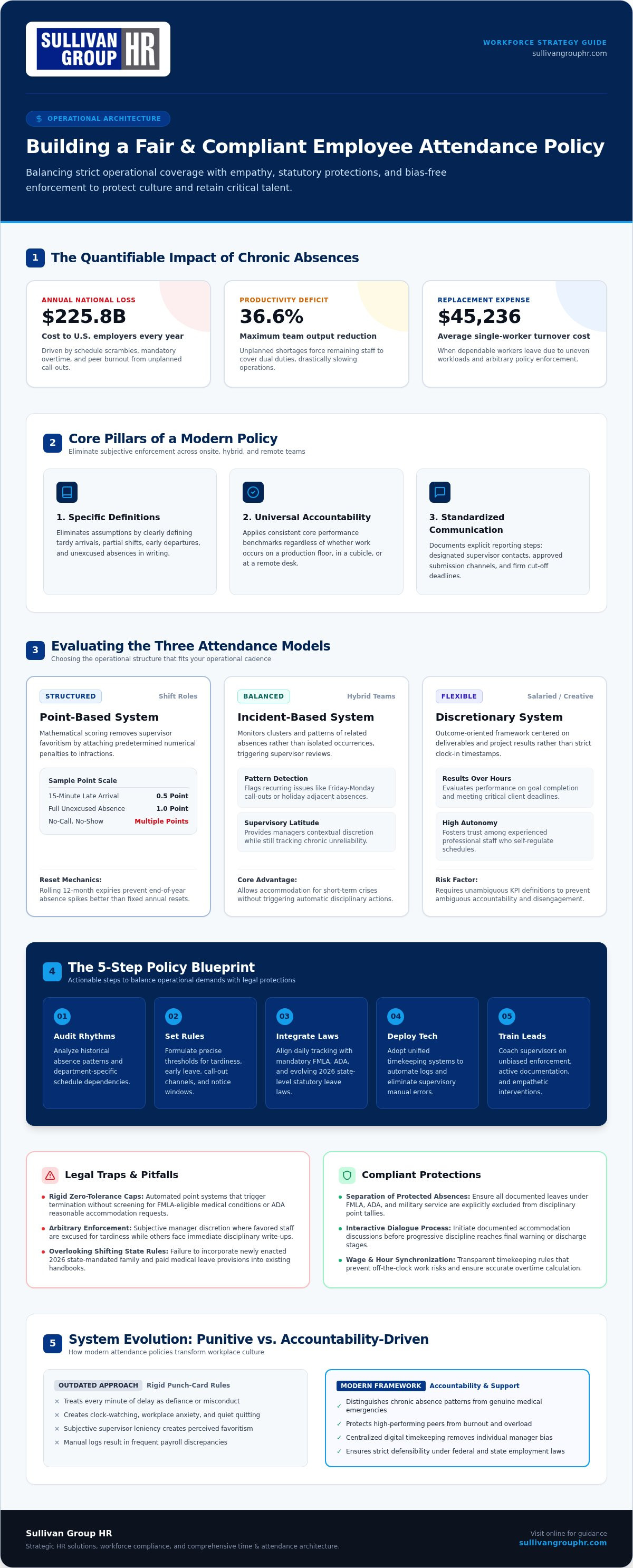
What if the strict attendance rules meant to protect your operations are actually driving your best people out the door? Unplanned absences cost U.S. employers an estimated $225.8 billion every year, sparking frantic schedule scrambles, costly overtime, and peer burnout. Yet when supervisors enforce rules arbitrarily, frustration spreads and discrimination risks surge. That is why creating a fair employee attendance policy requires balancing firm operational standards with empathy and legal compliance.
You shouldn't have to choose between seamless daily coverage and high staff morale. In this guide, you will learn how to design, implement, and enforce an equitable attendance policy that protects your culture, simplifies supervision, and strengthens retention. We'll examine intersecting federal protections like FMLA and the ADA, review shifting 2026 state leave laws, and reveal how modern timekeeping tools eliminate administrative friction for good.
Key Takeaways
- Understand why rigid, outdated rules damage morale and how modern standards redefine accountability across your workforce.
- Follow an actionable five-step roadmap for creating a fair employee attendance policy that balances daily operational needs with workplace flexibility.
- Evaluate the pros and cons of point-based, incident-based, and discretionary attendance models to find the right fit for your team.
- Protect your organization against costly legal liabilities by properly aligning daily tracking with complex FMLA, ADA, and state-mandated leave rules.
- Discover how unified time and attendance technology removes supervisory bias, reduces manual payroll errors, and supports transparent communication.
What Constitutes a Fair Employee Attendance Policy in Modern Workplaces?
A fair attendance policy isn't a punitive trap; it is a clear operational contract between leadership and staff. In the past, companies relied on rigid, zero-tolerance punch cards that treated every minute of tardiness as an act of defiance. Today, that approach alienates high performers and ignores the realities of hybrid schedules, medical emergencies, and caregiving duties.
When leadership approaches creating a fair employee attendance policy, the objective shifts from punishment to predictability. Punitive systems breed fear, clock-watching, and quiet disengagement. In contrast, an accountability-driven framework balances firm operational guidelines with empathetic support. It sets clear boundaries while ensuring that life events don't derail an employee's career trajectory.
Key Attributes of an Equitable Attendance Framework
Reliable policies eliminate guesswork. To keep standards consistent across onsite, hybrid, and remote teams, build your foundation on three core pillars:
- Specific definitions: Define what constitutes a tardy arrival, a partial shift, an early departure, and an unexcused absence so assumptions never replace written standards.
- Universal accountability: Apply identical core standards regardless of whether someone works in an office cubicle, on a manufacturing floor, or from a home workstation.
- Standardized communication: Outline exact reporting procedures, detailing whom to contact, how to submit notice, and the explicit deadlines for filing call-outs.
The Hidden Cost of Ambiguous Attendance Rules
When rules stay murky, managers enforce them subjectively. One manager overlooks a favorite employee's habitual tardiness, while another writes up a struggling worker for a single delay. This uneven treatment fuels deep resentment among dependable staff who shoulder the extra shift load.
Beyond damaged morale, the operational fallout escalates quickly. In understanding absenteeism, business leaders recognize that unplanned absences can reduce team productivity by as much as 36.6% while drastically driving up overtime expenses. If left unaddressed, chronic call-outs burn out your best contributors, sparking costly turnover where replacing a single worker averages $45,236.
Arbitrary enforcement also invites immediate legal scrutiny. When disciplinary decisions rely on supervisory discretion rather than documented data, workers can easily view terminations as discriminatory. Objective standards eliminate favoritism, insulate against compliance liabilities, and reassure your entire workforce that everyone plays by the exact same rules.
Comparing Attendance Frameworks: Point-Based, Incident-Based, and Discretionary Models
Every business operates under unique functional rhythms. A shift-based warehouse cannot run on the same schedule rules as a software design studio. Selecting the right framework is the most vital structural decision when creating a fair employee attendance policy. The structure you choose shapes company culture, manager credibility, and legal exposure.
Most employers evaluate three proven operational structures:
- Point-based models: Numerical tracking where specific infractions carry set values. They remove personal bias but risk unyielding rigidity.
- Incident-based models: Patterns of related absences trigger review. This framework gives supervisors flexibility while still tracking chronic reliability issues.
- Discretionary models: Flexible, outcome-oriented guidelines designed for professional roles where results matter more than exact hours logged.
If you choose a point framework, how points expire matters just as much as how workers accumulate them. Rolling-calendar tracking, which drops an infraction twelve months after its occurrence, prevents year-end attendance rushes. In contrast, fixed calendar-year resets wipe records clean every January, which inadvertently rewards late-year call-outs.
Point-Based Attendance Systems: Pros and Operational Pitfalls
Point systems deliver mathematical objectivity. A typical scale assigns half a point for arriving 15 minutes late, one point for a full unexcused absence, and multiple points for a no-call, no-show. Hitting specific milestones initiates progressive discipline, moving from verbal warnings to written notices.
The primary danger lies in rigid automation. Zero-tolerance point caps that trigger automatic terminations frequently cause compliance failures. Federal watchdogs actively penalize policies that assign points to legally protected medical leave. Aligning point policies with strict FMLA and ADA compliance requires deliberate human oversight before any disciplinary trigger executes.
Flexible and Discretionary Attendance Frameworks
Outcome-focused teams often reject numerical systems entirely. Exempt employees, who are subject to the FLSA standard salary threshold of $684 per week ($35,568 annually), thrive under systems that prioritize output over clock management. Discretionary systems empower departments to handle life emergencies reasonably without punitive paperwork.
Flexibility still requires structure. When managers possess subjective authority to excuse absences, organizations must document every operational accommodation. Clear administrative records prevent claims of disparate treatment or supervisory bias between departments. Partnering with seasoned advisors at Sullivan Group HR helps leadership audit discretionary rules, safeguarding internal equity while preserving your company culture.
Step-by-Step Guide to Creating a Fair Employee Attendance Policy
Drafting an attendance policy without clear operational alignment is an exercise in futility. If your frontline managers cannot easily enforce your guidelines, the policy exists only on paper. Success requires moving systematically from internal evaluation to practical execution.
When leadership begins creating a fair employee attendance policy, adopting a proven five-step implementation roadmap delivers the best results:
- Audit past operations: Analyze historical attendance patterns to uncover chronic coverage gaps and scheduling bottlenecks.
- Define clear parameters: Establish realistic shift rules, grace periods, and emergency call-out expectations.
- Align technical infrastructure: Connect your standards with modern workforce management solutions to automate recordkeeping and eliminate manual bias.
- Train supervisory staff: Coach managers across every department to apply disciplinary thresholds consistently.
- Formalize rollout: Publish your policy within your employee handbook and collect signed acknowledgments from your entire team.
Auditing Operational Needs and Establishing Core Standards
Before putting pen to paper, review your operational calendar. Which shifts see the highest unplanned call-outs? Identifying these patterns reveals whether attendance issues stem from individual unreliability or structural burnout. Define essential operating windows for each department, then build reasonable flexibility into your rules. A sensible five-to-seven-minute grace period accommodates everyday traffic bottlenecks without derailing team production schedules.
Defining Call-Out Procedures and Approved Communication Channels
Spontaneous, uncoordinated call-outs throw entire operations into disarray. Eliminate uncertainty by requiring staff to report unforeseen absences at least two hours before a scheduled shift. Designate official notification pathways, such as a centralized phone line or an integrated mobile time portal, and strictly prohibit informal text messages to a manager's personal device. If requesting medical verification for extended absences, focus strictly on functional clearance rather than probing private diagnosis details.
Rolling Out Progressive Discipline and Training Supervisors
Consistency builds trust; ambiguity breeds conflict. When creating a fair employee attendance policy, your disciplinary framework must outline clear, predictable milestones: a documented verbal conversation, followed by a formal written reprimand, final suspension, and termination. Frontline supervisors need extensive training to manage these stages without personal bias. Provide employees with real-time access to their attendance records so disciplinary actions never arrive as an unexpected shock.
Legal Pitfalls: Navigating FMLA, ADA, and Wage and Hour Compliance
A standard no-fault attendance policy feels simple until it triggers a federal retaliation lawsuit. When leadership approaches creating a fair employee attendance policy, regulatory awareness must take priority over rigid automation. Agencies routinely penalize companies that issue attendance points to employees taking legally protected time off. Protecting your balance sheet requires weaving sound attendance practices into your comprehensive HR risk management strategy. When supervisory teams treat statutory leave as unexcused absence, costly DOL audits and EEOC investigations quickly follow.
The Intersection of Attendance, FMLA, and Protected Medical Leave
Never penalize an employee for qualified Family and Medical Leave absences. Department of Labor guidance affirms that protected time encompasses travel to and from medical appointments alongside clinical care. Intermittent leave requires meticulous tracking down to the minute. Build a strict operational firewall between daily punch records and confidential medical certifications to safeguard employee privacy and preserve federal compliance.
Accommodating Disabilities Under the Americans with Disabilities Act
Recurring morning tardiness often signals an underlying medical condition rather than willful defiance. Under the ADA, adjusting a shift start time or permitting scheduling flexibility can serve as a reasonable accommodation unless it presents an undue operational hardship. Always document the interactive process thoroughly. Proactive dialogues prove your organization acted in good faith if an attendance-related termination ever faces administrative scrutiny.
FLSA and State-Mandated Paid Sick Leave Traps
Wage and hour compliance demands equal vigilance. Docking a salaried exempt worker's predetermined pay for partial-day absences violates the FLSA and risks invalidating their exempt classification. Concurrently, state-level leave mandates create an evolving maze. From California's 40-hour paid sick requirement to expanding paid family programs across states like Minnesota and Delaware, your attendance rules must reflect local statutes.
To insulate your organization against escalating statutory liabilities, partner with Sullivan Group HR to audit your policies and ensure complete regulatory alignment across every department.
Modernizing Attendance: Leveraging Integrated Technology and HR Expertise
Manual spreadsheets, paper punch cards, and disconnected time clocks belong to a bygone era. They invite transcription mistakes, encourage buddy punching, and create blind spots that fuel friction between staff and leadership. Even the best written guidelines break down when your infrastructure forces supervisors to decipher handwritten logs. Truly creating a fair employee attendance policy requires modern infrastructure that matches your operational vision.
Switching from disconnected systems to a cloud-based architecture turns timekeeping into a clear, shared touchpoint. By unifying attendance tracking with your payroll engine, every clock-in feeds verified hours straight into wage calculations without manual re-entry. Bringing in seasoned human resources management services bridges the gap between technological capabilities and human judgment, giving your leadership team both the software and the strategic guidance required to run an equitable operation.
Streamlining Timekeeping with the isolved HCM Platform
Adopting the isolved Human Capital Management platform removes tracking ambiguity across your entire organization. Its integrated time and attendance tools capture real-time timestamps across mobile devices, physical terminals, and web browsers. When staff members use self-service portals, they don't have to guess where they stand. Employees view upcoming schedules, monitor accrued PTO balances, and submit time-off requests with total clarity.
Behind the scenes, verified shift records flow straight into payroll administration. This eliminates tedious manual entry, slashes administrative hours, and protects your payroll from calculation errors. Supervisors review exceptions, approve leave, and verify coverage in minutes rather than spending entire afternoons correcting timecards.
The Strategic Advantage of Professional HR Consulting
Software alone cannot resolve workplace culture challenges. While isolved records operational data objectively, seasoned human resources consulting provides the judgment needed to manage daily workforce interactions. Expert advisors help craft custom employee handbooks that clearly translate complex leave mandates into practical internal standards.
Consultants also train your supervisors on equitable enforcement. Coaching managers to hold firm, empathetic conversations turns potential conflicts into collaborative discussions before attendance issues lead to disciplinary steps. By pairing modern HCM technology with dedicated nationwide consulting, leadership can focus entirely on growing core business revenue while experts protect compliance and build workplace trust.
Transform Your Workplace Attendance Strategy Today
Operational stability doesn't require rigid, heavy-handed policing. By balancing transparent attendance standards with statutory protections like FMLA and the ADA, you build an organizational culture founded on mutual respect rather than fear. Ultimately, creating a fair employee attendance policy protects your bottom line, eliminates supervisory bias, and keeps your top performers engaged for the long haul.
You don't have to tackle shifting regulatory mandates and software overhauls alone. Backed by nationwide administrative support, Sullivan Group HR delivers comprehensive HR consulting and custom employee handbook compliance solutions alongside seamless access to the award-winning isolved Human Capital Management platform. We align time and attendance tracking directly with payroll administration and workforce risk management, taking the administrative burden off your shoulders. Modernize your workforce policy with Sullivan Group HR and establish an equitable, high-trust environment where your business can truly thrive.
Frequently Asked Questions
Can you discipline an employee for attendance if they have a medical excuse?
No, you cannot discipline an employee if the absence is legally protected under federal, state, or local leave statutes. Absences covered by the FMLA, ADA accommodations, or statutory paid sick leave laws are protected against disciplinary points or penalties. However, if a worker exhausts their protected leave and submits a doctor's note for a routine illness, employers may enforce standard policy rules, provided they treat all workers equally.
What is a rolling calendar attendance policy, and how does it work?
A rolling calendar attendance policy evaluates an employee's infractions over a dynamic twelve-month period rather than resetting on January 1. When a team member receives an attendance point, that specific point remains active for exactly 365 days before dropping off. This rolling mechanism stops staff from exhausting excess call-outs right before an annual reset, which encourages steady, year-round operational reliability and equitable oversight across departments.
Is a no-fault attendance policy legal under federal employment laws?
Yes, no-fault attendance policies are legal under federal law, provided they explicitly exclude statutory, protected absences. Legal liability arises when automated systems assess points for approved FMLA leave, reasonable accommodations under the ADA, or state-mandated paid sick days. When creating a fair employee attendance policy, leadership must build clear procedural carve-outs so automated tracking never penalize staff members exercising their lawful leave rights.
How many unexcused absences typically warrant termination in a fair policy?
Most organizations set the threshold for termination between five and eight unexcused occurrences within a rolling twelve-month window. This progression relies on structured stages: a documented verbal conversation after two or three infractions, a formal written warning at four, and a final suspension before discharge. Transparent milestones give struggling workers ample opportunity to correct scheduling issues before facing permanent separation.
How do attendance policies apply to salaried exempt employees under the FLSA?
Salaried exempt workers receive a predetermined salary regardless of the specific hours worked, making minute-by-minute attendance tracking inappropriate. Docking an exempt worker's predetermined pay for partial-day absences violates FLSA regulations and threatens their exempt status. Instead of tracking exact clock-ins, management should evaluate exempt personnel based on output, overall availability, core collaboration hours, and formal full-day PTO requests.
What should be included in an official employee attendance policy document?
An official policy document must define punctuality expectations, tardiness grace periods, unexcused absences, and mandatory call-out notice windows. When creating a fair employee attendance policy, handbook guidelines must also outline progressive disciplinary tiers, point expiration schedules, and clear instructions for requesting statutory leave. Putting clear definitions in writing eliminates supervisory bias and establishes uniform operational standards across your entire organization.
How does automated time and attendance software improve policy compliance?
Automated software improves compliance by replacing subjective supervisory notes with verified, objective clock data. Platforms like isolved automatically enforce organization-wide rules, flag attendance exceptions, and prevent inconsistent disciplinary decisions driven by manager bias. Direct integration with payroll administration ensures accurate wage calculations, while self-service portals let employees view leave accruals and submit time-off requests with complete transparency.


